Sione Taufa
Fictional. Generated by AI — not a real person, and no likeness of one is intended.
22, pilot in Anchorage · rolled by @colin.hasbrook · card — no film
History
who has worn him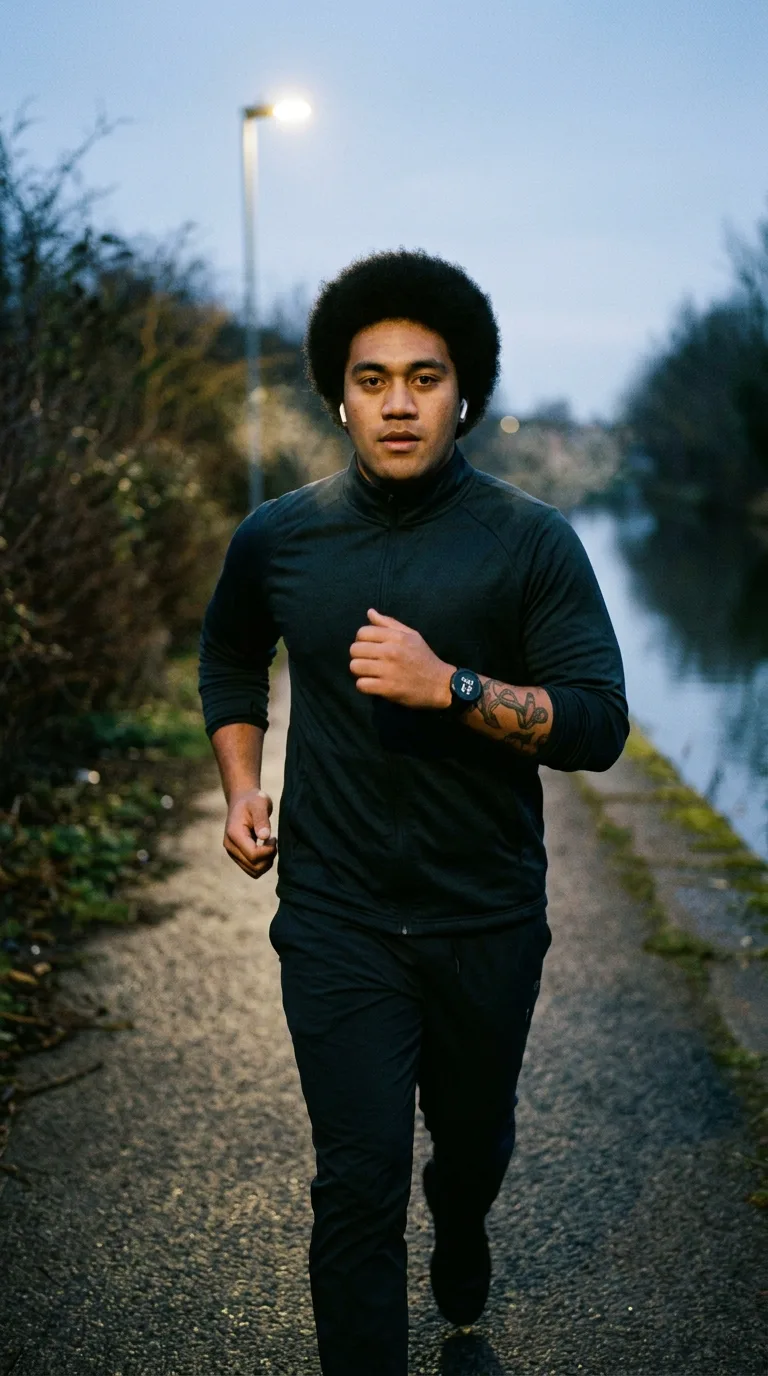
Rarest thing about him: Pacific Islander — epic, 1 in 172
Season 0seed 955666229 · engine v10
Character card
lineage 2NZHHJ
His body-swap story
@colin.hasbrook, wearing Warren Nakashima, rolled the wheel on and woke up as Sione Taufa, spent 4 minutes in him, then spun the wheel and woke up as Danny Kessler
Warren's kitchen is dark except for the fridge light, and Warren's knees ache the way they always ache at this hour, standing there, because Warren's knees are fifty-three years old and have carried Warren's weight up and down a thousand identical carpeted hallways to a thousand identical cubicles, and none of that belongs to you no matter how long you wear it. You have been him less than a minute, sitting down at the desk in his den, the laptop already open because Warren himself left it open, some ledger still glowing on the second monitor like it matters. It doesn't. You didn't come back for Warren. You came back because you spun him not forty seconds ago and felt nothing — no cold Atlanta floor under new feet, no strange mouth to learn, just a heavy tired body you'd apparently already had, filed and shelved, boring as the ledger. Bald head, brown eyes, a paunch you didn't earn. Four hundred and forty men behind you and this one barely registered as a man at all. You want the feeling back. You want the jolt. You put your — his — hand on the mouse, and you spin again before the fridge light even clicks off.
The stumble happens on a canal path six thousand miles and six hours away, evening there, night here, and for two steps nobody is home in the body at all — then you are, mid-stride, lungs already burning with someone else's exertion, and the watch on your wrist buzzes a split time it has no memory of you setting.
The first thing is the cold, real cold, Anchorage cold, needling through a jacket zipped to the throat, and the rhythm of legs that know this path without you, the gravel and packed dirt requiring no instruction, because this body has run this canal loop four mornings a week for three years and the muscle doesn't care who's asking now. Earbuds feed you the tail end of a song you don't recognize. Then the jacket sleeve brushes your — his — forearm, over the tattoo, and it comes: a shop in Norfolk, nineteen years old, the buzz of the needle, a friend from flight school laughing that a Tongan kid was getting an anchor like some old sailor, and Sione laughing back, not really explaining that his grandfather had actually been a sailor, that this was the point, that it wasn't a joke to him even if he let it be one out loud.
More comes, unbidden, riding the rhythm of the stride. The jet bridge — always the jet bridge, always the particular smell of it, jet fuel and carpet glue and the pressurized hiss before the door — and the first time he sat right seat and the captain, an older Samoan woman with twenty-six years in, told him he flew like he already knew the plane forgave him. He didn't, not for years. He carries an old knee, the left one, blown out playing rugby at seventeen, a tackle that ended wrong, and it still complains on cold mornings exactly like this one, a low ache under the kneecap that he runs through anyway because stopping feels worse than the pain does. His hands — broad, sure — know the weight of a yoke and the particular give of a control column at altitude the way they know nothing else, not a woman's hand yet, not really, though there was a flight attendant based in Seattle he texts sometimes and hasn't called it anything. His mother lit a candle every time he flew, still does, and he doesn't tell her that turbulence doesn't scare him, only paperwork does. He does not drink, has never wanted to, keeps a tin of pouches in the glovebox of a truck parked at a hangar and another in his running jacket right now, a small hard rectangle against your ribs that brings back an entire dull gray winter of night flights and vending machine coffee and being twenty-two and already tired of people asking when he'll make captain.
The shirt — no, not the shirt, there's no shirt out here, just the jacket, but the jacket remembers, too, in its way: this morning, or what was this morning to him, pulling it over a t-shirt still warm from the dryer in a cabin with plywood walls he never got around to finishing, a snowmobile under a blue tarp out back that he keeps meaning to sell and never does, because his father gave it to him and selling it would mean admitting his father isn't coming up to ride it again. The watch on his wrist he bought with his first real paycheck, and the mile-four alert buzzing now, wrongly, on a split he never held, is the only thing in this whole body that seems to notice something is off, and even that is just a number, blinking, ignored.
You slow without deciding to. Two steps, three, until you are standing on the gravel with breath sawing out of a stranger's twenty-two-year-old lungs, good lungs, young ones, no ache in them at all, only in the knee, and you understand for the first time in months what a body is supposed to feel like when it isn't complaining about all of it at once.
You look down at the hand at your side, opening and closing it, watching the tattoo shift over the tendons.
"Not bad," you say, to no one, your breath fogging in front of a face that has never once said those words in that voice before.