Warren Nakagawa
Fictional. Generated by AI — not a real person, and no likeness of one is intended.
61, sales rep in Denver · rolled by @colin.hasbrook · card — no film
History
who has worn him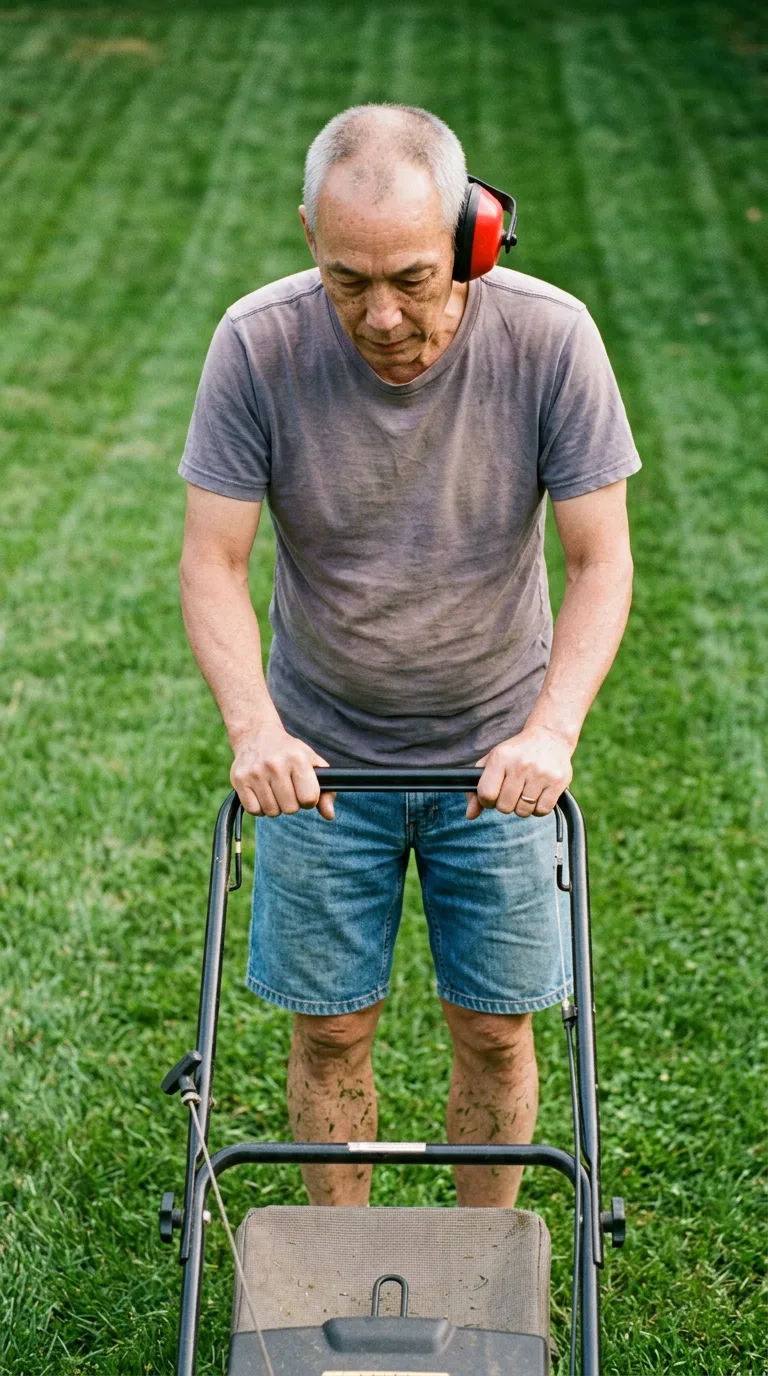
Rarest thing about him: Pulls at his beard — epic, 1 in 208
Season 0seed 279952485 · engine v10
Character card
lineage 2NZHHJ
His body-swap story
@colin.hasbrook, wearing Gerald Fontenette, rolled the wheel on and woke up as Warren Nakagawa, spent under a minute in him, then spun the wheel and woke up as Sami Kanaan
You are standing in Gerald Fontenette's kitchen in New Orleans, and Gerald's knees hurt in the specific way that means rain later, and Gerald's mouth tastes like the coffee Gerald doesn't remember wanting. You have been him for less than a minute. Sixty seconds ago you were Otis Redmond — sixty-four, retired, Atlanta, a house with a ramp you built yourself for a hip that never came back right — and before that you were a hundred other Mondays wearing a hundred other men. You spun into Otis and out of him inside four minutes, because Otis's knees were worse than Gerald's are now and you didn't want to feel that twice in one day. That is the whole reason. It is not a good one. You are aware it is not a good one. You do it anyway, standing in this stranger's slippers on this stranger's tile, and you reach for the phone that isn't Gerald's phone, that's the site's page loaded fresh from muscle memory that isn't muscle and isn't memory, and you spin because Gerald's reflux is starting up under his sternum and it is easier to leave a body than to sit with it.
The wheel spins.
You are gripping a push mower bar with both hands and the engine has just dropped a note under you and caught again, and your right ear is suddenly warmer — an earmuff settling back over it, though you don't remember lifting your arm to do it, except you did, his arm did, and now it's your arm and the row ahead of you runs dead straight where the last six ran crooked as a signature.
Grass clippings needle both your shins. Sun on the back of your neck. Your knees are not Gerald's knees — they're worse in a different way, a deep ache low and to the left, old cartilage, and your lower back has that specific mower-stoop burn that means you've been at this twenty minutes already and have a hundred more.
The bar under your palms gives you his hands first — thick-veined, a plain gold band snug on the left ring finger, a half-moon of grass stain worked into the pad of the thumb — and through the handle grip, worn smooth in two spots by two hands over eleven summers of this exact mower, comes a flood that isn't yours: Sharon laughing at him through the kitchen window the first summer they had this yard, telling him he mows like he's mad at the grass. His son's voice at nine years old asking to push it and being told not yet, buddy, and then at fourteen doing the whole back forty by himself while Warren watched from the porch with a glass of water sweating in his hand, so proud his throat hurt. The ex-wife's voice, older, harder, from a different house, a different lawn, telling him he cared more about the yard than he ever did about her — not fair, not entirely wrong either, and he carries that the way he carries the reflux, low and constant and never quite named.
The t-shirt against your back — damp, gray, gone soft as paper — gives you this morning: pulling it over his head in the bedroom while Sharon slept in, careful with the doorknob, the fabric snagging a second on his ear the way it always does, the smell of it already halfway to sweat before he'd even started. The jean shorts came next, a belt he didn't need but wore anyway out of some old habit from when he had less stomach and more waist. He'd stood at the closet a second longer than usual — not deciding what to wear, deciding whether to shave the little gray scruff along his jaw, and pulling at it instead, the way his hand does when it forgets it's a hand, and leaving it. Church tomorrow. He'd have shaved for church.
He is worth more than this yard, more than this street, more than anyone driving past would guess from a man in a stained shirt behind a manual mower he could've replaced with a riding one ten times over — he keeps it because his father-in-law gave it to him, because there's a particular Rocky Mountain quiet you only get pushing instead of riding, because Sharon likes watching him do it from the window even now. There is a life in one daughter's face he is thinking about without meaning to — a wedding a year off, a walk down an aisle he has already, privately, cried about once in the truck alone.
His stomach burns faintly, familiar, low. Chest a little soft under the shirt, arms wire-thin under looser skin, the specific tiredness of sixty-one that isn't pain so much as an argument with gravity he's stopped trying to win.
The mower idles under your hands, patient, wanting the next pull.
You let go of the bar and look down at both palms — his palms, grass-stained, ring catching the light — turning the left one over slow like it might not still be attached.
You look up, past the earmuff, into whatever's watching, and say, "Sharon's gonna ask why I stopped."