Sami Kanaan
Fictional. Generated by AI — not a real person, and no likeness of one is intended.
31, farmer in Atlanta · rolled by @colin.hasbrook · card — no film
History
who has worn him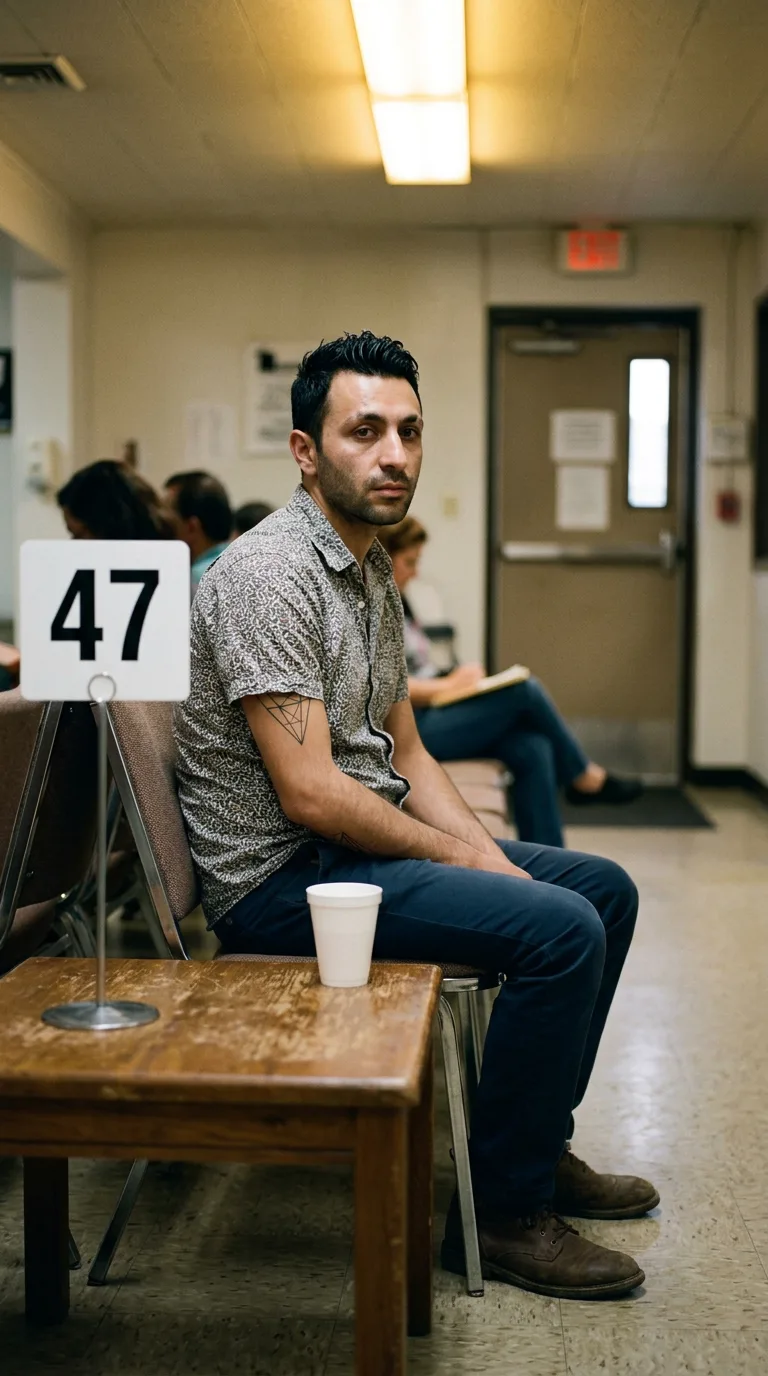
Rarest thing about him: Middle Eastern — rare, 1 in 34
Season 0seed 679887597 · engine v10
Character card
lineage 2NZHHJ
His body-swap story
@colin.hasbrook, wearing Warren Nakagawa, rolled the wheel on and woke up as Sami Kanaan, spent under a minute in him, then spun the wheel and woke up as Elias Cabrera
Warren Nakagawa's hand aches around the pen he isn't using, freckled knuckles gone stiff from thirty years of cold calls, and you hate this hand today the way you've hated exactly one other hand out of sixty-six. It's Monday, midday, sun flat and merciless through the blinds of a home office in Denver that smells like burnt coffee and printer toner, and somewhere on the desk a CRM dashboard is loading a pipeline that isn't going to close no matter whose fingers are on the keyboard. You've been Warren less than a minute of his life and already you know the shape of the rest of it: quota calls, a knee that clicks on the stairs, a divorce he doesn't bring up. Nothing wrong with him. That's the trouble. Nothing interesting either. You didn't spin sixty-six times because you like feeling comfortable. You open the site on his second monitor, the wheel already spinning behind your eyes before your thumb even taps it, because the itch is simpler than any reason you could give it: you want to not be him anymore, and you don't care yet who's next.
The wheel stops.
You are sitting down. That's the first thing — the drop of weight into a chair that isn't rising to meet you the way Warren's kitchen stool did, and a paper cup sweats against your palm, and overhead a strip light hums in a key you didn't choose. Afternoon light, thick and yellow through vertical blinds, air-conditioning fighting a losing war against Georgia humidity leaking in under a door somebody propped open earlier. A number board across the room clicks from 47 to 48 in the same half-second your knee — his knee — stops bouncing, like a motor cutting out. You set the cup down. Square, centered on the little wooden table, without deciding to. Your hands fold in your lap on their own, like they've done this a thousand times in a thousand waiting rooms, and a voice somewhere near the desk calls a name that isn't yours and isn't quite his either, not yet, not to you.
Then the shirt gives you the first flash: chambray, worn soft at the collar, and a bathroom mirror at five-forty this morning, steam still clinging to the glass, a man buttoning it one-handed while the other hand — this hand — turns a plain silver ring over and over between thumb and finger, not wearing it, just holding it, the way he does every single morning before he puts it in the dish by the sink instead of on. Sami. The name arrives with the ring, quiet, certain. Sami Kanaan, thirty-one years old, and this shirt has dried sweat and diesel and cut grass worked so far into the weave that no washing machine will ever fully get it out, and it doesn't matter, because today it's clean, today it's for the doctor.
The khakis under your palms remember mud that isn't there right now — a field gate at Riverside, dawn breaking gray-pink over rows of collards, boots sucking in the wet clay, his father's voice from thirty years ago telling him *you don't rush a field, it rushes you*. Sami's hands know irrigation valves and busted tractor belts and the particular give of good soil under a shovel, know it in the calluses along the palm even now, folded quiet in his lap. He is skinny in the shoulders and soft everywhere else, the body of a man who works outside and eats badly and doesn't sleep enough, and there's a low tiredness sitting behind his sternum that isn't sickness, exactly — Dr. Ferro upstairs calls it something with a name, gave him a prescription eight months ago that actually worked, first time anything had. He came off the beer around then too. Didn't announce it. Just noticed one Tuesday he hadn't wanted one in a month.
The scar through his eyebrow itches faintly — an old thing, a ladder, sixteen years old, nothing anyone asks about anymore. The tattoo on his arm, half under the rolled sleeve, geometric lines he chose himself at twenty-two because Layla said his life needed one thing in it that wasn't useful. Layla. Her name comes with a whole year attached — her laugh in his truck cab, a fight in a parking lot outside a Waffle House, her leaving for Charlotte and him not following, the ring in his pocket that was never for a wedding, just a habit that outlived the reason for it, his grandfather's ring, turned and turned and never worn because his hands are always in dirt or diesel and he doesn't want to lose it.
The board says 48. His name gets called into a room he's dreaded for weeks — blood work, a cyst, probably nothing, the nurse said, but *probably* has been sitting on his chest like a stone since Thursday. He didn't tell anyone he was coming today. Not Layla, not his mother, not the two guys who work the far acres with him. He drove himself, parked wrong, walked in with his knee going a mile a minute, and here, right here, is where the bouncing stopped.
You look down. His hands, tan across the back, pale at a wristwatch line, are open in his lap, empty of the ring for once, and you turn them over slowly, palm up, feeling every year of fieldwork sitting in the calluses that are not yours and are, now, completely.
You lift your eyes to whoever's still watching the door for him to go in, and you say, quiet, almost gentle with the strangeness of it:
"I'm not scared anymore."