Elias Cabrera
Fictional. Generated by AI — not a real person, and no likeness of one is intended.
23, florist in New York · rolled by @colin.hasbrook · card — no film
History
who has worn him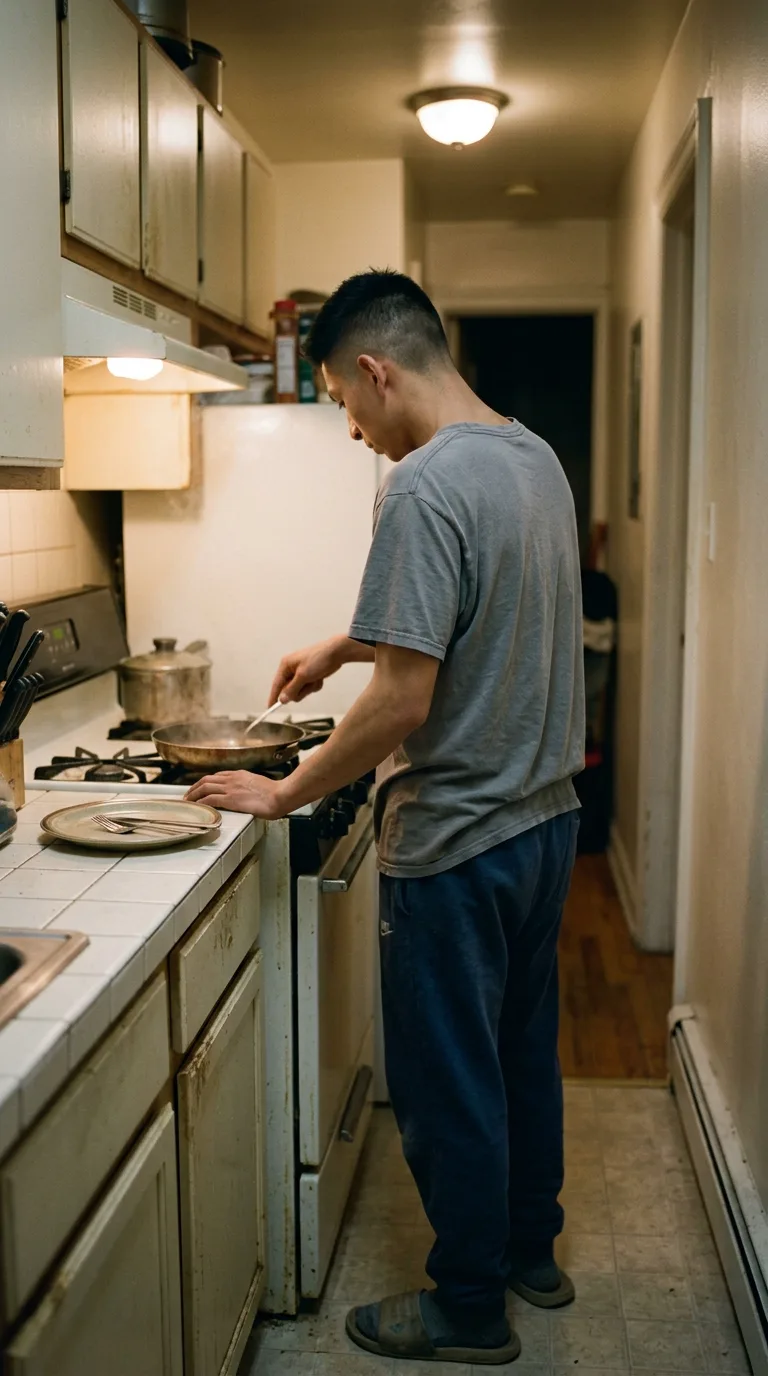
Rarest thing about him: A pack a day — rare, 1 in 16
Season 0seed 674948369 · engine v10
Character card
lineage 2NZHHJ
His body-swap story
@colin.hasbrook, wearing Sami Kanaan, rolled the wheel on and woke up as Elias Cabrera, spent 1 minute in him, then spun the wheel and woke up as Marcus Denny
The dirt is still under Sami Kanaan's nails when you decide.
You have been him less than a minute — standing in some rented field outside Atlanta with the afternoon flattening down on your shoulders, the scar through the eyebrow itching the way it always does when the sweat runs into it — and already you know you are not staying. It isn't the body. The body is fine, the body is a body, skinny fat and short and serviceable, and you could have kept him for a season if something in you had wanted a season. It's that you spun sixty-seven times to get somewhere and you keep landing in the same kind of life: a man alone with dirt or grease or debt, standing in a field or a garage, nobody waiting on him. You did not do this to collect quiet men. You did it because the wheel is there and paying for it feels like nothing at all, and today, for no reason you'd say out loud, the nothing itches like the eyebrow does. You take out your phone with Sami's hand, the one still faintly green at the knuckle, and you open the page you always open, and you spin.
It takes you standing at a stove, and it takes you mid-stir.
The wooden spoon is already turning the other way before you've finished arriving, your wrist — his wrist — correcting a circle that was going clockwise and now goes back, some old muscle habit closing over the gap where he was. Steam off a saucepan, garlic and something with cumin in it. A plate already on the counter to your left, one fork, one knife, laid square the way a person lays them when no one is watching them do it. You salt the pan without tasting it — his hand knows the shake, not you — and then you're reaching up into a cabinet, on instinct that isn't yours yet, and setting down a second plate beside the first. You don't know why you did that. Not yet.
Then the shirt tells you.
It's a soft gray T-shirt gone thin at the collar, and the second your shoulders settle into it you get him folding it, months ago, on a Tuesday, in an apartment that smelled like cut stems and cold water — Elias Cabrera, twenty-three, home from the shop with the green still under his nails same as the body you just left, which almost makes you laugh, except the memory isn't yours to laugh in. The shirt was a gift. Marisol gave it to him on some birthday that didn't feel like a big one, and he wore it into the ground because it was hers before it was his, in the sense that everything a person gives you like that belongs partway to them forever. She is not the girlfriend. She is the one before the girlfriend, the one who still turns up in a shirt collar and won't leave.
The sweatpants — navy, soft at the knee — bring back this morning, or a morning near enough to this one that it collapses into the same feeling: him pulling them on half-asleep after a closing shift that ran into 2 a.m., because Monday nights the shop does the funeral orders and somebody has to condition three dozen white roses under bad fluorescent light while everyone else in the city is asleep. That's the joke of the hour you're standing in — outside it's New York afternoon by the clock but inside him it's the deep dead hours before dawn, his body running on a night schedule his life never quite agreed to, and dinner right now is breakfast, or lunch, or whatever a plate is called when you eat it at an hour with no name. He calls it dinner because that's the shape it has. One pan. One person. He does this most nights he isn't at Camila's.
Camila. The name comes up through the spoon, the handle worn smooth exactly where his first two fingers sit, and with it a whole small history: a girl from the flower shop three blocks over who buys her bodega coffee at the register he stands behind, who laughed at something he said about carnations being the Bud Light of flowers, who has been staying over often enough that there's a toothbrush of hers in the cup by the sink he hasn't mentioned to anyone, not because it's a secret, just because it's new enough to still feel like something you could lose by saying out loud.
His feet, bare in slides on cracked tile, ache the good kind of ache — up from the arches, the cost of ten hours on a concrete floor at a wet bench, stripping thorns, snapping stems at an angle, hands doing that work so long they don't need his eyes for it anymore. Twenty-three and already the knees complain a little when it's cold. Skinny fat, soft through the middle in a way that has nothing to do with the forearms, which are wire and callus, which know a pruning shear's weight the way a hand knows a doorknob. Smoke sits far back in his throat, a pack-a-day rasp under the garlic smell, and there's an old empty patch where drinking used to be, a habit that just stopped mattering to him sometime last year, the way things do when nobody makes you quit and you quit anyway.
You feel, distantly, that he liked his life. Not loved. Liked, the way you like a song you don't own.
You look down. His hands — small scars nowhere, no ink, no rings, just weather and calluses and one thumbnail bruised faintly purple from a shear that slipped last week — turn the spoon over once more like they're checking it's real. You lift your eyes off them, into the low kitchen light, past the second plate you don't need and haven't taken away.
"Camila's gonna wonder why there's two," you say, out loud, to no one, in his voice, and you don't yet know if you'll be the one who has to explain it to her, or for how long that will even be your problem.