Otis Redmond
Fictional. Generated by AI — not a real person, and no likeness of one is intended.
64, retired in Atlanta · rolled by @colin.hasbrook · card — no film
History
who has worn him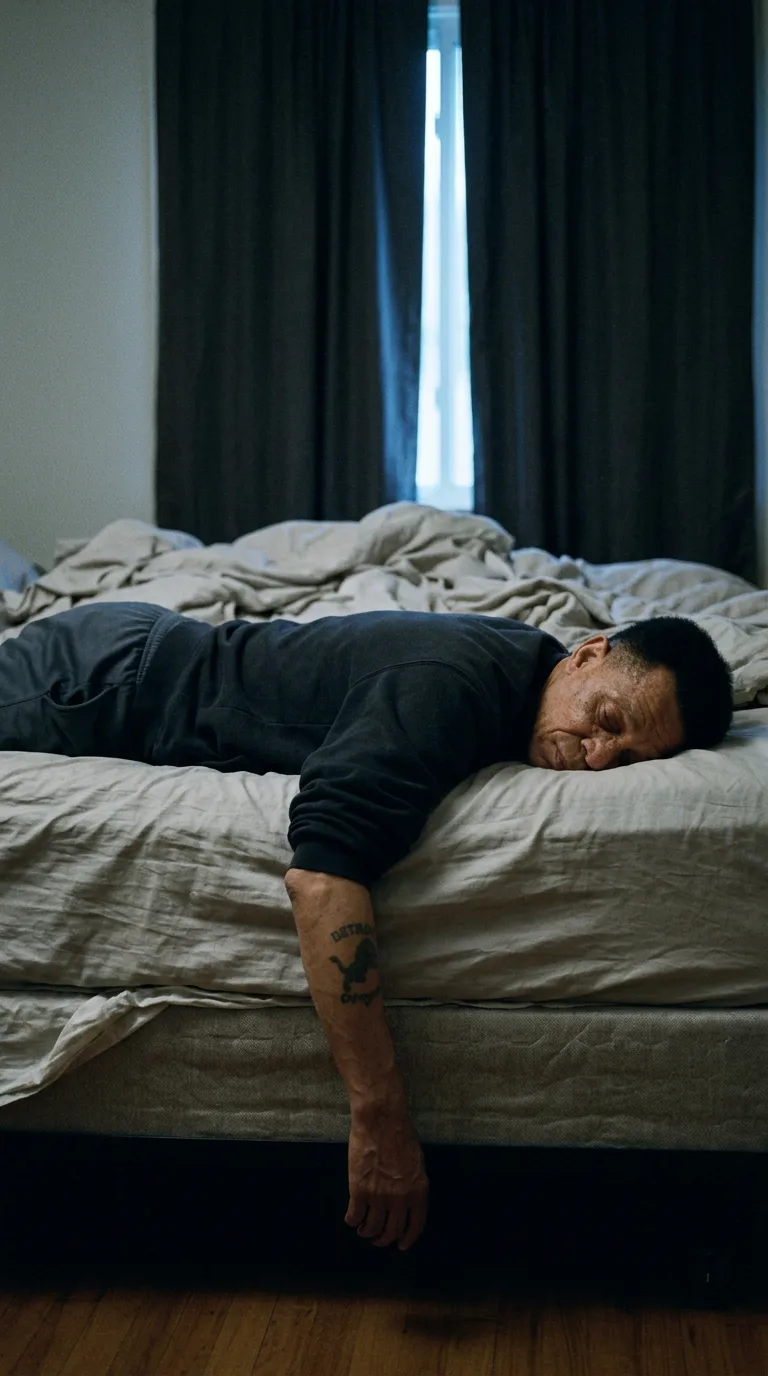
Rarest thing about him: Dyed black — epic, 1 in 57
Season 0seed 2114224907 · engine v10
Character card
lineage 2NZHHJ
His body-swap story
@colin.hasbrook, wearing Douglas Hearne, rolled the wheel on and woke up as Otis Redmond, spent under a minute in him, then spun the wheel and woke up as Kevin Chao
You are standing in Douglas Hearne's boots, in a stranger's barn outside Seattle, and you have just pulled a shoe off a gelding's hind foot when the animal shifts and steps square on the arch of that beautiful left foot.
The pain is enormous and stupid and exactly why you're leaving. Forty-nine years old, dimples, gray-silver hair, forearms like rope, and you spent this whole spin learning that a farrier's body is a body that hurts on a schedule — knees, back, now this — and that it belongs, every hour of daylight, to other men's horses. You liked the muscle. You did not like being property of a schedule. The gelding sidesteps, snorting, and Douglas Hearne's mouth opens on a word his own mother wouldn't recognize, and underneath the pain, clean and small, is the thought: *enough of this one.* Boredom wearing the mask of an injury. You've had sixty-two of these decisions already and they all sound the same by the end.
You reach into your pocket — his pocket — for the phone, thumb the site open one-handed while the horse's owner asks if he's all right, and you spin without answering her.
The barn goes.
You are lying on your back with your hands folded on your chest like a man laid out for viewing, and the air is thick and sweet the way Georgia air gets in the middle of a Monday afternoon, and there is a gap in navy curtains letting in one blade of white light. Your breath, a second ago ragged with pretend-sleep-that-wasn't-sleep, comes even. Fifty-nine pounds heavier through the middle than the barn body, five inches shorter, and every joint sits differently in this frame — softer, looser, a stomach that leads instead of a chest. Your arm, the one that had been hanging off the mattress, is already up and folded; the wheel does that part for you, always, before you're even looking through the eyes.
You open them.
Ceiling fan, unmoving. Sheets under you smell like sweat and a detergent with too much lavender in it. The pillow beside you is dented but empty and has been for a long time — you don't know that yet, but the dent will tell you in a minute.
Your hand is on the sheet. That's the first key. A flash: this same sheet, this same hand, gripping it at three in the morning eight months ago, chest tight, the particular flavor of dread that has a name and a bottle in the bathroom cabinet — *the anxiety ones, the little blue-and-white capsule, take with food, Otis, don't skip it just 'cause you feel fine* — his doctor's voice, a woman with kind eyes and no patience for skipped doses. The dread passes through you and out again, secondhand, the way all of it will be: his fear, not yours, borrowed like a coat.
You shift your jaw without meaning to — it's already clenched, has been since before you arrived, an old habit this body runs on autopilot — and that small movement opens something bigger. Otis Redmond's whole face, working in a mirror forty years ago, tie crooked, late for a Sunday service at Mount Ebenezer, his mother behind him fixing the tie herself and saying *you'll do*. Nicotine never touched these lungs — his daddy died wet and coughing and Otis promised the coffin he wouldn't. A drink now and then, weddings, a nephew's christening, nothing more; he never liked what it did to the clench in his jaw, made it worse the next day instead of better.
Your fingers find the sleeve of the sweatshirt still on you — navy, soft with age — and the memory comes up the arm like water finding a low place: this morning, or what was his morning, before whatever shift landed him horizontal at an hour honest men are on porches. Third shift at the distribution center, four years running since retirement wasn't actually retirement, since the pension came up short of what three kids and two divorces and one woman who mattered more than any of it had cost him over sixty-four years. Pulling the sweatshirt over his head in a dark room at 7 a.m., bone-tired, blackout curtains bought specifically for days like this, and thinking, the way he thinks every single morning, of her — Renata, gone nineteen years now, married to a dentist in Marietta, the one who got away clean and taken her laugh with her — and how none of the three women after her ever made him laugh like that, and how that was probably his fault and not theirs.
The tattoo is under your other sleeve, hidden, a crest gone soft at the edges with forty years of skin stretching around it — a team from a city he left as a boy and never once stopped rooting for out of pure stubbornness, the way you love a losing thing because leaving would mean admitting something about yourself. Your arm remembers getting it: twenty-two, a shop that smelled like antiseptic and cigarettes, a buddy laughing in the next chair, both of them too young to know forty more years would make the ink go the color of a bruise that never heals.
Three kids somewhere in this city or near it — grown, scattered, calling on birthdays, one of them calling more than the others, the daughter, and your chest — his chest — knows the exact weight of missing her without you having to be told a single fact about her face.
Your feet find the cold floor. Bare feet, a callus map only his own use built, over decades of standing at a register, a loading dock, a church usher's post, wherever the years put him. Freckles scatter warm across your nose in whatever light comes through that one gap in the curtain, and you understand, the way the body understands things a story can't quite hand you, why anyone would call that the thing you notice first about him.
You sit up. The sheets whisper off you. Somewhere in the house a clock you haven't located yet is keeping true Atlanta time, and it is the wrong hour for a man to be waking up, and some part of him — some tired, night-shift, grief-worn part — has known that wrongness every day for four years and stopped fighting it.
You look at your hands. Broader than you expected, freckled to the knuckle, a life of pallets and church programs and other men's steering wheels folded into them, doing nothing, for once, but existing in your lap.
You say, out loud, to the empty room and the gap of light in the curtain, "Well. Look at that."
Nobody answers. The clock ticks on toward whatever hour comes next, and you have no idea yet how many of them you get.