Douglas Hearne
Fictional. Generated by AI — not a real person, and no likeness of one is intended.
49, farrier in Seattle · rolled by @colin.hasbrook · card — no film
History
who has worn him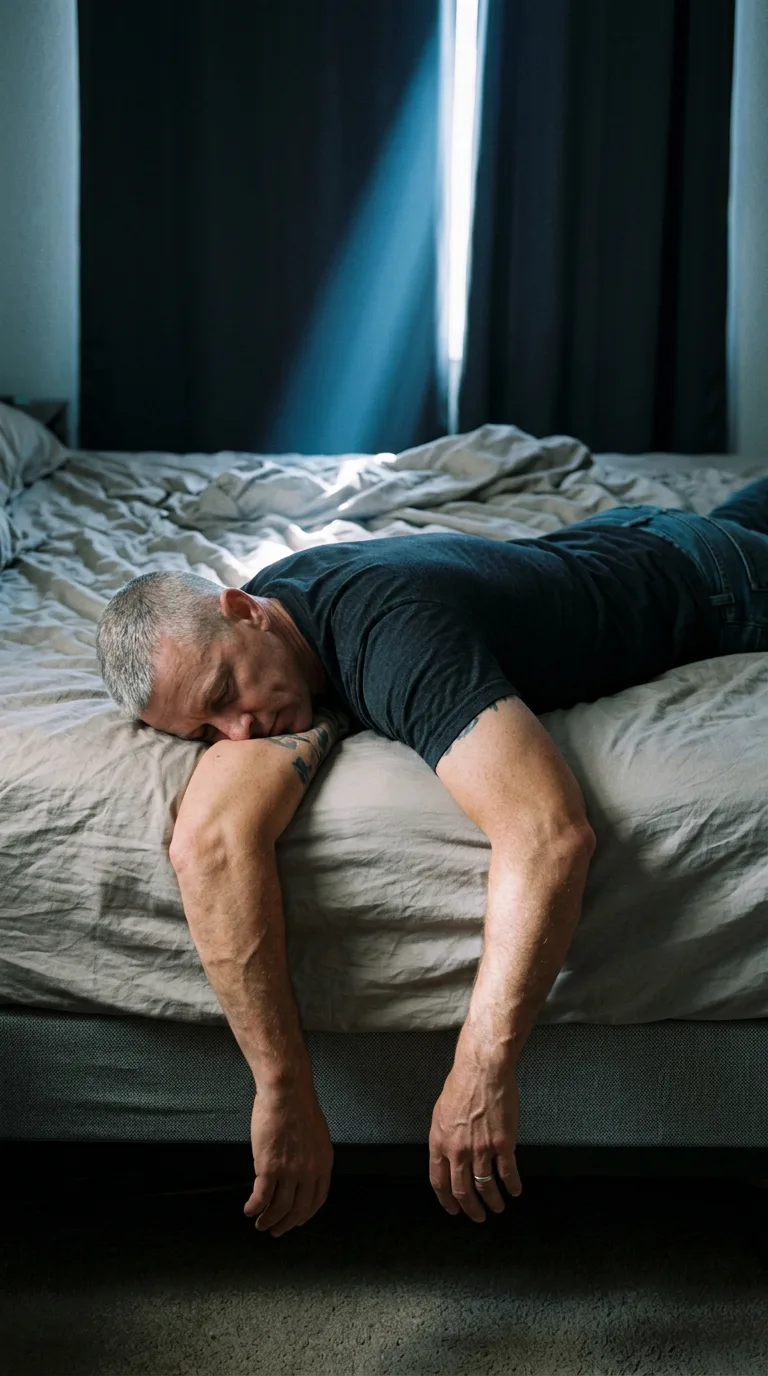
Rarest thing about him: Farrier — uncommon, 1 in 175
Season 0seed 427685523 · engine v10
Character card
lineage 2NZHHJ
His body-swap story
@colin.hasbrook, wearing Chris Delvecchio, rolled the wheel on and woke up as Douglas Hearne, spent under a minute in him, then spun the wheel and woke up as Otis Redmond
Chris Delvecchio's kitchen smells like burnt coffee and drywall dust, and his hands — soft, freckled, twenty-nine years old — are shaking a little around the phone. It's Monday, early afternoon in Small-town Ohio, and the panel he wired last week failed inspection, and his supervisor already called twice, and there's a girl he's been texting who stopped texting back three days ago, and none of it is unbearable, it's just enough. Enough that the itch comes back, the one that has nothing to do with Chris and never did. Sixty-one men worn and folded away, and Chris was supposed to be a rest stop, not a home, and this kitchen with its dead fluorescent bulb over the sink has started to feel like a rest stop you've overstayed. You open the site on his cracked phone screen. The wheel spins the way it always spins — too fast to watch, exactly slow enough to want to.
The room that receives you is dark and blue-curtained, and the body is already exhaling into a mattress. You arrive between one breath and the next: ragged, then even. Streetlight seams the curtain. There is weight here you didn't have a second ago — a heaviness in the shoulders, a low ache low in the back like the body has been standing on something hard for years. The arm that was hanging off the mattress lifts itself before you've decided anything, folds up onto the chest with the other one, and you are on your back now, staring at a ceiling you have never seen, in a posture this man has apparently never once slept in. Somewhere far off, underneath Ohio's afternoon, this is the middle of a Seattle day, and this man is asleep in it anyway, and that wrongness sits in the room like a held note.
The sheets under you are cool cotton, and touching them gives you nothing — sheets don't remember. But the ring does. A plain wedding band, left hand, and the second your attention lands on it something surfaces whole and warm: a courthouse in the rain, a woman named Renata laughing because neither of them had brought an umbrella, twenty-some years folding down into that one wet afternoon like it happened five minutes ago. Then a boy's face, older now than in the wedding memory, home from college and taller than his father, and the feeling that comes with him isn't a fact, it's a weight in the chest, proud and worried at once, the particular ache of loving someone you can no longer pick up.
You are lying on a bed you don't own in an apartment your body knows by feel before your eyes open. The gray-silver hair at the back of your skull is clipped close and hard-edged; your hand finds the line of it against the pillow and there's a flash — a barber named Duane, twenty years of the same Tuesday chair, the buzz of clippers a kind of meditation before a long stretch on your feet. Your feet. They ache low in the arches even lying still, a permanent bruise-deep tiredness that has a name — Douglas Hearne, farrier, forty-nine years old — and comes with the smell of scorched hoof and hot iron and the particular grip of a rasp handle worn smooth by your own palm. Diabetes lives in your body too, a dull hum you've stopped noticing, the meter in the bathroom, the finger pricks that don't hurt anymore because nothing does that you do to yourself every day.
The shirt against your back — you feel it now, its softness, its wear — gives you this morning, except it isn't morning, it's the deep dark before a shift, because this body works nights out at a breeding barn on the east side, foaling season, mares going any hour, and Douglas dresses for it every evening like other men dress for morning. You feel his hands, thick-knuckled, doing up this same gray shirt in a dim bedroom while Renata slept, quiet so as not to wake her, the small tender competence of a man who has dressed in the dark a thousand times so someone else could keep sleeping. His hands, when they're not working, go to his own cuticles, worrying at them, a habit he's never once noticed himself doing. You notice it now because you're doing it, unbidden, lying here.
There's a whole marriage in the pillow smell — Renata's shampoo, some argument years back about money that dissolved into nothing, the two of them slow dancing badly in this exact room once, drunk on champagne at New Year's, laughing at themselves. There's a boy who used to fall asleep in the truck on the way home from the barn, and grew up, and calls now on Sundays. There's the forge — the roar of it, the quench tub's steam, the particular satisfaction of a shoe seated right, nailed clean, no lameness in the trot after — a whole trade held in forearms that are strong in a way that has nothing to do with a gym.
You look at your hands. They are not the soft hands from the kitchen in Ohio; they are broad, scarred faintly along the knuckles, a plain gold-toned band on the left one, cuticles bitten ragged at the edges from a habit that isn't yours yet but already is. You turn the left one over, watch the light catch the ring, feel the whole weight of Douglas Hearne's ordinary devotions sitting in it like sediment.
You say, quietly, to the empty blue room: "Renata's gonna wonder why I slept through my alarm."
You don't know yet how long you'll let him wonder that with you in the driver's seat. Nobody does.