Warren Nakada
Fictional. Generated by AI — not a real person, and no likeness of one is intended.
51, engineering manager in San Francisco · rolled by @colin.hasbrook · card — no film
History
who has worn him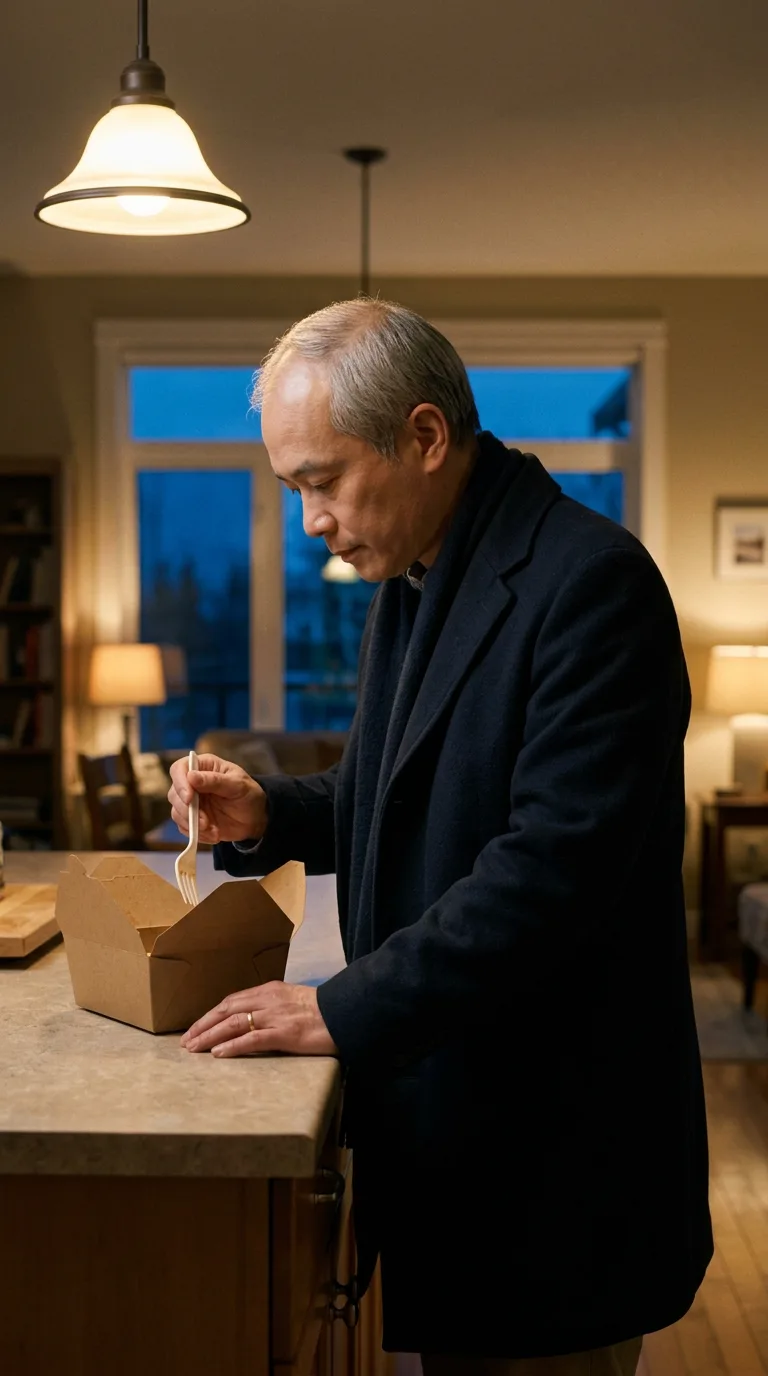
Rarest thing about him: Dip or chew — common, 1 in 31
Season 1seed 82845717 · engine v11
Character card
lineage 2NZHHJ
His body-swap story
@colin.hasbrook, wearing Trevor Aldridge, rolled the wheel on and woke up as Warren Nakada, spent under a minute in him, then spun the wheel and woke up as Derek Shimoyama
The scar through his eyebrow itches when he's about to do something he already knows is stupid, and it's itching now. Eastern Kentucky is dark outside the window, has been dark for hours, and the laptop is open on the desk with the wheel already spinning slow circles of color that don't mean anything until they stop. He told himself he wasn't doing this again tonight. He told himself that yesterday too. It isn't boredom, exactly — this body is fine, this body pays its bills and lifts weights in the garage and has a scar that makes women ask questions at bars. It's that the itch doesn't go away on its own anymore. It used to. Eight hundred and sixty-five men in, and the only cure that ever worked is the six hundred and eighty-fourth. He clicks. He doesn't let himself think past the click.
The counter is cold under your left hand and there is a fork in your right, halfway up, and you feel the whole trip stop midair like a film snagging on its reel. Weight settles into you all at once — shorter than you were, softer through the shoulders, fifty-one years sitting in the knees. The fork comes back down. Coat still on. A window in front of you holds nothing but your own reflection and the blue outside it, early evening bleeding into full dark, and for a second the reflection is the only thing that looks surprised, and it isn't even that.
You shrug the coat off one shoulder, then the other, the way a man does eleven thousand times without deciding to, and it slides onto the stool behind you, and that motion alone — the twist, the small catch of the collar on the back of the neck — opens a door. Not to a place. To a morning. This exact coat, off a hook by a door with a child's shoes lined under it, his wife's voice from another room saying something about the Muni delay, and Warren pulling it on over the blue shirt already buttoned, already rolled at the sleeves because he likes the cuffs up before nine even though he rolls them back down by ten for meetings. The shirt is against your back right now and it remembers itself: the chambray gone soft at the elbows from years of drafting-table friction, the lanyard he clips on last, always last, patting his own chest afterward like checking a heartbeat. Blueprints under one arm this morning, three rolled tight, corners worn round from handling. He'd carried them past the row of desks with the big prints pinned along the wall — his own annotations in red felt pen, a retaining wall detail somebody junior had gotten backwards twice — and felt, not pride exactly, just the flat competence of a man who has done a thing correctly for thirty years and expects to keep doing it.
The wedding band is tight in a way it wasn't twenty years ago, and touching it — your own thumb finds it without being told to — gives you a chapel with folding chairs, a woman in blue he still calls beautiful without performing it, a daughter now grown who calls on Sundays because he taught her that Sundays are for calling. Under the counter's edge your bare feet find the cold of the garage floor beneath the house, poured concrete that never really warms even in July, and the cold brings back the driveway above it, cut steep enough that he grips the rail every winter morning half-expecting ice that almost never comes in this city. A tin in his back pocket — he doesn't reach for it now but he knows it's there the way you know a back tooth — and the memory that comes with it is smaller and more private than the others: the taste under his lip at his father's funeral, the last time he let himself drink instead, and never again after, not one night since, not because a doctor said so but because he decided it in a parking lot and has kept the decision the way he keeps everything, quietly, without telling anyone it cost him something.
You lift the fork again with his hand — thick through the knuckle, a burn scar faded pale on the third finger from a soldering iron in 1994 — and eat in his exact rhythm, even mouthfuls, because grief and habit look the same from outside and this body doesn't know the difference either. The container empties. The window holds his reflection and gives nothing back.
You look down at the hand holding the fork like it arrived separately from you, turn it over once, palm up, the burn scar catching the cold white light from over the sink.
"Long day," you say, to the window, to no one who's listening, and it comes out in his voice, easy, a little tired, a man's whole life folded into two words he says most nights and means less each time — and you let your eyes come up off the hand and hold there, steady, on the dark glass, on whatever's behind it.