Trevor Aldridge
Fictional. Generated by AI — not a real person, and no likeness of one is intended.
40, cybersecurity analyst in Eastern Kentucky · rolled by @colin.hasbrook · card — no film
History
who has worn him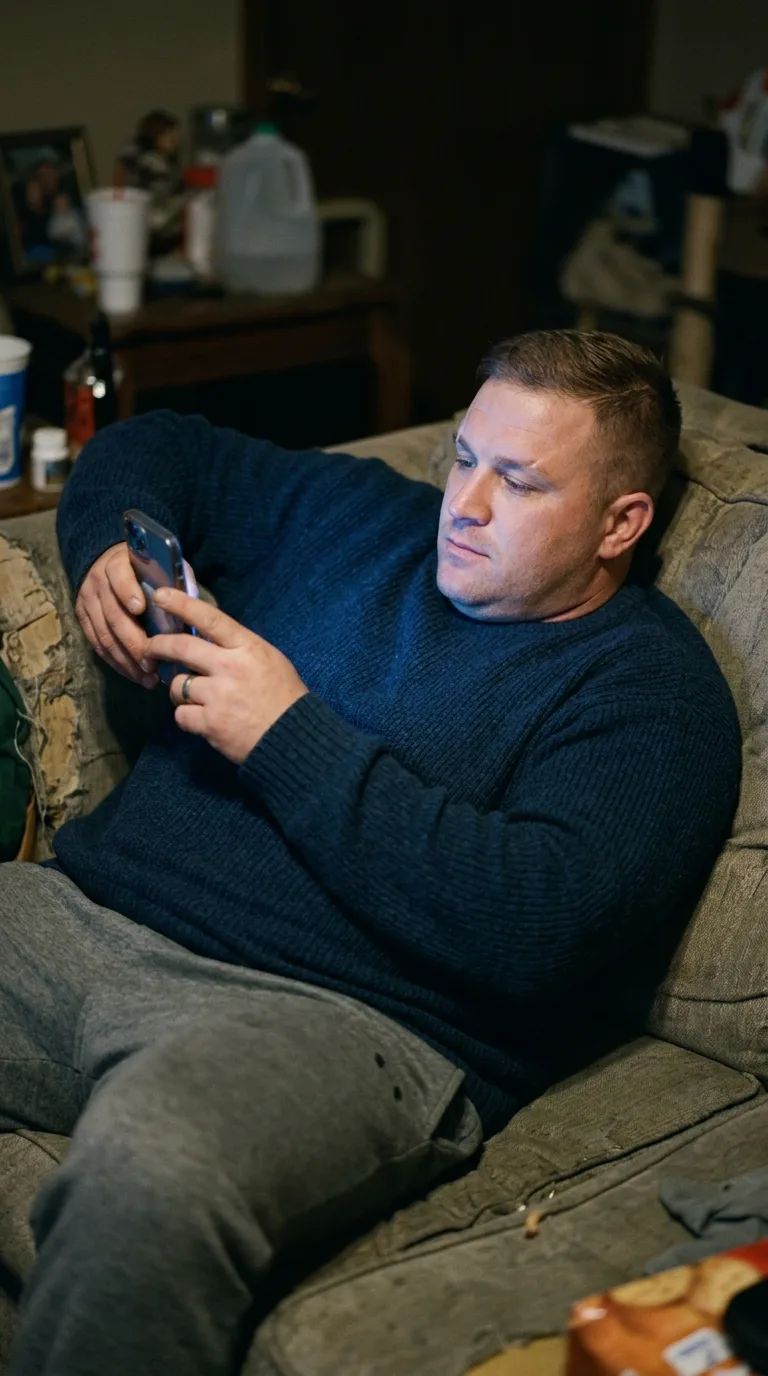
Rarest thing about him: Cybersecurity analyst — common, 1 in 439
Season 1seed 1716534090 · engine v11
Character card
lineage 2NZHHJ
His body-swap story
@colin.hasbrook, wearing Everett Standing Bear, rolled the wheel on and woke up as Trevor Aldridge, spent under a minute in him, then spun the wheel and woke up as Warren Nakada
Everett Standing Bear's office smells like cedar and money, and you have been him for less than a minute when the wanting comes back — that particular itch behind a stranger's sternum that has nothing to do with the body you're in and everything to do with what's still out there, unspun. Sixty-one is a fine age to be rich in. It is not a fine age to feel your pulse do what it just did climbing one flight of stairs. You stood at the window with the fog coming in over the bridge and thought: not this one, not tonight, and your thumb was already moving toward the card in your pocket before the thought finished.
The wheel doesn't care that you just landed. It only cares that you paid again.
It stops on a couch in Eastern Kentucky, and you arrive already reclined, already mid-thumb, the phone's light doing something to your face that a real man's face wouldn't let it do — no blink, no drift, just the scroll picking back up, faster, cleaner, a machine's rhythm wearing a tired man's hand. Around you: a coffee table with a gallon jug of water sweating a ring into the wood, a bottle standing sentinel next to a stack of Solo cups, a photograph turned half away from the room. The couch holds you the way an old couch holds a body that's sat in that exact groove ten thousand times. Your leg is already bouncing. It was bouncing before you got here and it doesn't stop for the changeover.
The sweater comes first — navy, ribbed, soft with age — and with it a morning: pulling it over his head in a bedroom with the closet door that never sits flush, cold enough outside to want the wool, sleeve catching a second on the leftover ache in his shoulder from lifting something the day before at his brother-in-law's. Not his brother-in-law's anymore. Ex-brother-in-law's. He'd worn the sweater anyway, out of spite or comfort, hard to say which, and the thought had made him laugh once, short, alone in the room.
The ring tan on your finger burns colder than the rest of the skin somehow, a stripe that's forgotten what it's for. Touch it and you get the wedding — not the whole thing, just a piece: her hand steadying his while the officiant talked too long, the two of them twenty-six and sure. Then, without transition, the piece that comes after all marriages that end: papers on a kitchen table he doesn't own anymore, her name in a box he had to check, the two kids' voices down a hallway asking why Dad's stuff was in boxes. He signed it standing up. He remembers that specifically — refusing to sit for it.
The couch cushions know his weight the way water knows the shape of a stone that's rested in it a long time — the dip is his dip, worn by nine hundred evenings like this one, phone-lit, alone, the house otherwise quiet because the kids are with their mother tonight and Thursdays are his to lose to whatever's on the screen. The security room comes back through the memory of a chair, not this one — a rolling chair, six monitors throwing blue across his face for eight, ten, twelve hours some weeks, alerts scrolling, coffee going cold, the particular tired that isn't sleepy so much as scraped. He is good at the job. He has been told this by people who would know. It has never once made him feel like anything.
Underneath the sweater: forty years of a body built wide and solid rather than lean, shoulders that have carried furniture and carried grief about the same way, a stomach he stopped fighting with somewhere around thirty-five, hands that know a keyboard the way a man's hands know a wrench — without consulting him first. The scar through the eyebrow surfaces last and smallest: a kid, a low branch, a creek he can't place exactly except that it ran brown and the footbridge over it swayed if you ran, which he had been doing, which is why the branch found him. His father laughed about it for years. His father is three years dead now and the laugh comes back anyway, riding in on the scar like it never left.
The bottle on the table is his and it isn't the first of the night and won't be the last; that arrives too, not as a memory so much as a fact of the body, a warm slow edge already sanding down whatever this evening was going to be before you got here.
You look at your hand — his hand, wide, a callus at the base of the trigger finger from something the memories haven't handed you yet — turning it in the blue light like it might tell you something the wheel didn't.
"Didn't think I'd miss the fog," you say to the empty room, to no one, and your leg keeps bouncing like it never heard you speak.