Everett Standing Bear
Fictional. Generated by AI — not a real person, and no likeness of one is intended.
61, chief executive in San Francisco · rolled by @colin.hasbrook · card — no film
History
who has worn him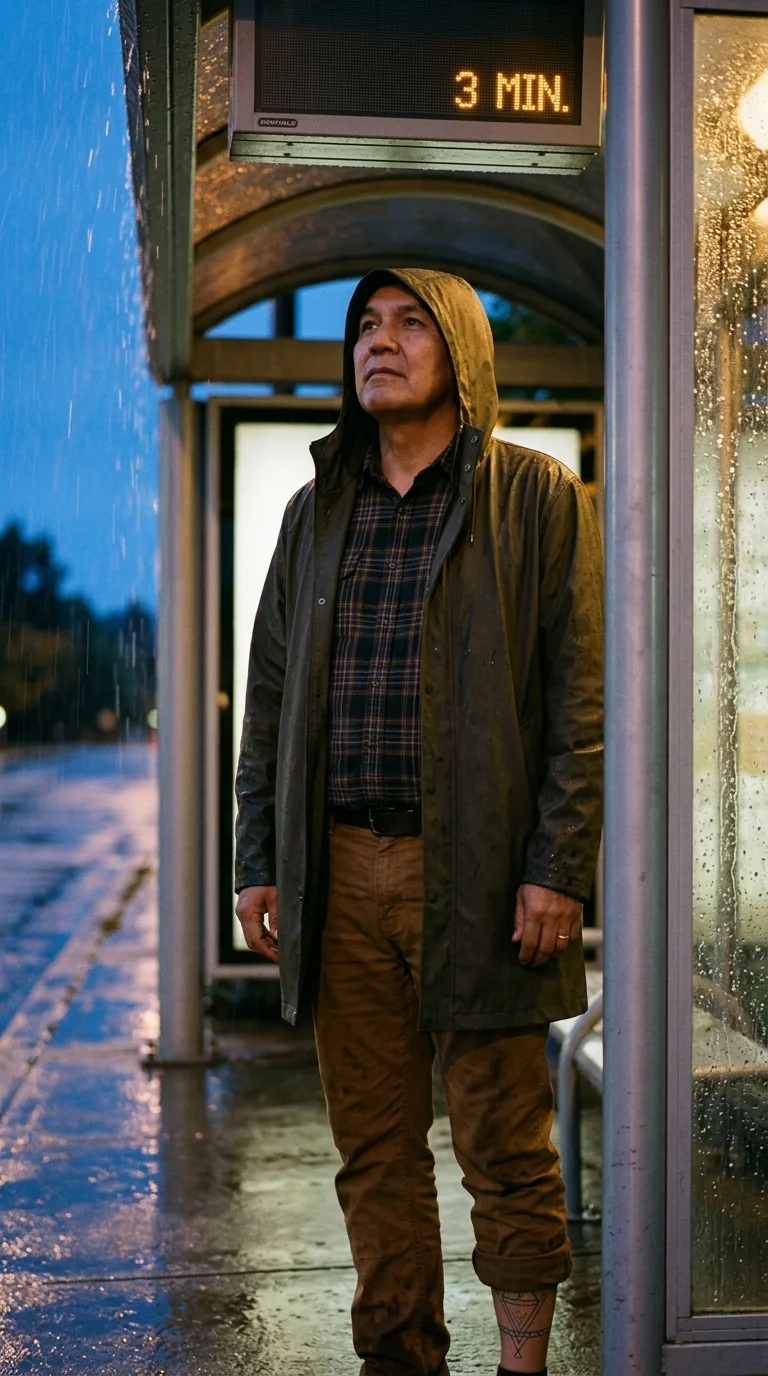
Rarest thing about him: Leg — common, 1 in 54
Season 1seed 1486525487 · engine v11
Character card
lineage 2NZHHJ
His body-swap story
@colin.hasbrook, wearing Shane Ostrander, rolled the wheel on and woke up as Everett Standing Bear, spent under a minute in him, then spun the wheel and woke up as Trevor Aldridge
You are sitting on Shane Ostrander's kitchen floor because it is the only place in the house the baby monitor doesn't reach, and you have been him for less than a minute, and already you know you cannot do this again tomorrow. Blond hair damp at the collar from bath duty, a beauty mark you keep catching in the microwave door's reflection, a beard you didn't grow and don't recognize the weight of. Somewhere upstairs a two-year-old is finally asleep and a wife you have known for forty seconds of shared marriage is folding laundry and calling this man's name, softly, like she loves saying it. You feel the love arrive with the body, secondhand, and it is unbearable precisely because it is not yours and never will be. Thirty years old going on however many spins from now, stay-at-home, competent, gentle, boring in a way that has nothing to do with him and everything to do with what you keep doing to men like him. You open the site on his phone with his thumb, the wheel already spinning in your head before your finger touches it.
The wheel lands and there is no seam, no falling — just the rain, already on your face, and a board reading 3 MIN going soft at the edges through water, and a hood that has slipped back off skull you didn't have a second ago. Sixty-one years of gravity settle into your knees all at once. You are standing at a bus shelter with your face turned up into the runoff, not flinching from it, a man's whole weight arranged like he has been standing in worse than this his entire life and found it did not kill him.
The coat is heavier than it looks — waxed canvas, soaked through at the shoulders — and it gives you the drugstore first, cheap and immediate: buying it because his wife laughed at the one he had, said it smelled like a dead animal, and he'd stood in the aisle at Ross feeling sixty-one and rich and somehow still a man who bought his own coats on clearance. That's Everett. That's the whole of him arriving sideways, through canvas.
The shirt underneath — plaid, flannel, worn soft — brings his hands doing up the buttons that morning, standing in the walk-in closet of a house in Pacific Heights with floor-to-ceiling glass and a view he still isn't used to loving, forty years after leaving the reservation outside Lame Deer for a scholarship nobody in his family understood the shape of. He'd dressed slow. Thursday meant the board call at four, meant the Merrick account closing or dying, meant he could wear whatever he wanted after five because nobody photographs a CEO waiting for a bus. His wife, Diane, had said something about the Andersons' dinner Saturday and he'd said uh-huh and not heard a word, thinking about the toothpick in his jacket pocket he'd need before the call, the one his hands would find without him looking, the habit that had outlasted three therapists and one very bad year.
The pants — corduroy, warm even wet — give you Rhonda. Not his wife. The one from before, the one who used to fold his laundry in a dorm room in Missoula and tell him he'd own something someday, and he had laughed at her, and now he owns four companies and a house with a garage cut into a hill so steep the driveway ices in January, and Rhonda is somewhere in Billings with a life he has never once tried to find, and he thinks of her maybe twice a year, always in weather like this, always without meaning to.
The wedding band is small and plain and it does not resist you the way some memories do — it comes easily, gladly almost: thirty-one years, a woman named Carol who married him back when he had nothing but a business degree and a stubbornness nobody could account for, who is at this exact moment two miles away starting dinner for one because he texted he'd be late, who does not yet know that late tonight means something different than it ever has. One child, a daughter, thirty-four, a doctor in Sacramento who calls every Sunday whether or not he answers.
The tattoo on the calf — you don't feel it through the sock and the rain, but it's there anyway, underneath, geometric and fine-lined, put on at forty-nine on a dare from his daughter, the one reckless thing on a man who otherwise built his whole life out of load-bearing caution. Evangelical since a grandmother dragged him to a revival tent at nine and it stuck when nothing else from that decade did. A toothpick, chewed to nothing, riding in his shirt pocket right now, and your jaw wants it before you've decided anything.
You feel all of it land in a body that is heavier than the last one, slower to turn the neck, a low ache in both knees that has been there since a company softball game a decade back and never fully left. Strong through the forearms still. Hands that have signed things that mattered and shaken hands that didn't. A man who has not been cold like this — really cold, standing-in-it cold — in longer than he could say, because somewhere in the last twenty years comfort became automatic and he stopped noticing it, and some small stubborn animal part of him missed the noticing.
You lift your hand out of the water and look at it — brown, broad-knuckled, a stranger's wedding ring catching the shelter light — and you turn it over once like you're checking it's real, because it isn't yours and it is now.
"Bus can wait," you say, out loud, to no one, in a voice that isn't yours either, and you don't move for the door.