Warren Castellano
Fictional. Generated by AI — not a real person, and no likeness of one is intended.
58, dentist in High-desert Nevada · rolled by @colin.hasbrook · card — no film
History
who has worn him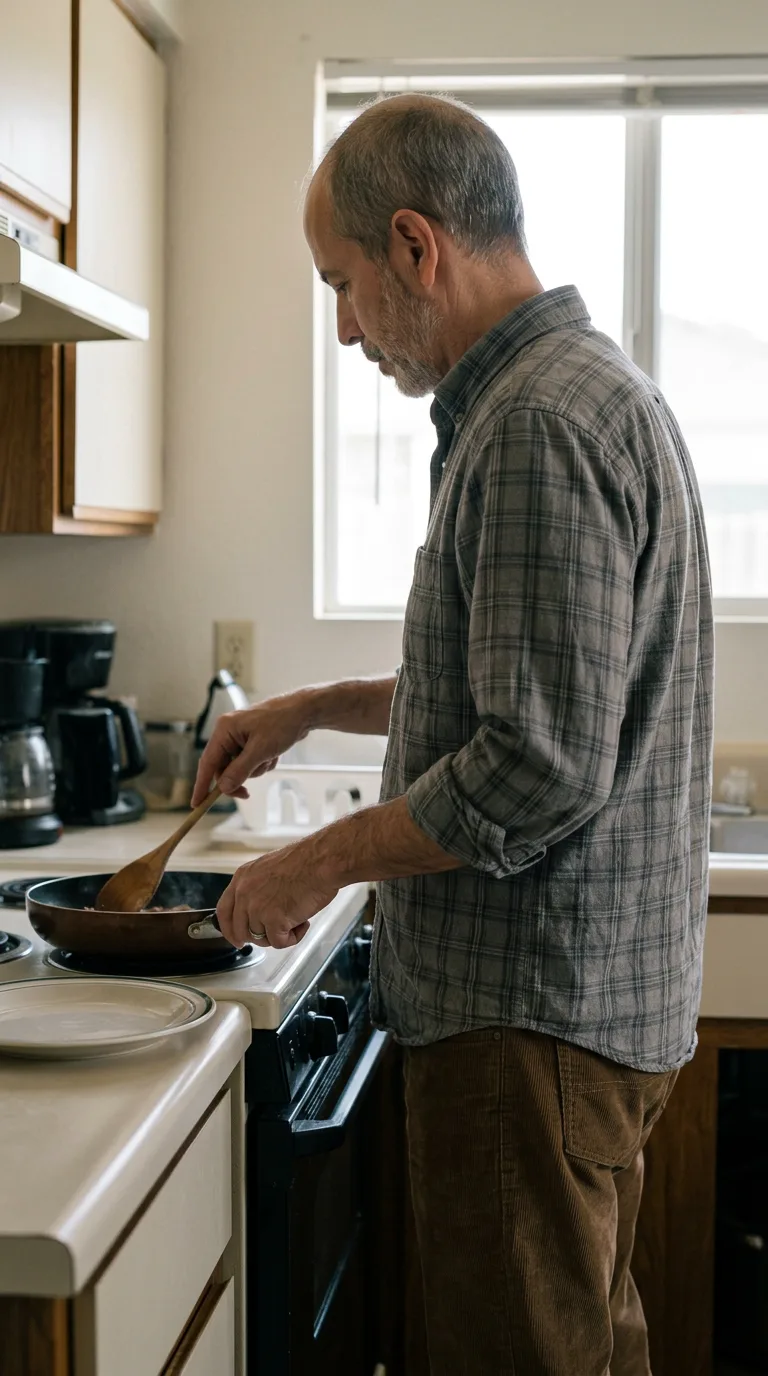
Rarest thing about him: Dentist — uncommon, 1 in 951
Season 1seed 1036778249 · engine v11
Character card
lineage 2NZHHJ
His body-swap story
@colin.hasbrook, wearing Amir Haddad, rolled the wheel on and woke up as Warren Castellano, spent under a minute in him, then spun the wheel and woke up as Douglas Fenneman
The nose still isn't right. That's the thing you keep noticing, eleven o'clock on a Thursday, standing in a dorm kitchenette that smells like someone else's ramen — you keep touching the bridge of it with a knuckle, the little crooked place where it healed wrong before you ever got here, and it isn't yours to be annoyed by, but you're annoyed by it anyway. Nineteen. Brown eyes, brown hair, a body that runs a little soft no matter what the gym schedule says. You've had him less than a minute and you're already bored in the specific way that isn't about him — it's about you, about how eight hundred and four men have taught you that the first minute in a new one is a held breath and this one exhaled wrong. Nothing's happened. Nothing's going to happen. He has a paper due and a roommate asleep in the next room and a whole life you could, if you wanted, actually live for a while. You don't want to. You want the wheel the way you always want the wheel, which is to say you don't examine it, you just open the laptop, and the page loads the way it always loads, patient, expensive, humming with everyone it has ever been.
You spin.
The spoon is already moving when you arrive, and you almost fight it — old reflex, the wrongness of a hand doing something you didn't tell it to do — but the circle just changes direction under you, slows, and you let it. Onions and something browned going the other way now in a pan that's seen forty years of Thursdays. The overhead light in this kitchen is the flat gray-white of a desert morning through a blind that's only half up, and your back is warm from a window you can't see, and your knees — both of them, distinctly, separately — ache in the low patient way of a man who has stood at counters and hunched over other people's open mouths for three decades. You are shorter than you were a second ago. Heavier through the middle in that soft loose way that isn't fat exactly, just less than there used to be. There's a wedding band on the hand holding the spoon and it is warm from your own skin, which means it's been on this hand a long time.
You salt the pan without tasting it — the salt already thrown before you can decide to throw it, muscle doing what muscle does — and then your hand goes, on its own, to the cabinet, and comes down with a second plate, and sets it beside the first one on the counter, and that is the moment his whole life starts arriving through your fingers like current through a wire you didn't know was live.
The plate first — cool ceramic, a hairline chip on the rim you feel before you see — and it's Daniel's plate. Not a name you knew a second ago, just there now, the way a word is there when you remember it: Daniel, across this same counter, laughing with his mouth full about something on the AM radio, years and years back, before the trailer even had the second coat of paint on the skirting. Daniel who is not dead, who left, who is somewhere in Reno now with somebody else's name on his mail, and who Warren still sets a plate for on nights when the quiet gets to be too much of an argument to have with himself. The one who got away isn't a metaphor here. It's a plate. It's a habit forty years deep that outlived the marriage that came after him.
The spoon in your hand next — worn smooth, the handle darkened where a thumb has worried it for longer than either of you has been alive in this body — and through it comes the other marriage, the real one, the one with a ring still on this hand: Carol, twenty-six years of her, the hospice bed they'd put in what used to be the sewing room, her hand in his so light at the end it was like holding something that had already mostly gone. A daughter somewhere — grown, calls on Sundays, worries about him out here alone with the sagebrush and the wind — and grief that isn't sharp anymore, just weather, just something the trailer has learned to hold the way it holds heat.
The shirt on your back — plaid flannel gone soft with washing — gives you this morning in the order he lived it: sitting on the edge of the bed with the light still blue outside, working the buttons one-handed because the left shoulder doesn't love reaching anymore, the small satisfaction of getting the sleeve right the first try. Corduroys that remember being pulled on standing, one hand on the dresser for balance because fifty-eight is an age the body mentions to you now, quietly, in the knees, in the low ropy ache across the lower back from bending all day over the reclined heads of strangers with their mouths open and their trust given over without thinking about it. Hands that know, without being told, the exact pressure of a scaler against enamel, the little economies of motion that thirty years teaches and never announces. Hands gentle with a spoon the same way they're gentle with a molar.
He isn't unhappy. That's the strange, plain thing that comes up last, quietest of all the memories, easy as breath: spiritual in the way of a man who watches the light change on the Shoshone range and calls that enough church for one lifetime, sober by nature and not by struggle, never smoked, never needed to. A man doing well for himself in a trailer he stays in because he likes the quiet and the stars, not because he has to. A second plate out of habit and love and a little bit of not-quite-loneliness, cooking for one the way some men set a place for someone they buried or someone who left, because some part of you keeps the table the way it always was.
You look down. The hand on the spoon has a wedding band worn thin at the bottom from forty years of turning. The knuckles are bigger than any hand you've worn in months. You turn the hand over once, like checking it's real, like checking it's yours, and it is, for now, entirely and only yours.
"Two plates," you say, to the empty kitchen, and you almost laugh, and you don't take it back down to one.