Warren Bhatt
Fictional. Generated by AI — not a real person, and no likeness of one is intended.
60, sanitation worker in Small-town Ohio · rolled by @tyler.iverson · card — no film
History
who has worn him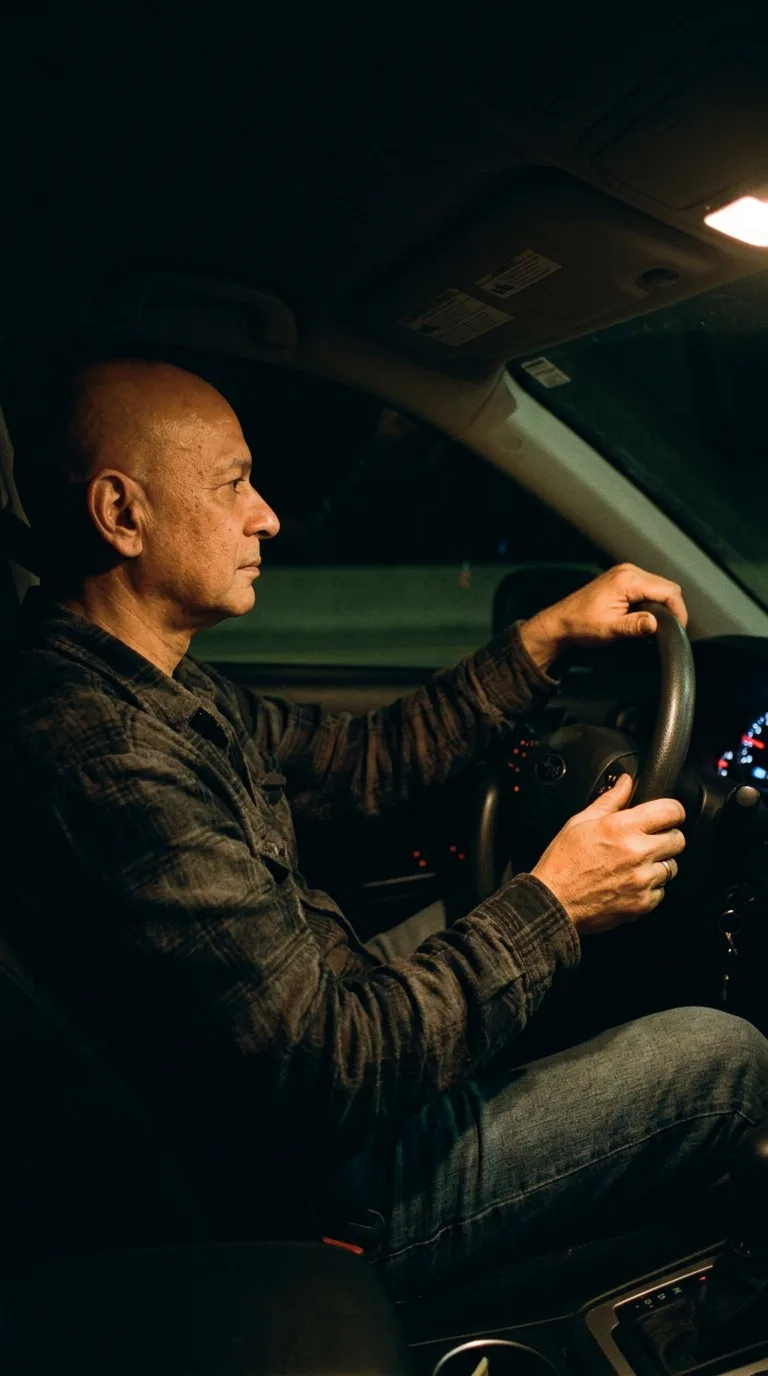
Rarest thing about him: South Asian — rare, 1 in 27
Season 0seed 1407379239 · engine v10
Character card
lineage 9IC4OB
His body-swap story
@tyler.iverson, wearing Dennis Yamashiro, rolled the wheel on and woke up as Warren Bhatt, spent 5 minutes in him, then spun the wheel and woke up as Gary Ostrand
---
The kitchen smells like other people's fish, and that's the problem.
You have been Dennis Yamashiro for two minutes, standing in his galley kitchen with his hands wrapped around a mug he hasn't drunk from, and already you know this was a mistake. Not a bad body — a decent one, wiry, a nose that healed crooked, a life on the water that comes through in the calluses. But it is eleven in the morning on a Saturday and Dennis Yamashiro's kitchen smells like a bait bucket that never got emptied, and there is a woman's voice upstairs saying a name that is not yours and was never going to be yours, and you understand with total clarity that you do not want two minutes of this, let alone a lifetime. Some bodies you settle into like a chair. This one you're already standing up out of. You set the mug down still full. You are not sentimental about it. You are already gone before your fingers leave the handle, already thinking about the page with the wheel on it, the way you always do the second a body stops being interesting — which for you is fast, faster than you'd admit to anyone who asked, if anyone could ask.
You spin.
—
The turn signal is already ticking before you have hands to feel it with, before you have eyes to see the dash by. Then you do: two hands at ten and two, low and wide, not yours a half-second ago and yours now, and the smell is upholstery and cold air through a cracked window and something faintly antiseptic, a hand-sanitizer smell worked into the fabric of a jacket sleeve. The road ahead is one lane each way, unlit, a green sign flashing past too fast to read. Your foot is already easing off the gas for an exit. Outside it is dark enough that you understand, distantly, that wherever this is, it is not the same hour you left.
You are sixty. You feel it immediately, not as a number but as a low ache riding across both shoulders and down into the lower back, the specific tiredness of a body that has been lifting since six that morning and driving since should-have-been-home. The bald scalp is cool where the window vent hits it. There's a wedding band pressing cold against the wheel.
—
The steering wheel gives you the first of it — thousands of hours worn into that grip, and under your palms a flash of a man's hands doing this same ten-and-two on this same road so many times it isn't memory anymore, it's just how the hands sit. Then more: this stretch of highway at dawn instead of dark, the truck idling behind him, other men's voices.
The jacket sleeve against your forearm gives you a morning — not this one, an early one, cold enough to need it, flannel over a thermal shirt, pulling it on in a bedroom with the shade still down because Priya likes to sleep past his alarm even though she's awake, always awake, just pretending so he doesn't feel bad leaving her. Warren Bhatt. The name arrives with the shirt cuff, the way a scent arrives before a face. Thirty-one years married. No kids — there was a stretch, in the thirties, when that ate at both of them, and then there wasn't, and now it's just a fact about the house, the quiet in it after six a.m.
The gloves aren't on his hands right now but the memory of them is stitched into the fingers anyway: the truck's back step at six, the cold rail, Ohio in November, the particular rhythm of grab-hoist-toss that his body could do asleep, has nearly done asleep, twice. Twenty-two years on the route. Men who retired or moved on, a foreman who calls him "the Rock" because he's never once called in. A boss's voice, half-affectionate: *Bhatt, you're the only guy who shows up on Ash Wednesday and doesn't complain about giving anything up.* He isn't Catholic. He laughed anyway, every year.
Church comes through the collar somehow, a Sunday stiffness worked into the fabric near the throat — a small evangelical congregation two towns over, a pastor who prays for the harvest even though nobody there farms anymore, his and Priya's hands joined on the pew between them. A pill bottle in the bathroom cabinet, sertraline, five years now, and the relief of a doctor who didn't make him feel small for asking. A body that carries worry in the jaw and the space between the shoulder blades, worry that used to come out sideways, in silence, until the pills took some of the teeth out of it.
The wheel itself gives you the last thing, the reason for the dark and the drive: a nephew's birthday two counties over, cake in a box on the back seat that you can smell now, sugar and grocery-store frosting, and the tiredness of a man who worked a full shift, went to a party he didn't want to skip, and is three miles from a bed that has Priya warm in it, waiting up probably, texting *almost home?* an hour ago. The turn signal ticking for an exit that isn't his — his is the next one — comes through as pure animal wrongness, a held breath, though the hands don't know yet why they're uneasy.
You correct the wheel a foot before you even decide to. His hands, not quite yours yet, already knowing this road better than you do.
—
You take the right exit. You breathe out.
Your hand comes off the wheel first, then the other, and you hold them up in the dash light — brown, thick-veined, a plain gold band catching the glow, knuckles that ache in a specific, familiar way you have never felt before this second. You turn the right one over slowly, like checking it for something.
"Almost home," you say, out loud, to no one, in his voice, and you don't know yet if that's a promise or just something to say into the dark before the next light changes.