Gary Ostrand
Fictional. Generated by AI — not a real person, and no likeness of one is intended.
43, wrestling coach in Lagos · rolled by @tyler.iverson · card — no film
History
who has worn him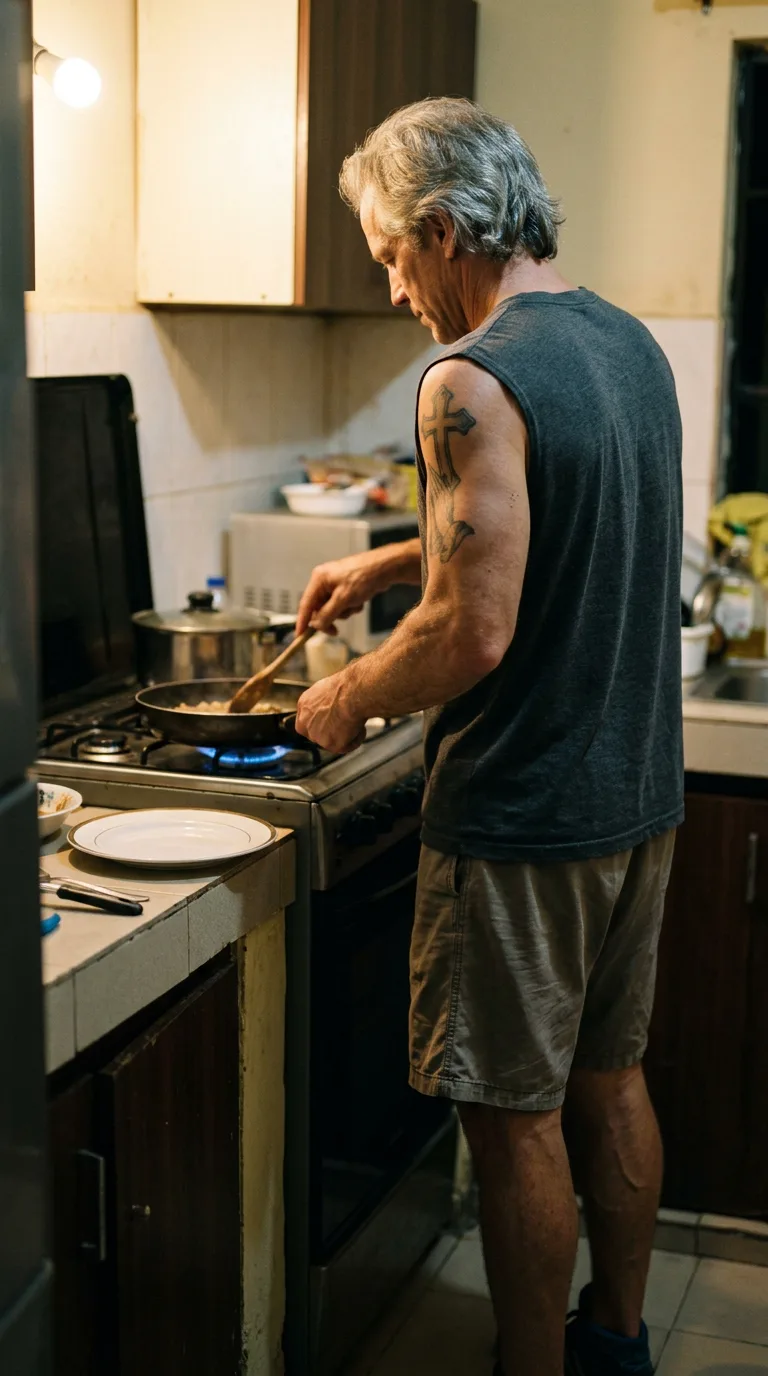
Rarest thing about him: Lagos — legendary, 1 in 8,838
Season 0seed 1098915881 · engine v10
Character card
lineage 9IC4OB
His body-swap story
@tyler.iverson, wearing Warren Bhatt, rolled the wheel on and woke up as Gary Ostrand, spent 4 minutes in him, then spun the wheel and woke up as Julián Reyes-Whitfield
The four minutes as Warren Bhatt taught you something you didn't want to know: that a body can be so tired it stops being interesting even to the thing wearing it. Sixty years old, bald under a fluorescent bathroom light, standing over a bathroom sink in Ohio with a trash truck idling somewhere down the block waiting for a shift that wasn't his to finish. Your back — his back — had ached in a low, dumb, permanent way, and his knees had ached to match it, and you'd looked at his brown eyes in the mirror for exactly as long as it took to think: no. Not this one. Not tonight. You didn't hate him. You just didn't want to be him for one more breath, and there is a wheel that never asks you to explain that, only to pay again.
So you spin, and the gray of the bathroom tile drops away into nothing, and there is a stove.
The spoon is already moving before you have a hand to move it with. You feel the arm first — leaner than the one you left, a working forearm, tendons standing when it turns — and the stirring motion stutters, catches, reverses, going the other way now for no reason you gave it, just because whatever was steering it before let go and you took the wheel a half-second late. Salt goes into the pan from a shaker that is still in mid-tip, muscle memory finishing a motion he'd already started. You don't taste it. You wouldn't know what he was making even if you did. Behind you, a kitchen with tile the color of weak tea, a window with bars on it, the blue ring of gas flame the only clean light in the room, everything else the orange of one bulb doing its best.
The cupboard door is still swinging where his hand — your hand now — pulled a second plate down and set it beside the first without deciding to. Two plates. One pan. You stand there a second inside a body that is doing things ahead of you, and you let it, because this is always how it starts: him keeps moving for a breath or two before you catch up to what he was.
Then the touching starts telling you things.
The spoon handle, worn smooth on one side where a right thumb has pressed it a thousand times: a woman's voice, not unkind, saying *you always cook enough for two, Gary, we've been divorced four years* — and it isn't a memory of an argument, it's almost fond, the way she says it now when she picks the kids up, like it's a thing she's stopped being annoyed by and started just noticing about him. Divorced. Three kids, maybe four, a whole scattering of school forms and weekend custody and a fridge with drawings on it from when they were smaller than they are now. You feel where the ache of that lives — not sharp, just present, like the wrestling room floor is present under his feet at seven in the morning.
The sleeveless hoodie against your back gives you the gym before it gives you anything else: fluorescent light off a mat, the particular smell of a school gym in a country that is not his, the whistle's cord looped and looped again around his knuckles because he's tied and untied that lanyard a thousand times without looking at it. Wildcats Wrestling, the shirt says, faded to a memory of navy, and it is a memory of an actual place, a program he built somewhere else a long time before Lagos, before whatever brought him here to coach boys who call him Coach G and mean it. His shoulder throbs where the tattoo is — cross and praying hands, put there the year his father died, the pain of the needle folded now into the pain that just lives in that joint all the time, arthritic, old rope pulled too many times through the same worn groove.
His hands want a cigarette. That want is not yours and arrives anyway, a small itch along the fingers that have bitten their own nails to the quick — you feel the ragged edge of a thumbnail catch on the wooden spoon and it is such a small, human, embarrassing detail that it almost undoes you: a millionaire, they say, a man with numbers behind him that would buy this whole shuttered street, and still he chews his nails like a boy waiting outside a principal's office.
The shorts, the shoes by the door still laced from practice, the whole sunbaked day of it — boys drilling takedowns on a mat gone soft at the edges, the generator outside coughing to life when the power cuts, harmattan dust turning the sun into a coin you could almost touch — all of it comes up through his feet standing on tile still warm from the day's heat trapped in the building. He loves them, the boys. He does not love being here, exactly, but he has stopped asking the difference.
And under all of it, quieter, the plain fact of eating alone most nights and still, every night, without deciding to, setting out two plates.
You look down. His hands — nails bitten close, one knuckle scarred pale from some mat years ago, gray hairs on the forearm catching the stove light — turn the spoon over once like you're checking it's real, and it is, and it was always his, and now it's temporarily nobody's but yours.
You look up, past the second plate, into the dark window over the sink where his own reflection should be looking back and isn't quite.
"Didn't order enough for two," you say, in his voice, and you almost laugh, because neither did you.