Warren Aldecott
Fictional. Generated by AI — not a real person, and no likeness of one is intended.
49, mechanical engineer in Atlanta · rolled by @connor.waskiewicz · card — no film
History
who has worn him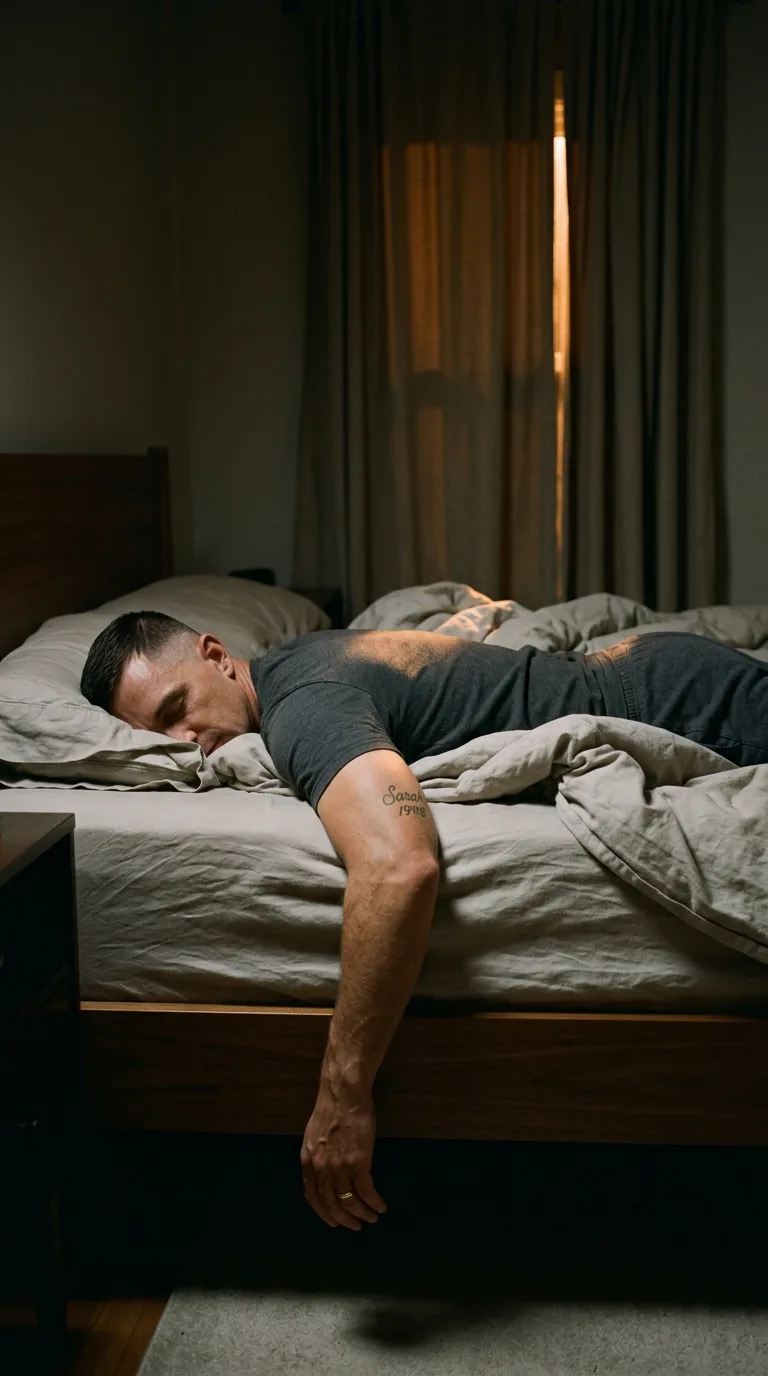
Rarest thing about him: Drums his fingers — common, 1 in 26
Season 1seed 1006478310 · engine v11
Character card
lineage 2NZHHJ
His body-swap story
@connor.waskiewicz, wearing Colby Strand, rolled the wheel on and woke up as Warren Aldecott, spent under a minute in him, then spun the wheel and woke up as Owen Kesteloot
Colby Strand's beard itches. That's the thing you notice first, standing at the site of a decision that isn't really a decision anymore — it's a reflex you've had nine hundred and forty-two times before. The smoke pit out back is banked and cooling. The bar's closed. Everyone in the little coastal town is asleep except you, and you're thirty-two years old in a body that isn't yours, red-headed, skinny in a way that makes your ribs visible when you reach for anything overhead, and it has been less than a minute since you became him. You don't even know yet what he sounds like when he laughs. That's the itch under the itch — not boredom exactly, more like impatience, the particular hunger of a man standing in a doorway he hasn't walked through yet. You didn't come to like Colby Strand. You came to feel the shape of somebody new close over you. So you open the laptop still warm on the porch rail, the wheel already loaded from last time, and you spin it before you've let yourself think better of it.
The wheel does not care that it's the middle of the night in Maine. It doesn't care that eleven hundred miles south, in a heavy-aired cul-de-sac outside Atlanta, it is also the middle of the night, and a man is asleep at an hour that fits him exactly. You feel the falling-elevator lurch that always comes — and then you are face down, one arm off the mattress, and your breath, which was ragged a half-second ago in a chest that isn't there anymore, goes even. The arm draws itself up. You roll onto your back. Your hands fold on your chest like a man laid out for a wake, a posture this body has apparently never once chosen for itself in forty-nine years, and something in the muscle protests it, faint and unconscious, before settling.
Streetlight comes through the gap in the curtain in one blade across the ceiling. You are big now — you feel it immediately, the difference between Colby's narrow wrists and this: forearms with real weight in them, a chest that takes up room, legs that go a long way past where a smaller man's would stop. Nothing hurts, exactly, but there's a low back that knows it's forty-nine, a soreness behind one shoulder that you'll later understand as three decades of leaning over a bench. Under your palms, laced together on your sternum, you feel a ring on the left hand — cool, then warm — and a T-shirt, worn soft, riding up slightly over the waistband of what you were wearing to sleep. Contact. That's when it starts coming.
The ring first. A courthouse afterward, not a church — that was a fight, the only real fight before the wedding, and losing it never actually bothered him, because Sarah cried a little at the courthouse anyway and he decided crying was crying wherever it happened. Sarah. The name arrives with the date under it, both already inked into his arm in a hand he didn't choose himself — she picked the script, some art student she found off a flyer, back when they were younger than this and had less than nothing and the tattoo cost more than the rent that month. Fourteen — no, seventeen — years married now. Three kids, maybe four; a flash of a fourth birthday cake he isn't sure is memory or wish, too many candles to count in the half-second he's given.
The T-shirt against your back gives you the morning he put it on — not last night's, an older morning, layered under this one the way worn cotton remembers a body. Standing in the lab that afternoon in the navy fleece vest, the flannel sleeves rolled to the forearm to keep the tattoo half-hidden the way he always did around the newer engineers, calipers in one hand, a half-assembled prototype gearbox on the bench throwing its shadow long under the shop lights. He'd been good at this since before he had words for it — his hands already knowing, without being asked, how a tolerance should feel between two fingers, how a bearing should seat with no play in it. Mechanical engineer, twenty-six years at it, and there's real money now, more than his father ever imagined for him, more than he lets the neighbors see in the car he drives. He goes to Mass most Sundays, less out of certainty than out of the habit of kneeling next to Sarah. He stopped drinking somewhere around kid number two, no drama in it, just stopped wanting the taste. Never smoked. His fingers, though — even now, folded on his chest, they want to drum against something, a tabletop, a steering wheel, the edge of his own knee — an old tell his wife has learned to read as thinking, not nerves.
The heat of the room comes in next: heavy, wet, a Georgia July even at this hour with the AC laboring somewhere down the hall, nothing at all like the cold porch boards under Colby's bare feet an hour and a state of being ago. Kids are asleep down the corridor — you feel that knowledge land without a picture, just the certainty of small weights sleeping under this same roof, a house he worked eleven years to be able to afford outright. He works nights sometimes when a deadline's close, catches sleep in stolen windows; that's why the middle of the night finds him horizontal and gone instead of still hunched at the bench. A whole marriage exists now in your chest that a minute ago belonged to no one you'd ever met — an anniversary trip to Savannah, a fight about the second mortgage that ended in the kitchen with her laughing before either of them meant to let it go, a diagnosis scare eight years back that turned out to be nothing, the terror of it still sitting somewhere behind his sternum like a stone worn smooth.
Your — his — eyes open.
You lift the left hand off your chest first, slow, the ring catching what little light there is, and turn it over in front of your face like you've never seen the back of a hand before, the veins, the pale ring-line, the tattoo's edge just visible where the sleeve of the T-shirt has ridden up. Forty-nine years of somebody else's small motions are sitting in that hand, waiting to be used. Down the hall, one of the kids coughs once and goes quiet again, and somewhere beside you the other side of the bed is empty and cool — she must be up early, or not home yet, and you don't know which and it doesn't matter right now.
You bring the eyes up off the hand and hold them on nothing in particular, into the dark of the room, the way a man looks at himself in a mirror he isn't sure is really there.
"Okay," you say, out loud, to no one. "Okay."