Colby Strand
Fictional. Generated by AI — not a real person, and no likeness of one is intended.
32, pitmaster in Coastal Maine · rolled by @connor.waskiewicz · card — no film
History
who has worn him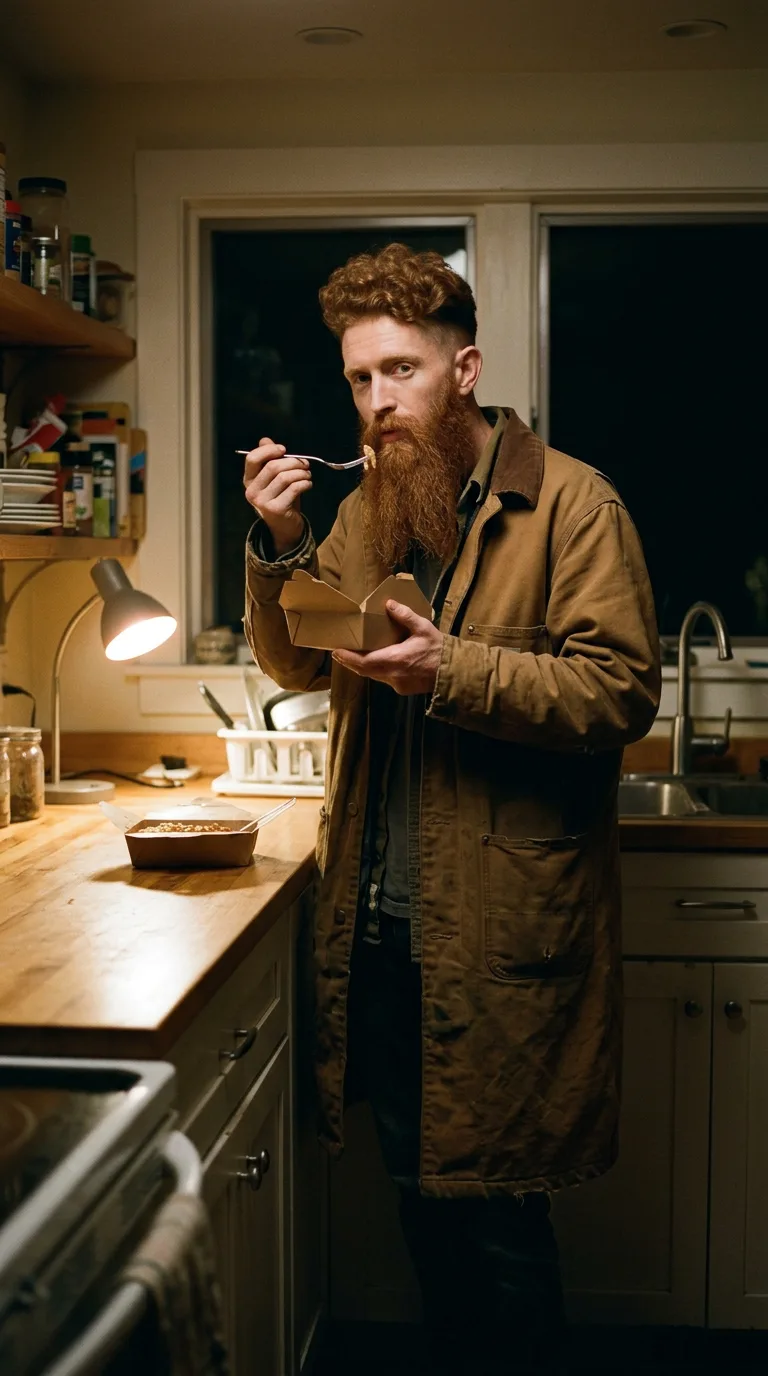
Rarest thing about him: Pitmaster — uncommon, 1 in 2,452
Season 1seed 247958583 · engine v11
Character card
lineage 2NZHHJ
His body-swap story
@connor.waskiewicz, wearing Gregory Pashenko, rolled the wheel on and woke up as Colby Strand, spent under a minute in him, then spun the wheel and woke up as Warren Aldecott
Gregory Pashenko's kitchen smells like other people's takeout and unwashed dishes, and you stand in it barefoot on cracked linoleum, feeling how his knees complain when he shifts his weight, how his lower back has already filed its nightly complaint at him for existing. Forty-seven years packed into him like insulation. Between jobs, he tells people, like there's a next one lined up. There isn't. You spun him up three spins ago as a stopgap, something solid to stand in while you figured out where you wanted to go, and he has been serviceable — big hands, decent hearing, a couch that doesn't creak — but tonight, sitting on the edge of his unmade bed at three in the morning, you keep thinking about Manny. About the kid you were for less than a minute before this one. Cashier, twenty-four, a beauty mark under his left eye you noticed in the bathroom mirror before you even had time to unpack a single memory of him. You didn't get anything of Manny's life. You just wore him standing at the register for the length of a breath, felt his heart going, and let him go. That's the thing gnawing at you — not guilt exactly, something closer to unfinished business, the way a name on a page bothers you until you look it up. You want to know who mattered to that kid. You get up, walk to the front room where Gregory's laptop is already open to the wheel, and you don't think about it as a decision. You spin.
The fork is halfway to your mouth and then it isn't — your hand puts it down against the lip of the takeout container, gentle, deliberate, like someone else's hand doing someone else's math. The coat is heavy on your shoulders, canvas, oil-stained, and it slides off in one motion you didn't plan, dropped over the back of a kitchen chair without looking. You sit. You eat in even mouthfuls, and out the black window there is nothing to see but your own face, faint, doubled, red-bearded, a stranger's.
The chair under you is a captain's chair, spindled, and the seat of it against your legs brings back a Sunday — sanding this exact chair on a tarp in the dooryard, lobster traps stacked to the side gone furry with old rope, salt air needling into the cuts on your knuckles, radio on a station that's half static this far up the coast. That was Colby's chair, refinished twice, and his hands know the motion before you do, wanting to reach down and check the rung joint out of habit.
The coat, draped there behind you, gives you more the second your shoulder brushes its sleeve: 5 a.m., pitch dark, frost on the truck windshield, and Colby pulling that coat on over a hoodie in a mudroom that still smells like last week's brisket. The firebox ritual — kindling first, then splits, watching the smoke go from white to thin blue and only then walking away satisfied. Fourteen hours some days, tending heat like it's a living thing that'll sulk if you look away. His forearm — this forearm, right one — has a crest inked into it, half sleeve, done in Portland the year the team finally won something, and the itch of the outline healing comes back distant and small, an old soreness in skin you now own.
The container in your hands: cheap Chinese place two towns over, the only thing open this late, and this is not new — you get the sense of dozens of nights just like it, a man who cooks for hundreds of strangers all day and can't be bothered to cook for one at midnight. Your jaw works around the food out of long habit, teeth already knowing the shape of your own beard grazing the corner of your mouth, a small design flaw you've apparently made peace with.
Something rises up out of the counter itself — years of it under your palm, the particular grain, and Colby at twenty-six behind this same wood teaching himself brisket by ruining nine of them, laughing about it later with Manny on the phone, the two of them a thousand miles apart trading complaints like men who'd grown up two doors down instead of meeting at a pit competition in Memphis and deciding, immediately, uncomplicatedly, that they were going to be friends for life. You feel that friendship the way you feel a scar you can't see — Manny's voice on speaker while Colby smoked a shoulder overnight, the visits down to New Orleans that never happened often enough, the wedding Colby didn't have and the one Manny didn't either, both of them single in their own separate ways and fine with it, mostly. An old girlfriend surfaces too, sharp for a second — a woman's laugh, a fight about nothing, the two years after she left when he dipped tobacco to keep his hands busy instead of drinking, because drinking was never his and dipping filled the same hole.
Your leg is already bouncing under the table, has been the whole time, a motor that runs whether you ask it to or not. Thin body, wiry, more strength in the forearms than the frame suggests — a man built by standing twelve hours a day at a smoker, not by anything you'd call exercise. Nothing hurts tonight except the low ordinary ache of a workday, the kind that's almost a comfort.
You set the empty container down. Look at your hand — freckled, long-fingered, a little singed along one knuckle, not the hand you had an hour ago in Pittsburgh, not the hand you had four spins back in New Orleans holding a register drawer shut. You turn it over once, like checking it's real.
"You'd have laughed," you say to the dark window, to Manny, to nobody, and you don't know yet if that's true, or how long you'll be the one who gets to say it.