Gregory Pashenko
Fictional. Generated by AI — not a real person, and no likeness of one is intended.
47, between jobs in Pittsburgh · rolled by @connor.waskiewicz · card — no film
History
who has worn him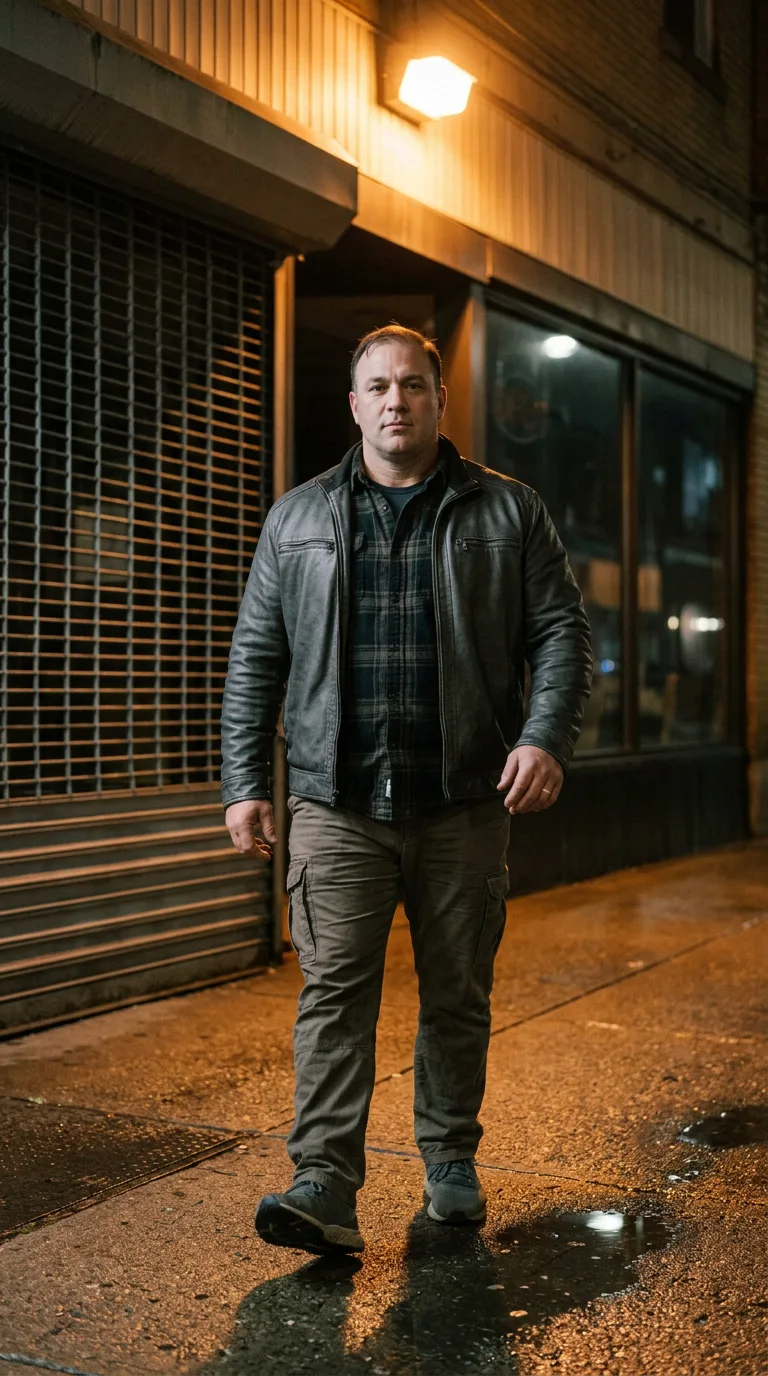
Rarest thing about him: Drunk, walking home the long way — common, 1 in 64
Season 1seed 2007577125 · engine v11
Character card
lineage 2NZHHJ
His body-swap story
@connor.waskiewicz, wearing Farid Hosseini, rolled the wheel on and woke up as Gregory Pashenko, spent under a minute in him, then spun the wheel and woke up as Colby Strand
You are under a bay light on a garage floor in Denver, and Farid Hosseini's back has been aching since a torque wrench slipped four hours ago into a shift that ended thirty minutes back. His hands — spotted, ropy, capable — still smell of solvent no matter how long since he washed them. He is sixty-three and he has been sitting in this man's recliner less than a minute, and already the sameness of it is closing over you like water over a stone: another double shift tomorrow, another grandson's birthday he'll send cash to instead of going, another quiet house since the divorce nobody talks about. It isn't bad. It is just already known, the whole shape of it, the way a room is known the second you turn on the light. You open the laptop that isn't yours, out of habit more than plan, and the wheel is already the last tab open, the way it always is, the way it will be until you stop being anyone at all.
You spin knowing nothing about what it will give you, which is the entire point of ever spinning again.
The bay light doesn't dim. There's no falling. There's a wet street and a shoe scuffing concrete and then the shoe stops scuffing — plants flat, even, sure — as a hand you don't own yet steadies against the cold rounded flank of a parked Corolla. Weight comes up through legs that are heavier than Farid's, thicker through the thigh, a gut that sits differently, breath that tastes like bourbon and a coldness on the face that is night air off wet Pittsburgh brick. You are standing. You were about to fall and now you are not falling. Somewhere behind the sternum a heart that isn't racing from fear is racing anyway, just from the bourbon, just from two in the morning.
The leather jacket is open and it's the jacket that gives you the first of him — not words, a temperature: a closet, cedar blocks, an ex-wife's hand smoothing the collar down before a wedding neither of you will name yet, years off from tonight, already gone. You turn left at the corner, which some dumb animal part of the legs insists is wrong, and that wrongness is also him, arriving sideways, the way all of it will arrive.
The jacket keeps giving. Sleeves first — this exact jacket, off a hook by a door in a house he doesn't live in anymore but still has a key to, some arrangement about the kids that lets him come and go on Thursdays. Thursday. He'd stopped by to see them sleep, basically, stood in two doorways too long, and then left before anyone woke up wanting breakfast from a father who doesn't live there, and he did what he does after: walked, and did not walk straight home, and had two at the corner bar and then two more because the second bartender didn't card the pours the way the first one had. Three kids, or four — the number comes through fuzzy, a chorus of names said fast at a table, not sat still long enough to count — and all of them asleep right now in a house with his name still on the mortgage paperwork somewhere in a drawer.
The plaid shirt under the jacket is thinner, and it gives up a whole ordinary morning: standing in a bedroom that used echo a little too much, pulling this exact shirt over his head, the collar catching once on the ear the way it always does, waistband of the cargo pants sitting under a stomach that has gotten softer than the one in the wedding pictures, and not minding it much, some mornings, and minding it plenty on others. The tan band of pale skin on the ring finger — you can feel its exact width like a phantom groove, a place his thumb goes without asking, checking for something that has been gone two years and some months. He does that now, mid-stride, thumb finding the bare stripe, and behind it comes an argument in a kitchen, not the worst one, just the one that ended it — quiet, almost polite, the worst kind — and her face doing the thing it did when she'd already decided and was only being kind about telling him.
His shoulders carry muscle built for lifting things nobody thanked him for, and a lower back that clicks faintly on this exact rotation of the hip, walking. Between jobs three months now — a plant that let people go in a batch and called it restructuring — and mornings at a kitchen table with a laptop open to listings that all want five years of a different experience than the one he has. He's not proud of the drinking lately. He knows what it costs the mornings after. He does it anyway on nights he's seen the kids and can't yet go be alone in the apartment that still smells like paint.
The cold air keeps him honest about none of that, walking, and you ride all forty of those even, quiet steps down inside a chest that breathes slower than the one you left, older muscle carrying newer weight, until his — your — feet stop of their own accord on a wet corner under a dead shop sign, mid-step, the choice of it already made without him.
You lift both hands into the orange light off the storefront grate and turn them over. Wider than Farid's. No solvent smell. A groove on one finger with nothing in it.
"Whose house is this," you say, out loud, to no one, and it isn't really a question, it's just what comes out first — and somewhere far off under it, already, quiet as a second heartbeat, is the wheel, waiting to be spun again, whenever that turns out to be.