Farid Hosseini
Fictional. Generated by AI — not a real person, and no likeness of one is intended.
63, diesel mechanic in Denver · rolled by @connor.waskiewicz · card — no film
History
who has worn him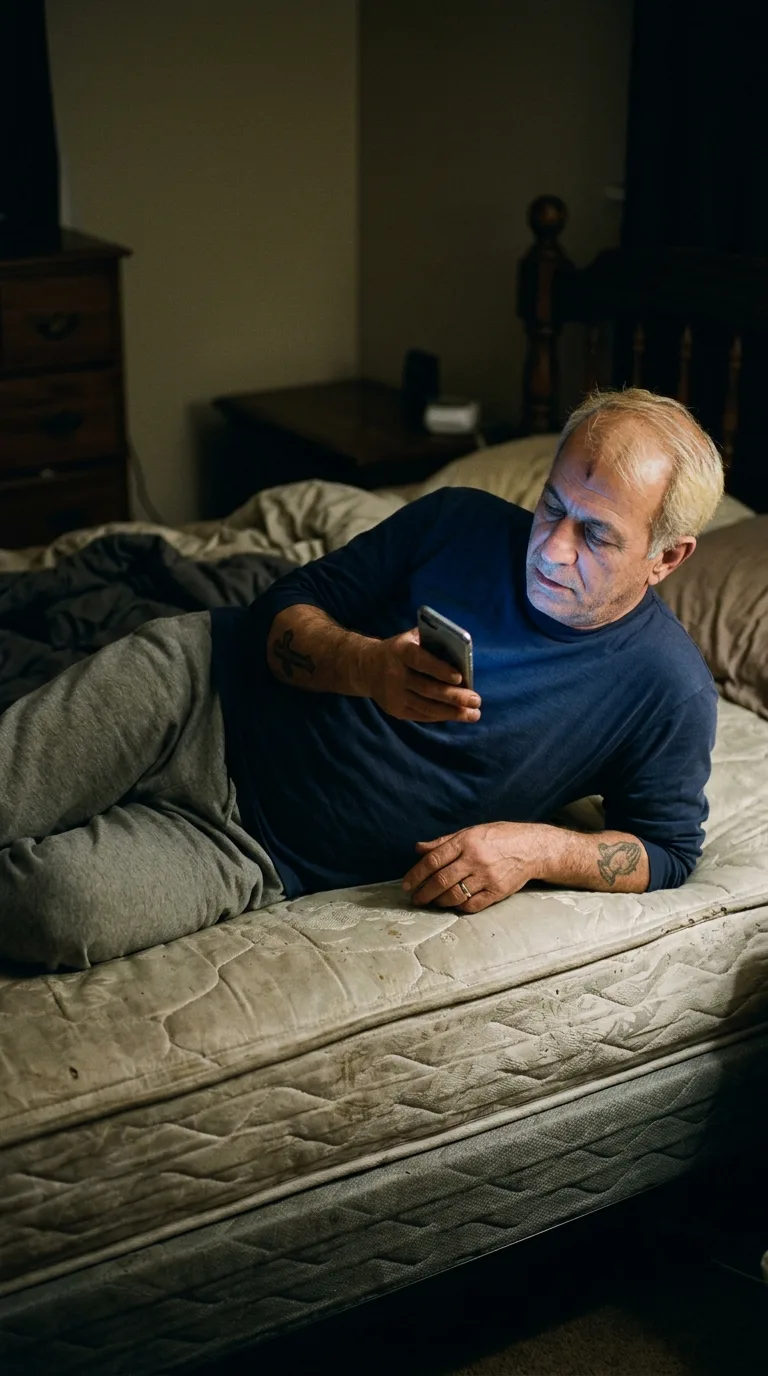
Rarest thing about him: Other Christian — rare, 1 in 219
Season 1seed 1183775406 · engine v11
Character card
lineage 2NZHHJ
His body-swap story
@connor.waskiewicz, wearing Manuel Osorio, rolled the wheel on and woke up as Farid Hosseini, spent under a minute in him, then spun the wheel and woke up as Gregory Pashenko
The register drawer will not stop rattling in your ears even though you clocked out four hours ago, even though you are lying on a cashier's twin mattress in a shotgun house off Claiborne with somebody else's ceiling fan ticking overhead. Manuel Osorio's body is twenty-four and it is a good body, quick, unbroken, and it is not the body's fault that you can already feel the itch starting under its skin, the specific boredom of knowing exactly how a night like this one ends: a beer you didn't buy, a phone you keep checking though nobody is texting Manuel Osorio at three in the morning, and the register drawer, always the drawer, sliding open on its little track a hundred times a shift. You have been him less than a minute of his own time and already you are doing the thing you do, which is reaching for the phone that isn't yours, thumbing to the bookmark that isn't a bookmark so much as a door. vessel.cards. The wheel loads slow on his crummy connection. You do not think of it as leaving him. You think of it the way you always think of it, which is barely at all — a coin going back into a slot, a hand reaching for the next thing on the shelf because the shelf is there and so is the hand.
You spin.
There is no in-between. There is a mattress under one hip and then, in the same breath, a different mattress under a different hip, older, thinner, the coils gone soft in the middle from decades of one man's weight settling into it nightly. The room is dark except for a rectangle of cold light six inches from a face that is not swiping anymore so much as remembering how — the thumb, his thumb, now your thumb, picks the motion back up mid-stroke, faster, smoother, steadier than the hesitation that was in it a half-second before you arrived. The scroll doesn't stop. Notifications slide by unread. Somewhere behind the sternum a heart that has been going eleven hours already keeps going, unbothered, because hearts don't know the difference.
You are lying on your side. The shirt against your back is thin, worn cotton, navy, and it is the shirt that speaks first — not words, just the ghost-memory of an arm pushing through this exact sleeve some hours ago, before a shift, in a bathroom with a mirror spotted along the bottom edge where the silvering has worn through. Farid dressing at five in the afternoon for a night that runs to sunrise, because the fleet doesn't stop needing its trucks fixed just because the sun goes down, and somebody has to be the one standing in the pit at 2 a.m. with a torque wrench when a coupling fails on a rig that's due in Cheyenne by six. That's him. Third shift, seventeen years at the same yard, and his body has learned the discipline of sleeping in the wrong hours the way a muscle learns any repeated insult — not gracefully, just permanently. The mattress under him now is the mattress he sleeps on during the day when the blinds are taped at the edges to keep the Colorado sun out, except tonight is his night off and he isn't sleeping, he's up too late anyway because his body no longer knows the difference between rest and its imitation.
The ring is the next thing. Left hand, flat against the comforter, and touching it — you are not touching it on purpose, it is just there, the way it has been there for thirty-one years — opens a whole hallway at once: a courthouse in Adams County, his wife's hand smaller than his, her laugh too loud for the room, her mother crying for reasons that were only partly happy. Nadia. Not a name you asked for, just one that arrives with the metal, worn thin on the underside from wrench grease and dish soap. He loves her in the unglamorous way of a man who has been market-testing the word for three decades and found it holds. There's no drama in the marriage, which is its own kind of fact — no ex who still matters, no one, because there was never anyone before her worth the filing space in memory.
The tattoos on the forearm are colder somehow than the rest of the skin, or maybe that's just where his mind keeps its weather. The cross first — inked at twenty-six in a shop in Aurora that didn't exist anymore, done by a guy who talked the whole time about a fishing trip. Then the praying hands, done later, after his father died, after the funeral where half the service was in Farsi and half in English and Farid stood at the back not sure which language grief was supposed to come in. He converted young, before any of this, before the wife, before the diesel yard — a choice that cost him some family and kept others, the specifics gone soft now the way old decisions do, worn round like the ring. He still goes Sundays. Doesn't talk about it at work. It's his, privately, the way the leg that won't stop bouncing under a table is his — a tell nobody in thirty years of marriage has managed to read as anything but him being him.
The hands themselves — his hands — know things without being told: the particular grip of a ratchet swung dry versus with give in it, the exact half-turn where a bolt goes from stuck to free, the ache that lives permanently now in the base of both thumbs from forty years of exactly that motion. Average build going soft at the middle the way a body does after sixty-three years of gravity and diner food between shifts. A knee that clicks going down stairs. A lower back that announces itself on cold mornings, or in his case cold evenings, before a shift, when he's pulling on the coveralls that live folded over the same chair every single day of his life. Bleached hair he started doing at fifty because Nadia liked how he looked younger and he found, embarrassingly, that he liked being looked at that way too, and the roots coming in dark now are less a flaw than a clock nobody but him is checking.
The bounce starts in the leg before you've decided anything, an old habit arriving with the body like a tenant who never left. Then you look down at the hand still holding the phone, the screen gone dim in it now, the wedding band catching what little light the room has, the praying-hands tattoo blurred slightly with age at the linework, and it does not feel like your hand yet, the way none of them ever quite do in the first stretch, when the borrowed nervous system is still humming with somebody else's decades and yours is somewhere underneath, waiting to see how long the lease runs.
You sit up on the edge of a mattress that is not the one you fell asleep in, in a house that smells faintly of motor oil no amount of showering fully strips, and you say, to no one, in a voice with an accent worn down soft by forty Denver winters:
"Not yet, then."