Walter Kosinski
Fictional. Generated by AI — not a real person, and no likeness of one is intended.
62, trucker in New York · rolled by @colin.hasbrook · card — no film
History
who has worn him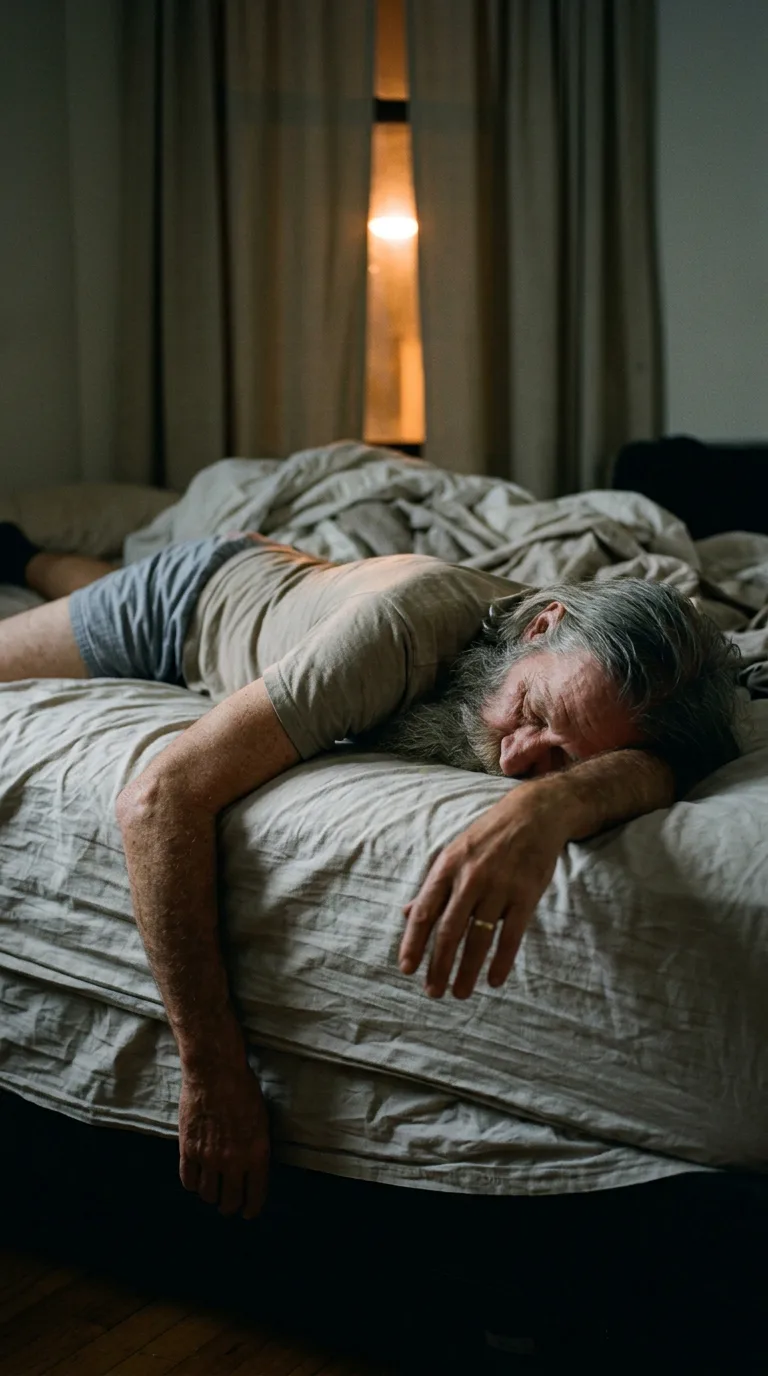
Rarest thing about him: Pagan, Wiccan or New Age — rare, 1 in 185
Season 1seed 1793627732 · engine v11
Character card
lineage 2NZHHJ
His body-swap story
@colin.hasbrook, wearing Gerald Muncaster, rolled the wheel on and woke up as Walter Kosinski, spent under a minute in him, then spun the wheel and woke up as Roy Cabaniss
You are Gerald Muncaster for less than a minute, and already you know it was a mistake — not because the body is bad but because it is small in a way you didn't expect from the outside, the ceiling of his Philadelphia office too close, the desk lamp throwing his shadow huge and stooped across a wall of degrees he earned twice, once for himself and once, it turns out, for a father who never once said the right thing about it. You are standing in his study holding a mug that isn't his, feeling the dimple pull at his cheek from a smile that belongs to a photograph on the shelf — him and a woman, decades younger — and the loneliness of him arrives like weather, fast and total, not yours but suddenly the only thing in the room. Fifty-three, bald by his own hand, brown eyes tired in a way sleep doesn't touch. You did not choose this unhappiness. You only inherited it for the length of a held breath. That's enough. Your thumb finds the little wheel-shaped icon still open on his phone, and you spin before you've finished deciding to.
The gap is not a gap. There is no falling, no dark — only the ragged pull of someone else's breath evening out under your own attention, like a radio tuning into a clearer station. You are heavier than you were and lighter at the same time, skin loose in places Gerald's was tight, a beard pressed damp against a pillow that smells like laundry soap and someone else's sleep. The arm hanging off the mattress draws itself up without your asking it to — an old reflex of a body that has folded its hands on its chest in some other version of a life, though not this one, not for years — and you roll onto your back inside it, palms coming to rest over a sternum that doesn't ache yet, though you can feel, distantly, that it might, later, the way a bruise announces itself before it colors. Streetlight comes through a gap in the curtain in one bright vertical seam. Somewhere outside, an engine idles that is not the one this man drives for a living.
The memories don't come as a flood. They come the way his hands come back to him — piece by piece, object by object. The ring first: a wedding band, warm from his own skin, and with it a version of a woman he does not have to strain to see, because grief like his does the remembering for you. Her name arrives with the weight of a name said ten thousand times and now said to no one — Carol — and behind her name a kitchen in Canarsie, a linoleum floor, the particular ceremony of her lighting a candle at the window every solstice whether he believed in it or not, and how after she went he kept lighting it anyway, because it turned out somewhere in the last decade he'd started believing it too, quietly, the way men his age come to things without ever announcing they've arrived. The band on his finger is thin gold gone soft with age; his thumb worries at it out of forty years of habit that outlived the reason for it.
The shirt gives you more — red flannel over a gray tee, and in the sleeves a whole geography of small mornings: pulling it on in a truck-stop bathroom outside Hazleton at four a.m., the fluorescent hum, the way his hands shook putting the buttons through, not from fear or cold but from something in the nerves that has been there for years now and that he has learned to work around the way you learn to work around a pothole you know is coming. Two sons flash through — one a voice on a phone he doesn't call enough, one a photograph on a dashboard, both grown, both fine, both far. His own father's temper, and how he swore off the drink at twenty-six specifically not to become that, and never touched it again, not once, not even at Carol's funeral when everyone would have understood. Cigarettes he quit the year the first grandchild came. A rig he loves in a way he never loved a house — the long clean nothing of a night highway, the CB chatter, the money he never needed to make anymore but made anyway because the alternative was silence in a brownstone he owns outright and could sell for more than most people see in a lifetime and never once has, because a man builds his life around a habit, not a bank balance.
The beard against the pillow, the boots by the door he can't see but knows are there, worn brown leather, salt-stained from winters — each one hands him another year, another town, another version of the same grief worn to a comfortable shape. He does not despair in it. That is the thing you did not expect: no bitterness, just a long patient ache he has made a kind of peace with, candle and all, believing quietly that she is somewhere and that somewhere is not nothing.
You bring the hands up in front of your face — his hands, spotted, strong-knuckled, the left one still wearing its gold — and they shake, faint and constant, a tremor that isn't fear, that was already there before you arrived and will be there after, whenever after is. You watch them for a second too long, the way he never lets himself.
Then you lift your eyes to the gap in the curtain, to the sodium light standing in it like a held flame, and you say, quietermuch than you meant to: "Carol, I'm still here."
You don't know yet for how long.