Roy Cabaniss
Fictional. Generated by AI — not a real person, and no likeness of one is intended.
55, warehouse picker in Miami · rolled by @colin.hasbrook · card — no film
History
who has worn him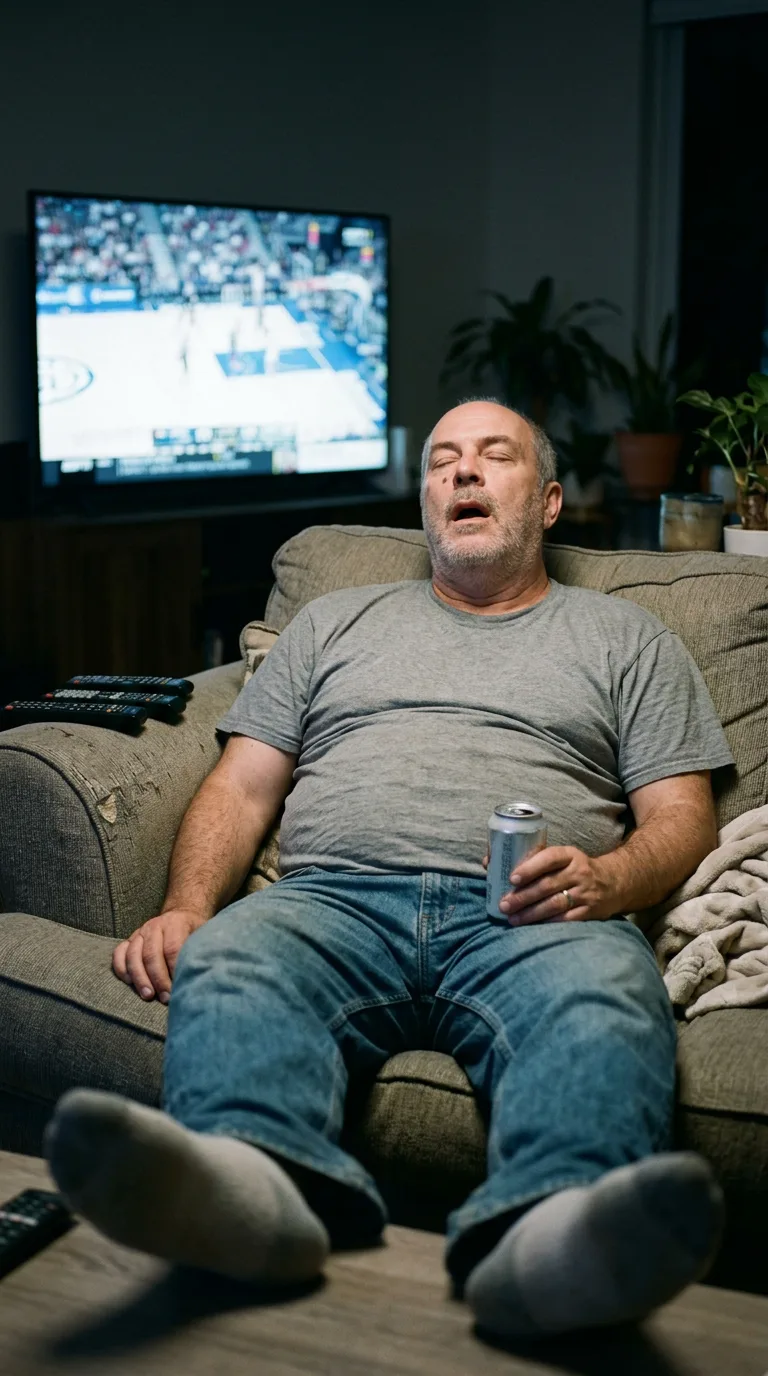
Rarest thing about him: Gray — uncommon, 1 in 96
Season 1seed 1223044248 · engine v11
Character card
lineage 2NZHHJ
His body-swap story
@colin.hasbrook, wearing Walter Kosinski, rolled the wheel on and woke up as Roy Cabaniss, spent under a minute in him, then spun the wheel and woke up as Mark Heffernan
---
The rig smells like diesel and cold coffee, and Walter Kosinski's back has been talking to him since Tulsa. Sixty-two years in this body, and only forty of them yours, and already you know its complaints better than its pleasures — the knee that clicks going down out of the cab, the beard that itches worse in humidity, the way the long haul makes his eyes feel sanded. It is nearly midnight in New York, and you're parked at a rest stop off the Thruway with the engine ticking as it cools, and you are bored in a way that has nothing to do with Walter and everything to do with having been him for less than a minute of his own life and eight hundred and ninety-one other men's before that. The boredom is not about the beard or the knee. It's that you already know what tonight in this cab looks like, because you've read it off his hands on the wheel, his logbook, the photo taped above the visor of a woman who stopped waiting for him years ago. Nothing here you haven't had before in some other trucker's skin. You open the site on his phone, the wheel already spinning in your head before your thumb even finds it.
The floor doesn't feel like floor. It feels like carpet, and then like a couch cushion giving under a weight that is not the weight you had a second ago — heavier through the middle, softer, low to the ground in a way Walter's long frame never sat. There's a can in your hand, aluminum, warm as bathwater, and your mouth is open and dry and a roar is coming out of a screen you didn't choose to be facing. The ball leaves someone's hand on the TV, drops through the net on a replay you already missed once, live, asleep. Your thumb moves before you tell it to — finds a remote by feel, lowers the volume with a small, exact motion, like it's done this ten thousand times and doesn't need you awake for it.
The couch first — worn soft in a shape that fits this body like it grew there, and it gives you an evening: him coming home off a double, dropping into this exact dent, a wife's voice from the kitchen saying something about the boys wanting to talk to him before bed and him saying in a minute, hon, in a minute, and the minute becoming three hours and a basketball game he doesn't even like that much, just needs. Then the shirt — gray, thin from washing, and worn against your back it gives you laundry day, her folding it warm out of the dryer, complaining lightly that he still hasn't replaced the one with the hole at the collar, and him saying he likes the hole, it's got character, and her rolling her eyes in a way that means she loves him. The jeans at the waist, tight now the way they get after dinner, give you a whole marriage of dinners — her cooking, him doing dishes badly on purpose so she'll take over, thirty-one years of that particular dance.
The wedding band on the left hand, dulled gold, gives you the actual day — a backyard, folding chairs, her father's suit two sizes too big on her father, and Roy — you have his name now, off the ring's inscription flashing behind your eyes, *R & D, always* — Roy standing there sweating through a rented shirt, twenty-four years old and sure for the first time in his life about something. It gives you the two kids after, a boy and a girl, grown now, one of them calling on Sundays and one of them not calling enough, and the particular quiet ache of that second one, which he never says out loud to anyone, not even her.
The socked feet against the coffee table's edge give you the shift he came off — a warehouse floor, pallet racking stretching up into sodium light, a forklift's beeping somewhere behind him all day like a second heartbeat, his knees complaining on the concrete the way they have for years now, the particular tired that isn't sleepy so much as used up. It gives you the vest, the scanner gun heavy in his palm, the small pride he takes in never missing a pick, in being fifty-five and still faster down an aisle than half the twenty-year-olds. It gives you a cigarette he hasn't had in nine years and still sometimes wants at the top of a shift, and the AA-lite version of himself that quit that too, mostly, except the once-a-month night out with the guys from the dock that turns into two beers too many, which this, tonight, apparently was.
His leg is bouncing. You didn't start it — it was already going, the whole time you've been sitting here in him, a small restless engine under the knee that never fully switches off, running under the marriage and the kids and the shift and the game like it's older than all of it, older than you, going since he was a boy and nobody could get him to sit still in church.
You look down. The can is sweating cold now against fingers that are thicker than the ones you had a minute ago, the ring catching the TV light. You turn the hand over, slow, like you're checking it's real, watching the gray hair on the knuckle, the mole on your own cheek just visible in the dark reflection of the screen when you tip your head.
"Huh," you say, to the empty apartment, to the TV, to nobody. "Missed the whole first half."