Mark Heffernan
Fictional. Generated by AI — not a real person, and no likeness of one is intended.
40, sales rep in San Francisco · rolled by @colin.hasbrook · card — no film
History
who has worn him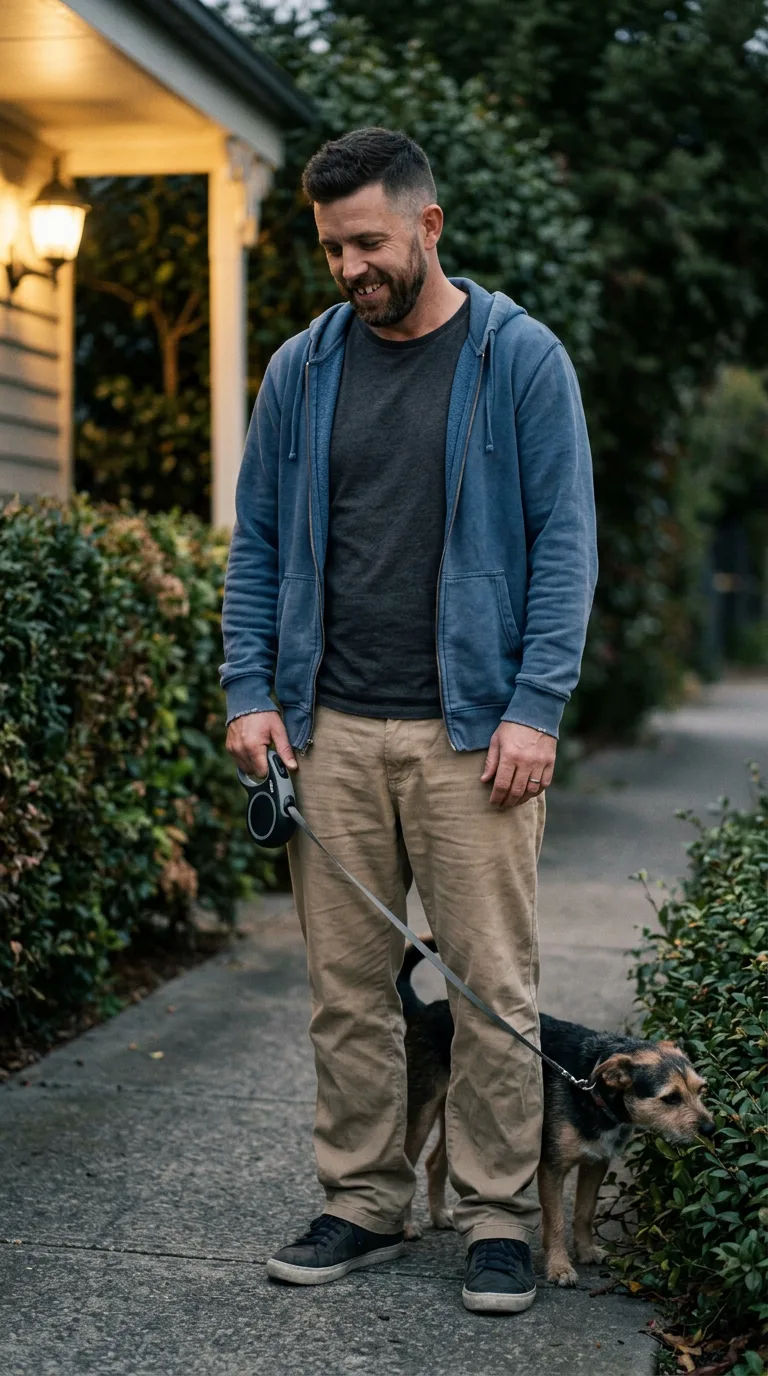
Rarest thing about him: Walking the dog — common, 1 in 35
Season 1seed 1315592824 · engine v11
Character card
lineage 2NZHHJ
His body-swap story
@colin.hasbrook, wearing Roy Cabaniss, rolled the wheel on and woke up as Mark Heffernan, spent under a minute in him, then spun the wheel and woke up as Kyle Beringer
You are standing in a warehouse aisle at eleven at night in a body that is not your own but has felt, for the last little while, close enough to count. Roy Cabaniss's knees ache in a way that has become almost comfortable, familiar, the way a bad radio station becomes company. Fifty-five years old, gray stubble, a beauty mark on his cheek that you have stopped noticing in mirrors. You picked a case of something heavy off a shelf twenty minutes ago and felt his lower back complain, and that complaint is the whole reason you are walking to the break room now, phone out, thumb already moving toward the site before you have admitted to yourself that you are going to do it. It is not boredom exactly. It is that the body works fine and fine is not the same as good, and somewhere in the last four hundred men there stopped being a difference between wanting and simply checking. You spin because the wheel is there and because Roy's shift doesn't end for two hours and you would rather not be in his back for those two hours if you don't have to be.
The wheel turns. It always turns quickly, faster than a wheel that size should, and then it isn't turning.
You are outside. Cool air, a hedge, green smell of it, and a small weight tugging at the end of something in your hand. The leash goes slack — the dog has stopped pulling to sniff — and you feel your own hand, his hand, still moving on a half-second delay, like the body hadn't caught up to the fact that someone new was driving it. You wind the leash twice around two fingers without deciding to. You start walking again, and the dog has to trot to catch the new stride, ears flattening, glancing back up at the face it knows and something behind the face it doesn't.
The shirt is what gives him to you first. Cotton, soft at the collar from washing, and the memory comes the way they always do — sideways, uninvited, in his feeling and not yours. Getting dressed a few hours ago: an undershirt over a chest that carries the day's second cup of coffee still sitting a little sour, then this shirt, sleeve, sleeve, the small annoyance of a button that's a little loose and he keeps meaning to have it fixed and never does. He'd stood in front of the closet for longer than a shirt deserves because Angela had asked would you wear the blue with the gray tomorrow and some old habit of pleasing her had him laying it out the night before like a man twice as careful as he actually is.
The wedding band is next, and it opens wider than the shirt did — eleven years, a hotel ballroom in Sacramento, her sister crying more than she did, his own toast running long because three drinks in he'd meant every word too much to stop. He quit drinking two years after that without much ceremony, just noticed one October that he hadn't wanted one in a while and let it stay that way. The ring has never come off since the day it went on. His thumb knows exactly where it sits without looking, the way it's doing right now, worrying it in a small circle nobody would notice unless they were the one wearing the hand.
The lanyard from the hotel lobby this afternoon flashes through next, though it's hanging on a hook by the door now and not on him — a meeting that went long, a client who liked him more than the product, the particular tired satisfaction of a number he'll report tomorrow that will make somebody happy. He is good at this job in the unglamorous way of a man who has simply done it for eighteen years and stopped resenting it around year six. Comfortable. Not rich. Enough that Angela stopped asking if they could afford things and started just deciding.
The leash handle in his palm brings the dog itself — a rescue, three years now, still flinches at umbrellas, still the best decision either of them made that whole year — and under that, cracking through unbidden the way the small ones do, his hands wanting to crack their knuckles, an old habit from nerves nobody in his life has ever asked him to explain. A pack a day sits behind his teeth like weather, a craving that isn't urgent but is never fully gone either, and you feel it arrive and recognize it, faintly, the way you recognize all of them now — five hundred cravings, eight hundred marriages, a gap-toothed smile he uses when he means something and a different one, tighter, when he's being polite. This one, walking a dog on a Thursday evening with someone waiting on the porch light for him, is the second smile's opposite: the real one, easy, aimed at nothing but the animal's back.
His body is forty and knows it only a little — a twinge starting in one shoulder from years of a laptop bag on the same side, otherwise sound, otherwise strong enough that the two extra blocks the dog wants don't cost him anything. It is, you notice, comfortable to be him. Comfortable the way Roy's back was not.
You look down. The hand at the end of the leash is not Roy's spotted, thick-veined hand. It is younger, the wedding band catching the porch light three houses down, and you turn it once in the air in front of your face like you're checking it's actually attached.
"Huh," you say, to the dog, to the hedge, to no one. "Okay."
The dog looks up at you, waiting for the walk to resume, no idea at all that anything in the world has changed.