Travis Oberholt
Fictional. Generated by AI — not a real person, and no likeness of one is intended.
30, cable installer in Dallas · rolled by @colin.hasbrook · card — no film
History
who has worn him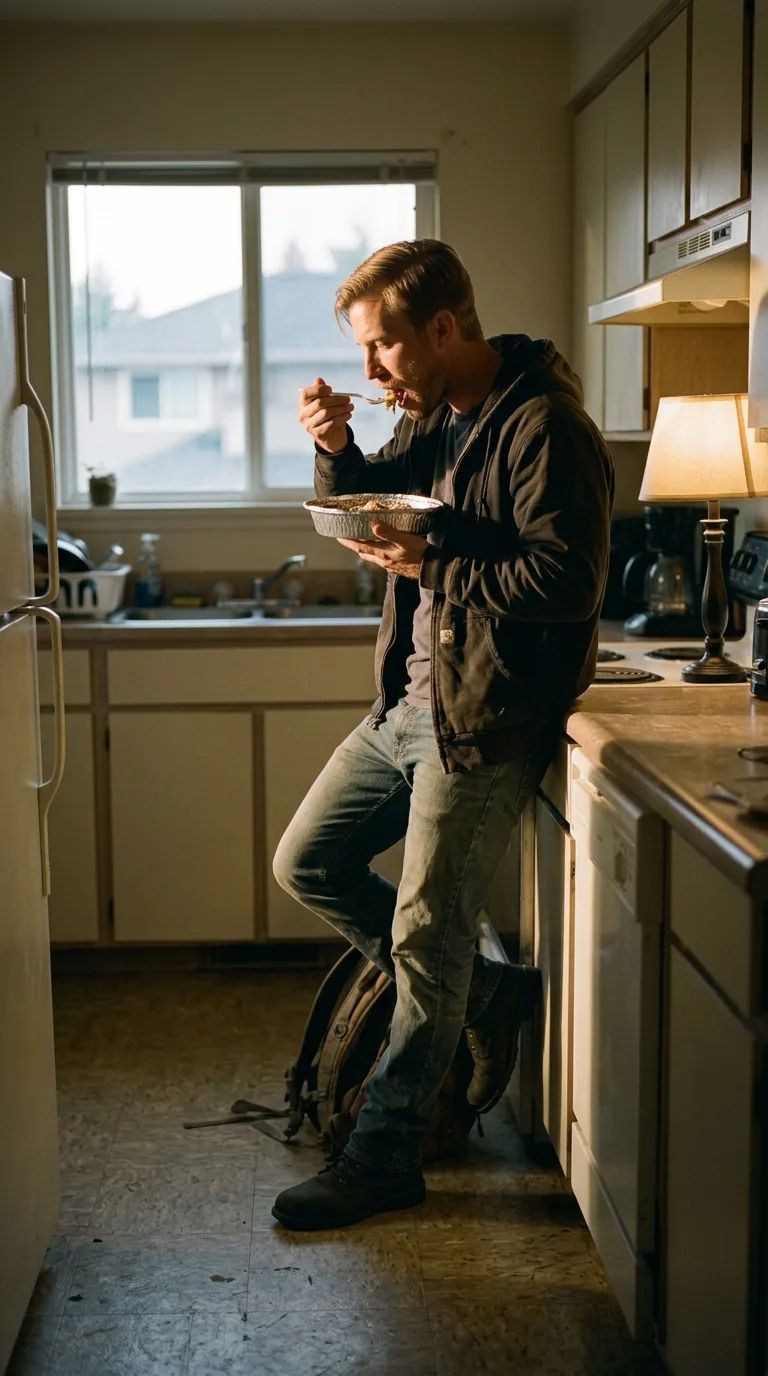
Rarest thing about him: Cable installer — uncommon, 1 in 773
Season 1seed 1743294760 · engine v11
Character card
lineage 2NZHHJ
His body-swap story
@colin.hasbrook, wearing Daniel Kwon, rolled the wheel on and woke up as Travis Oberholt, spent under a minute in him, then spun the wheel and woke up as Franklin Dubose
The gap in his front teeth catches on his tongue while he chews, the way it always does, and that is the thing you notice first — not the ledger open on the kitchen table, not the space heater ticking in the corner of a rental that smells like other people's cooking, but this stupid gap, this body's one persistent fact, worn smooth by thirty-one years of a habit you didn't build. You built almost nothing here. Less than a minute in him and already the second spreadsheet cell is wrong, already the silence in this house is a silence you recognize from eight hundred and thirty-three other kitchens — the specific quiet of a place where nobody is coming. You are not sad about it. You are bored of it, the way you get bored of a hallway you've walked too many times, and that boredom is the whole reason your hand is already moving to the laptop, pulling up a tab that isn't spreadsheets.
The wheel loads its lazy spin-and-glow, and you pay it what a man like this earns in a week without a thought, because none of it is his money and none of it has to last.
You spin.
—
The fork is halfway to your mouth and then it isn't your mouth, it is a mouth, hazel-eyed, tired around the edges from a day of sun and aluminum. Weight drops onto you all at once — shorter, denser, forearms roped with a strength that has nothing to do with a gym, coat still zipped, its collar chafing at a throat gone tacky with dried sweat. Your hand — his hand — sets the fork down into the foil tray of stir-fry with a small, decisive clink, like something completing a thought it started hours ago. You feel your shoulders roll and the coat slides off them onto the counter behind you, unbidden, a body doing what it always does at this exact hour without asking permission from whoever's steering. You sit. Some kitchen chair takes your weight and you keep eating, mouthful after even mouthful, and outside the window over the sink Dallas has gone the flat orange-grey of a sky with the sun already down behind rooflines that all look alike.
The container's warmth against your palm is the first key, and it turns.
Cold noodles going warm in a microwave that ran too short because you learned two years in that thirty seconds is what it takes and you stopped waiting for the beep. Grocery bags with the receipt still folded in the bottom of one — you always fold it, force of habit from a father who did the books for a mattress warehouse and taught you numbers mattered even when there weren't many of them. The waistband of the cargo pants sits low and familiar, worn soft at the belt loops from a tool belt you shrugged off in the truck cab an hour ago, and your hips remember the drag of it, the particular ache low in your back that comes from a ladder's fourth rung held too long, one boot hooked over the top for balance while your arms worked a splice above your head. Calluses along the pads of two fingers on your right hand, raised and yellow, made by drop wire pulled taut a thousand times. You know, in the unhurried way a body knows a thing rather than remembers it, that you are good at this job. Not proud of it, particularly. Good at it. There's a difference and this man has always understood it.
The stubble drags faintly against the collar of the coat as your jaw moves, two days' worth, sandy blond, and touching it — your own fingers grazing your own chin without deciding to — gives you the last time you shaved: Sunday night, alone, in a bathroom with a single bulb, because Monday was a new install in Frisco and the crew lead liked a clean face on customer-facing days. You get flashes of the crew lead's voice, easy and unbothered, the kind of foreman who doesn't care who you take home as long as the trucks roll on time. A flicker of a name, Deacon, someone from a bar near Deep Ellum eight months back, a good few hours that didn't turn into anything and didn't need to. No one waiting on a call tonight. No one whose photo sits anywhere in this rental. The apartment around you is bare in the particular way of a man who spends his money on nothing but rent, gas, and takeout, because the facts underneath him are thin: five, ten, fifteen thousand dollars total to his name on a good year, and every year lately has been a good year only by the standard of not going backward.
The shirt against your back, still faintly damp under the arms, gives you this morning entire: pulling it over your head in a dark bedroom before six, the smell of yesterday's detergent, tucking it in one motion out of habit though the job doesn't require it and never has. The boots by the door, the specific stiffness of them going on cold, the truck's ignition catching rough the way it's caught rough for two winters running because you keep saying you'll get it looked at. None of it is dramatic. None of it needed to be. That's what makes it almost unbearable to hold for a second longer than the body gives you — the ordinariness of a whole life stacked up in the small circuits of dressing and driving and climbing and coming home to eat standing up because sitting down alone felt like something to put off.
The window in front of you holds nothing but your own reflection now that the light outside has gone, and the fork scrapes the last of the tray clean.
You look down at your hand — blunt fingers, the yellow calluses, a thin white scar of a burn on the base of the thumb you didn't put there and don't remember getting, though something in the wrist twitches at the memory of a hot ferrule anyway — and you turn it over slow, watching hazel-colored light from the stove hood catch along the knuckles.
"There you are," you say, to no one, to the window, to the version of you that isn't home yet and never will be.
Outside, six hundred miles east, a man you left behind is finishing a container that isn't his either, in a kitchen he'll wake up in tomorrow still wearing, still not knowing, while somewhere on your screen the wheel sits cooling, waiting on nothing, patient as furniture, for whenever you decide thirty-one wasn't the last number after all.