Franklin Dubose
Fictional. Generated by AI — not a real person, and no likeness of one is intended.
58, janitor in Western Kansas · rolled by @colin.hasbrook · card — no film
History
who has worn him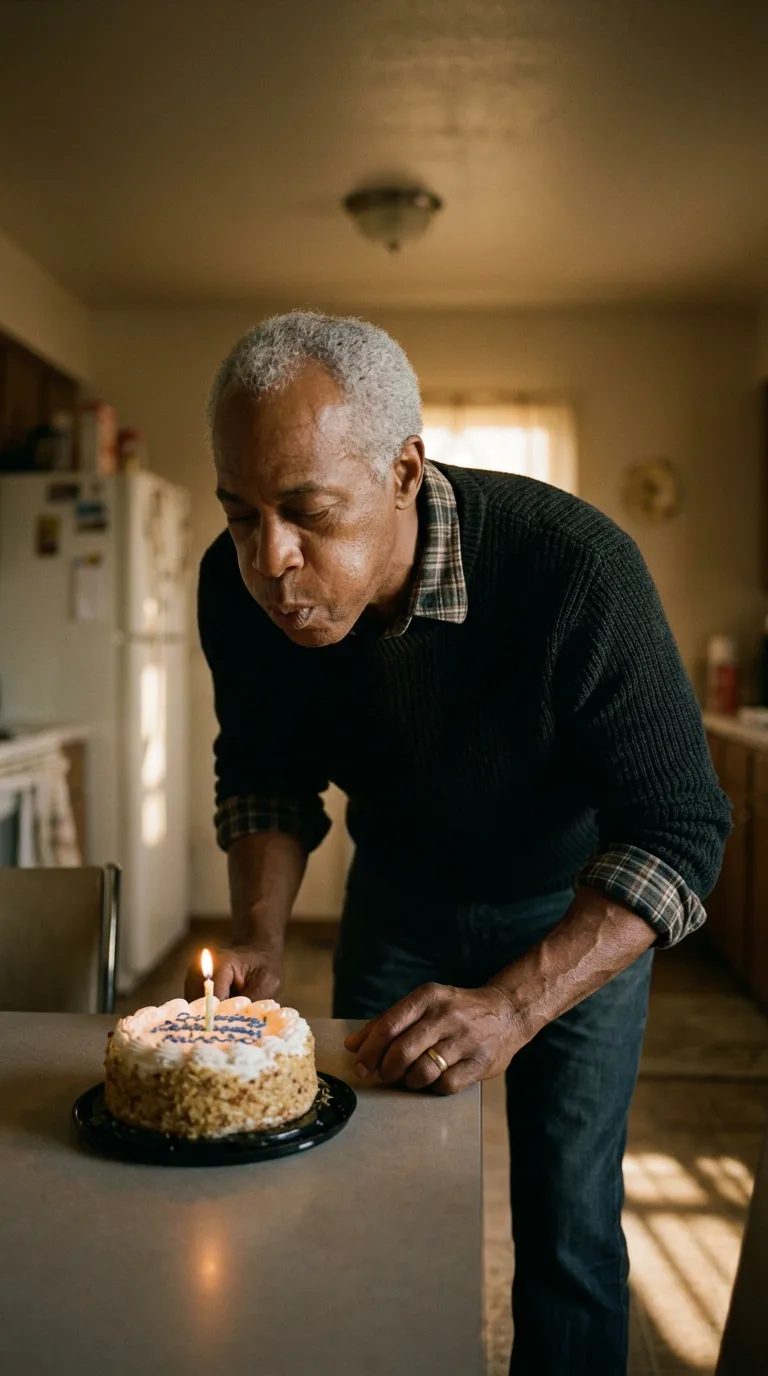
Rarest thing about him: Platinum / silver — uncommon, 1 in 101
Season 1seed 761941794 · engine v11
Character card
lineage 2NZHHJ
His body-swap story
@colin.hasbrook, wearing Travis Oberholt, rolled the wheel on and woke up as Franklin Dubose, spent under a minute in him, then spun the wheel and woke up as Ruben Castellanos
The van smells like cut coax and burnt coffee, and Travis Oberholt's hands — your hands, for now — are still greasy from the spool he racked twenty minutes ago. Thirty years old in this one, blond stubble coming in gold under the dash light, a body that does what you ask it without complaint, which should be enough. It isn't. It's the fourteenth day in a row you've clocked out of the same garage, driven the same access road, and felt the specific boredom of a life with no snag in it. Comfortable never held your attention long. You already know, sitting there with the engine ticking as it cools, that you're going to open the site on your phone before you've even decided to. Travis Oberholt has been you for eleven days. That's long enough to know every inch of him. You want the part you haven't seen yet — somebody's, anybody's, unopened.
You spin. The wheel finds a kitchen in Kansas.
The candle goes out on your breath and the room drops dark and then a second breath comes from nowhere, filling a chest that is not the one you just left, and your hand — his hand — is already closing around the candle, drawing it up out of the icing, smoke rising off the wick in one straight thread because there is no draft in this room, no fan, nothing moving but you. You are bent at the waist over a grocery-store cake with someone's name written on it in blue gel icing you have not read yet. Your knees are locked at an angle you didn't choose. There's a ring on your left hand, warm from the air of the room, and a sweater with a plaid collar underneath it scratching faintly at your throat.
The sweater gives it up first, wool against the forearms, worn soft at the elbows: your wife, Carol, bought this for you two winters ago at the outlet mall outside Hays, and you wore it out of the bag because she stood there wanting you to, and it has been the cold-weather sweater ever since, hung on the same hook by the door. The plaid shirt under it — you remember your own hands buttoning it this morning, top down, tucking the collar out over the sweater's collar the way you always do, standing at the dresser mirror with the porch light still on outside because the sun wasn't up yet when your shift started. Six a.m. at the school. Empty halls, the smell of pine cleaner and floor wax, the particular quiet of a building built for children with no children in it. You've mopped that hallway for eleven years. Your knees know the linoleum's give near the gym doors better than they know most people.
The ring is next, plain, unadorned, and it brings Carol whole: her voice over the phone last week saying she'd get the cake herself, don't argue, fifty-eight isn't nothing, and the particular ceremony of her setting one candle in the icing instead of fifty-eight because she said counting them out felt like a chore and not a wish. She isn't in the room. She's at her sister's this week, and she called an hour ago to say happy birthday and hung up before the cake ever came out of the box, which is why you're alone at the counter blowing out your own candle in a dark kitchen with the overhead light off because you liked, for one private second, the look of the little flame against the window and the thunderhead stacking up black beyond it, the wheat stubble gone the color of an old coin in that yellow before-storm light.
The ex-wife comes in sideways, uninvited, the way she always does: Diane, gone nineteen years now, no children between you, and neither of you ever able to say afterward exactly what killed it, only that it had been dying a long time before either of you noticed the smell. You don't think about her often. Tonight, alone, blowing out a candle nobody else is watching you blow out, she surfaces anyway, and there's an old ache in it that isn't grief anymore, just weather.
Your body underneath it all: fifty-eight and still built like you work with your hands, because you do, six days a week, a push mop and a rolling cart and forty pounds of trash bags at the end of every shift. Your knees complain on the cold mornings. Your lower back knows the exact height of the bucket wringer and hates it a little. Your hands, when they're not doing anything at all, find a lighter you don't smoke with anymore — haven't in fifteen years — and flip it open and shut, open and shut, a habit outliving its reason, and there's one in your jeans pocket right now, and you can feel the small worn weight of it against your thigh even bent over the counter like this.
You straighten up. Look down at the hand holding the candle, frosting still on your thumb from where you touched the letters of your own name. You turn the hand over once, like you're checking it's really the one you left the house in this morning.
"Well," you say, to the empty kitchen, to the storm light in the window, to no one, "that's one way to spend it."