Ruben Castellanos
Fictional. Generated by AI — not a real person, and no likeness of one is intended.
49, dentist in Denver · rolled by @colin.hasbrook · card — no film
History
who has worn him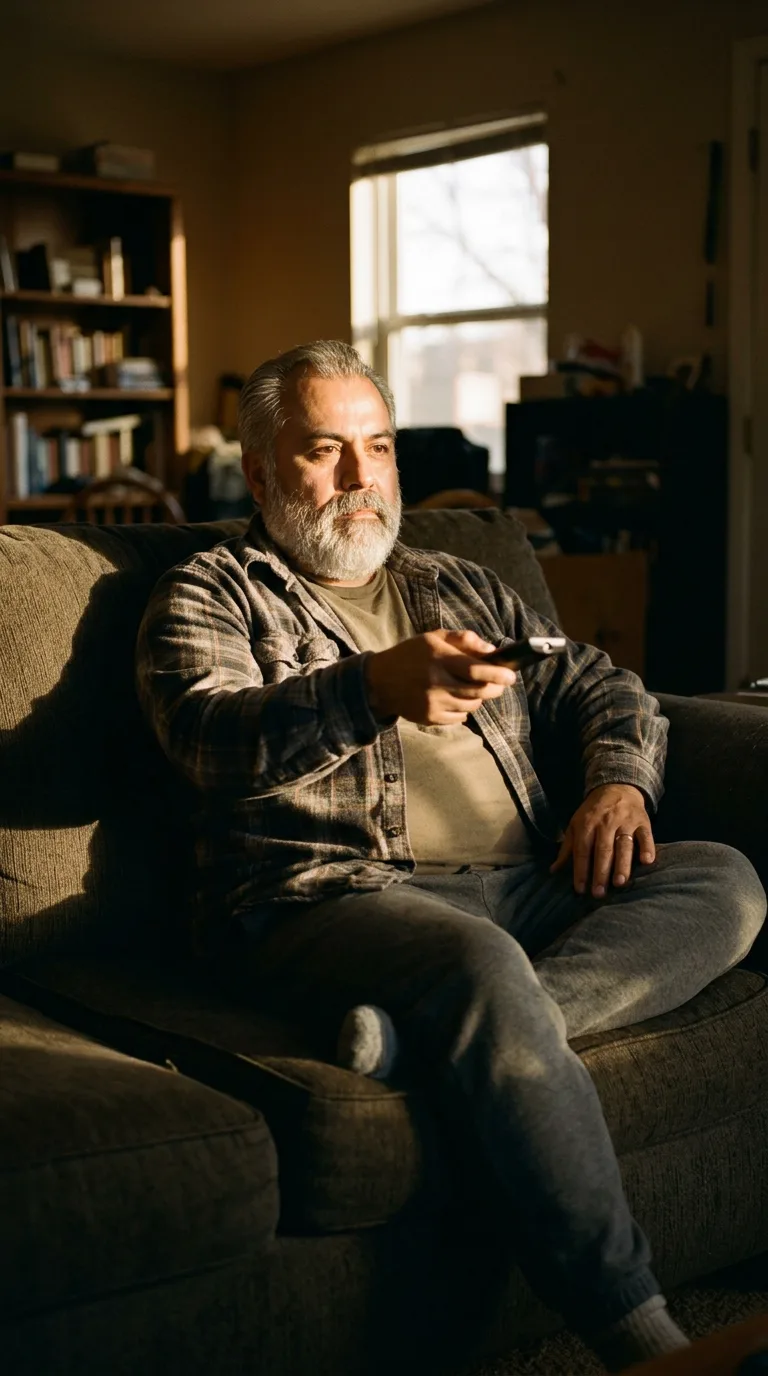
Rarest thing about him: Pipe smoker — rare, 1 in 282
Season 1seed 2087577890 · engine v11
Character card
lineage 2NZHHJ
His body-swap story
@colin.hasbrook, wearing Franklin Dubose, rolled the wheel on and woke up as Ruben Castellanos, spent under a minute in him, then spun the wheel and woke up as Marcus Deveraux
The mop bucket has a wheel that squeaks, and you have listened to it squeak for eleven months of Thursdays. Franklin Dubose's knees ache going down the east hallway of the school, a specific ache, a floor-buffer ache, and his supervisor called him "hey" twice today instead of his name, and something in you — not him, never him, he does not know you are a tenant — decided that was enough. You clock out at the end of his shift, sit in his truck in the lot with the radio off, and pull up the site on a phone with a cracked corner. The wheel is already loaded from last time. You do not think about why tonight and not some other night. You never do. You spin.
The television is mid-laugh-track when you arrive, and you arrive already sitting up, spine straight, the remote coming down out of the air and landing flat on the couch arm like it was always going to land there. The room is dark except for the screen strobing blue-white across a face that is not moving the way it was a half-second ago. Somewhere behind the ribs, a full stomach, warm, heavy in the chair of the body. Outside the window behind the blinds, Denver light is doing the long gold thing it does before it quits for the day, and none of that light is getting in here. The show goes to a joke. Nothing in the face answers it.
The couch fabric is corduroy under the forearms, ribbed, worn smooth in two patches, and touching it gives you Thursday nights — dozens of them, stacked — Ruben with a beer sweating a ring into the side table, Ruben half-listening for his wife's car in the driveway, Ruben alone on purpose because Alma has her book club and he likes the quiet more than he'd ever tell her. The remote in the right hand is warm from his grip, and it gives you the channel he flips to without deciding, a rerun he's seen enough times to mouth along with, and under that, further down, the particular shape of his laugh, which you are not making right now.
The gold band on the left hand is the loudest thing in the room once you notice it. It gives you a wedding fourteen years back, a backyard, string lights, Alma's dress catching on a rosebush and both of them laughing too hard to fix it right away. It gives you the ordinary bruise of marriage — the fights about money that aren't really about money, the specific quality of her hand finding his under a restaurant table without either of them looking down. It gives you, too, a name that isn't hers — Denise, years before Alma, a summer that ended wrong and never fully closed, a woman he still thinks of on certain smells, certain songs, and never says her name out loud anymore because there's no clean way to. He has never told anyone that some nights the quiet he likes is really that.
The pipe on the side table, cold, unlit, gives you smoke curling in the garage with the door half up, an hour carved out most evenings that Alma has stopped asking about because she knows the shape of a man who needs one thing that's only his. The taste of it is still faint at the back of the throat along with something older, whiskey, the fourth one tonight, or the third, the count gets soft after a while and has for years. The jaw is clenched and has been clenched, you realize, since before you got here, a habit worn into the muscle the way a shirt gets worn into shoulders — clenches when a patient cancels, clenches when Alma goes quiet in a way that means something, clenches for no reason at all, the body's own weather.
Under the sweatpants, under the T-shirt, is a day that started at the office, the overhead lamp swung down over some retiree's mouth, latex snapping onto these same fingers, the small mirror turning a molar toward the light, a hygienist laughing at something he said around the suction. Forty-nine years old, dad-bod thick through the middle, feet that ache in a specific line along the arch by six o'clock from a day spent standing at the head of a chair. The clothes he put on that morning — scrubs first, then these — come back sleeve by sleeve: the short-sleeved button top going on easy over the shoulders, the moment of tucking it, checking the mirror without really looking, the ring catching the bathroom light. None of it was a big morning. That's the whole of what it was.
The remote is still warm. You look down at the hand around it — thick fingers, silver hair on the knuckles, the band worn thin on one side from forty-nine years of turning it when he's thinking. You turn the hand over slowly, like it might not agree to be yours, and for a second the TV keeps playing to nobody.
"Huh," you say, to the empty room, in his voice, and it comes out lower than you expected, gravel at the bottom of it, and you don't know yet if that's funny or if it's just true.
You do not laugh at the next joke either.