Todd Kessner
Fictional. Generated by AI — not a real person, and no likeness of one is intended.
45, soldier in Small-town Ohio · rolled by @colin.hasbrook · card — no film
History
who has worn him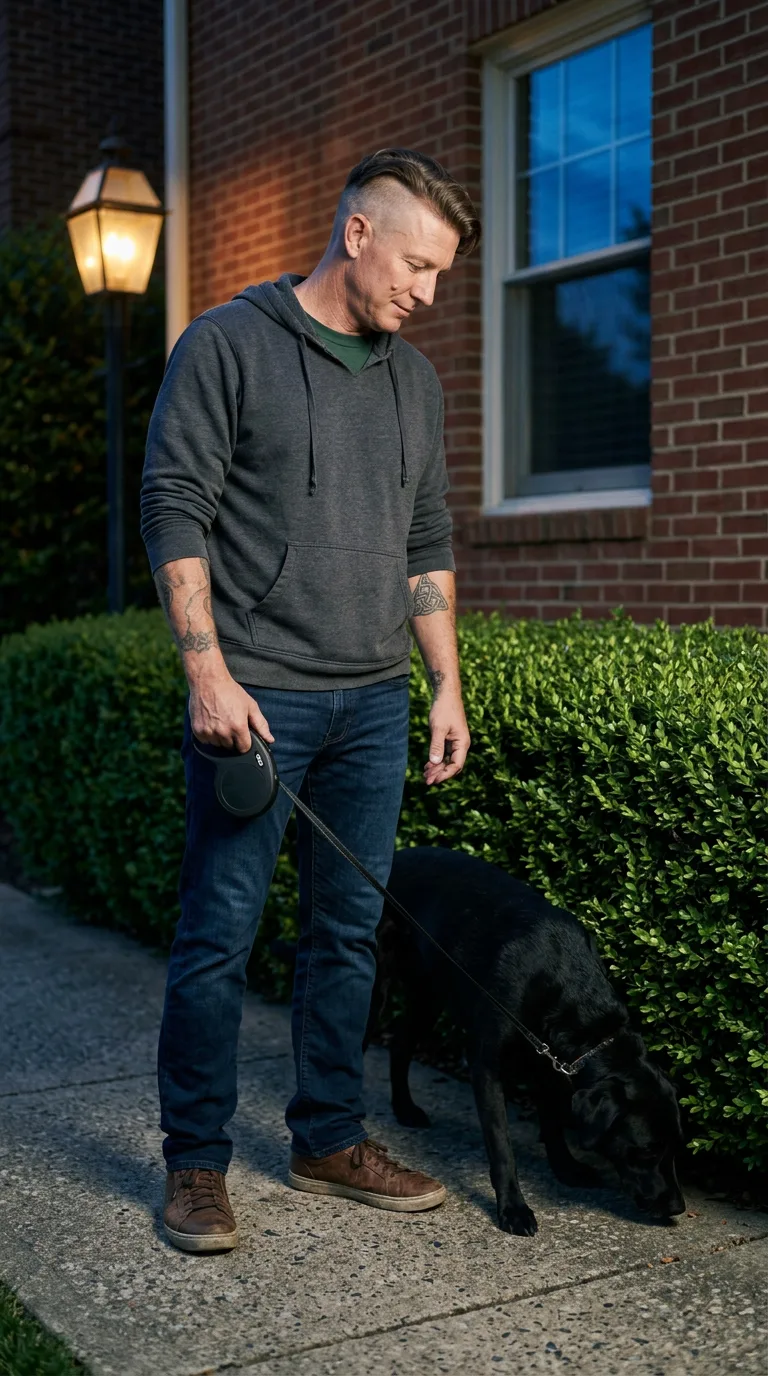
Rarest thing about him: Soldier — common, 1 in 292
Season 1seed 2009505181 · engine v11
Character card
lineage 2NZHHJ
His body-swap story
@colin.hasbrook, wearing Wendell Coker, rolled the wheel on and woke up as Todd Kessner, spent under a minute in him, then spun the wheel and woke up as Paul Ashcombe
The rig's radio is muttering weather nobody asked for, and you crack your knuckles against the wheel one more time — his knuckles, the trucker's, thick and swollen at the joints from thirty-one years of driving — and you already know. You are done with him. It isn't the CB chatter or the gray beard in the visor mirror or the ache that lives permanently in his lower back now. It's that this evening, parked at the rest stop outside Pikeville with the engine ticking as it cools, you felt time pass. Felt it the way you never used to. Six hundred and ninety men and you have started, God help you, counting the ordinary hours instead of skipping past them. That is the thing you would not say out loud: you are not chasing anything anymore, you are running from the feeling of sitting still inside one skin. So you thumb the phone open, find the site, watch the wheel spin its bright dumb circle, and let go of him mid-breath, the unibrow, the odd-colored eyes, all of it, without even the courtesy of finishing his thought.
The leash is already in your hand when you arrive, and it is not your hand — longer fingers, a mole's small dark weight high on the left cheek that you can somehow feel like a coin pressed there though you have no face of your own to feel it with. Weight settles differently: taller, leaner through the middle, a body that stands with its shoulders already braced for something, out of habit. The dog looks up past the hedge, ears flattening, some animal arithmetic telling it the math has changed at the other end of the leash. Your hand — his hand — has stopped walking. It winds the retractable leash in twice, a short mechanical clatter, and starts off at a stride the dog has to scramble to learn.
Streetlamp. Brick. A window with blue evening light behind it. It is a smell that gets you first — fabric softener and the ghost of cut grass and, underneath, the flat mineral smell of the hoodie's own gray cotton — and Todd Kessner comes up through it in pieces.
The hoodie: he's had it four years, bought it off a rack in a Beavercreek strip mall the week he got back from the last deployment, because his hands wanted something soft and unremarkable to wear that had nothing to do with a uniform. This morning — an evening that was a morning where he stood, hours turned inside out by a job that runs its people through night watches and pre-dawn PT until the calendar stops meaning much — he'd pulled it over his head still warm from the dryer, right arm first the way he always does, favoring the shoulder that took shrapnel outside Kandahar and aches on cold mornings whether or not the temperature agrees it should. The rolled sleeves come with a flash of a barracks mirror, cataloguing the ink on his forearms — the unit crest, the Celtic knot he got with three guys who aren't all still alive to remember getting it with him — a private little roll call he does some mornings without meaning to.
The jeans: dark, broken in soft at the knee, bought with Renata two winters ago at an outlet mall while the kids fought over a soft pretzel, her hand on his arm the whole time saying these, get these, they make you look like you have a life outside that base. He does have a life outside the base — three kids, a fourth almost certainly on the way if the way Renata's been looking at him lately means what he thinks — and the wallet in his back pocket gives you her, quick and warm: dark hair, laughing at something not funny, steady in a way he has never had to work at trusting.
The boots: standing at attention this morning — the actual dawn one, before the shift folded time over on itself — at formation outside the barracks, breath fogging, sergeant's voice flat and carrying in cold air, the particular ache of standing at parade rest that lives in his calves and has for twenty years. Dog tags cold against his sternum under it all, a small persistent metal fact.
The dog: a shelter mutt named Duke that the youngest picked out by pointing and shouting, and Todd's hand on the leash grip remembers a hundred evenings like this one, the dog's nose working a hedge like it's cracking a case, Todd's mind two blocks ahead already, on dinner, on whether Renata's ultrasound photo is still stuck to the fridge with the elephant magnet, on nothing, on everything, on the particular peace of a body that has done enough hard things today that this, walking a dog on a street with one stoplight, feels like the reward for it.
You feel where his hands want to go without him — the itch in the fingers, knuckles aching faintly to be cracked, an old unconscious tic thirty-one years deep that started as a nervous habit at nineteen and calcified into something his body just does now, the way it just breathes.
You look down. His hands, tan against the dark leash, a thin white worry-line where the wedding ring isn't yet but the girlfriend's ring might someday be. You turn one over slow, watching the tattoo shift at the wrist, watching the mole's shadow move faintly at the edge of your vision when you tip your head. Somewhere behind a window across the street a porch light comes on, uninterested.
"There you go, boy," you say, to the dog, in his voice, easy, low, a voice that has given orders and meant them — and it comes out sounding almost like a man who intends to be here for dinner.