Wendell Coker
Fictional. Generated by AI — not a real person, and no likeness of one is intended.
32, trucker in Eastern Kentucky · rolled by @colin.hasbrook · card — no film
History
who has worn him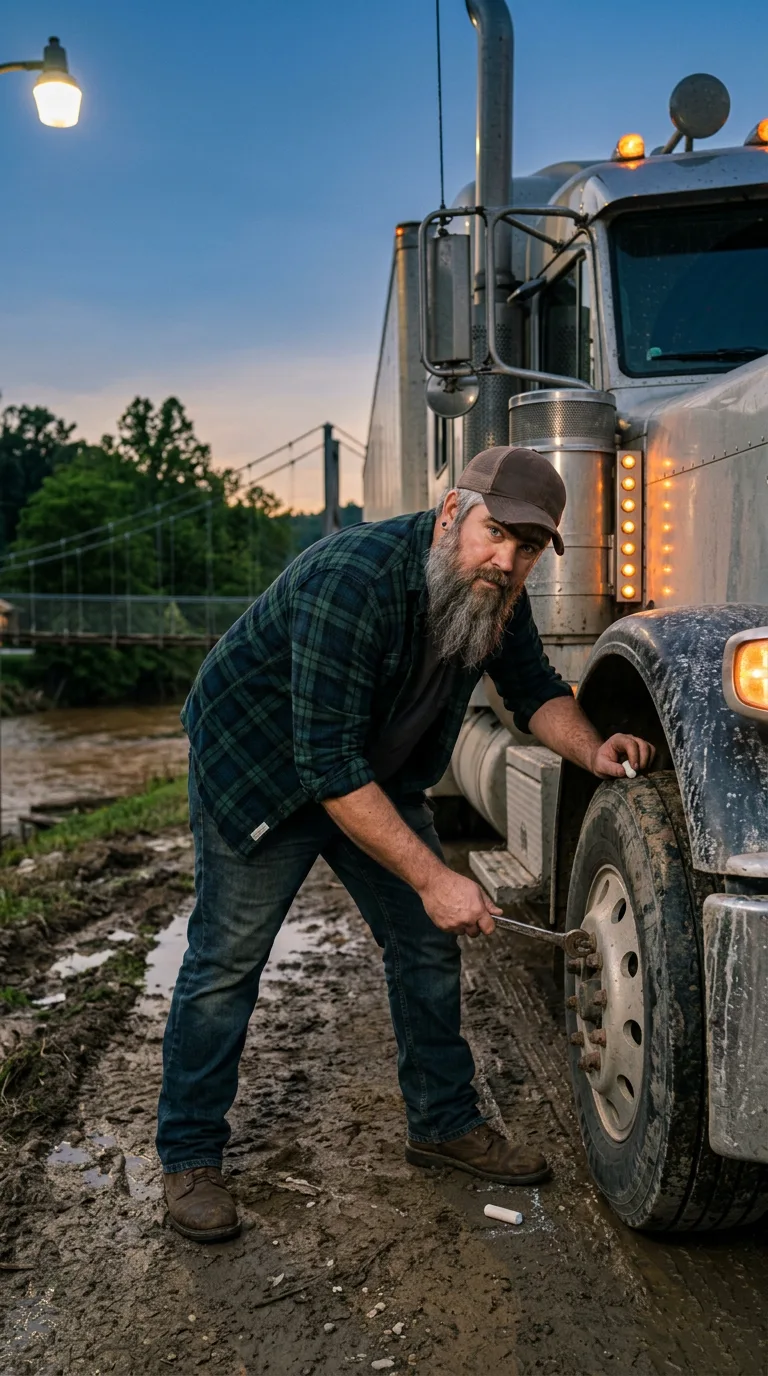
Rarest thing about him: Heterochromia — rare, 1 in 200
Season 1seed 845967764 · engine v11
Character card
lineage 2NZHHJ
His body-swap story
@colin.hasbrook, wearing Gerald Stanek, rolled the wheel on and woke up as Wendell Coker, spent under a minute in him, then spun the wheel and woke up as Todd Kessner
You are Gerald Stanek for less than a minute, and already you know it was a mistake — not the body, the body is fine, skinny and old and reliable enough, but the desk. The desk is the problem. There is a stapler on it aligned exactly parallel to the monitor, and a coffee mug that says WORLD'S OKAYEST MANAGER that some employee bought as a joke Gerald never got, and a spreadsheet open that has been open, in some form, for eleven years. You spun the wheel and it gave you Gerald mid-shrug, mid-nothing, and you stood there in his hazel eyes for forty seconds feeling the specific boredom of a man who alphabetizes his lunch. That's the something. Not drama. Just: not this. Not one more evening being asked to approve a purchase order. You are not built — nobody wearing anybody is built — to sit still. You open the laptop, you find the site, the wheel already spinning under your cursor before you've finished deciding, and Gerald's hand, which is your hand for these last few seconds, clicks the pen in his shirt pocket once, twice, out of a habit you didn't give him.
The wrench slips a quarter turn wrong on a lug nut you've done ten thousand times, and then it doesn't slip, it goes back and does it again, slow, correct, checked.
You are bent over at the wheel of a truck the size of a house, mud working itself into the tread of a boot that is not the boot you left, and there is a lug wrench heavy and cold in a hand that is not the hand you left either — this one is broader, the knuckles thicker, a dusting of chalk on the palm from a tire-checking stick lying in the mud below. The light is going amber-blue behind you, that held breath of a sky right before true dark, and somewhere off to the left water is moving over rock, and there's a swaying cable footbridge strung across it, and the truck's running lights are already on, ticking gold against the fender. Your back — his back — has an ache low in it that has been there so long it doesn't announce itself, it just sits, a permanent tenant. You straighten up half an inch too fast and something protests, comfortably, like an old dog complaining before it lies back down.
The shirt is what opens first. Flannel, green and navy, soft with washing, unbuttoned over a gray tee gone the color of rain — and touching its own sleeve brings a whole morning back at once: a woman's voice from the kitchen, coffee already made, the particular ease of a body getting dressed in a house it knows in the dark without needing the light. *You always roll them up before you even get out to the truck,* she says, not a complaint, just an observation she's made a hundred times, and there's real fondness under it, and under that, briefly, an old ache that isn't about her at all — a different kitchen, years back, another woman's voice that had the same rhythm and none of the same warmth by the end. You don't get her name. You get the shape where she used to be, the specific quiet of driving past exits you used to take just to see her.
The cap comes with the feeling of a hundred first-lights, brim worn soft at the curve, sweat-salted at the band — mornings alone at truck stops with the diesel smell and the particular company of nobody, which he has never minded, which some part of him actively prefers. The beard, when the wind moves it against your collar, brings the barber's voice from some shop in Pikeville, joking about the time it'd save him to just shave the damn thing, and the flat certainty underneath, never spoken, that he never will. It's not vanity. It's just his now, the way the two mismatched eyes in the mirror are his, the way people used to stare and don't anymore because he's stopped noticing them staring.
The wrench in your palm is the deepest one. It knows this truck better than the rest of you knows anything — the particular give of this lug nut, the memory of a hundred flats fixed on shoulders of highway with nothing but headlights and the sound of eighteen-wheelers passing close enough to move your hair, the small stupid pride of a rig kept running past when it should've quit. Somewhere in there is a whole stretch of years: a route memorized so completely it stopped being a road and became a body of its own, hollows in the seat, a specific gas station burger you'll never admit out loud that you like, a dip can worn a permanent ring into the truck's cupholder. The body under your hands is heavy in a way that has settled rather than been fought — soft where it's soft, strong through the shoulders and forearms in the unglamorous, functional way of a man who lifts things because the job requires it and not because he wants to look like he does.
The last thing that comes, faint, from the mud on your boots and the sound of the creek: this bridge, this exact light, a hundred evenings just like it, and no fear in any of them. He never saw it coming because there was nothing to see.
You look down. The hand on the wrench is thick-knuckled, chalk-dusted, a stranger's hand doing a stranger's job with a competence that isn't yours yet and already is. You turn it over once in the fading light, like checking it for damage that isn't there.
"Damn," you say, to no one, to the creek, to the truck. "Wrong hands again."