Terry Wickman
Fictional. Generated by AI — not a real person, and no likeness of one is intended.
55, manager (mid-level) in Western Kansas · rolled by @colin.hasbrook · card — no film
History
who has worn him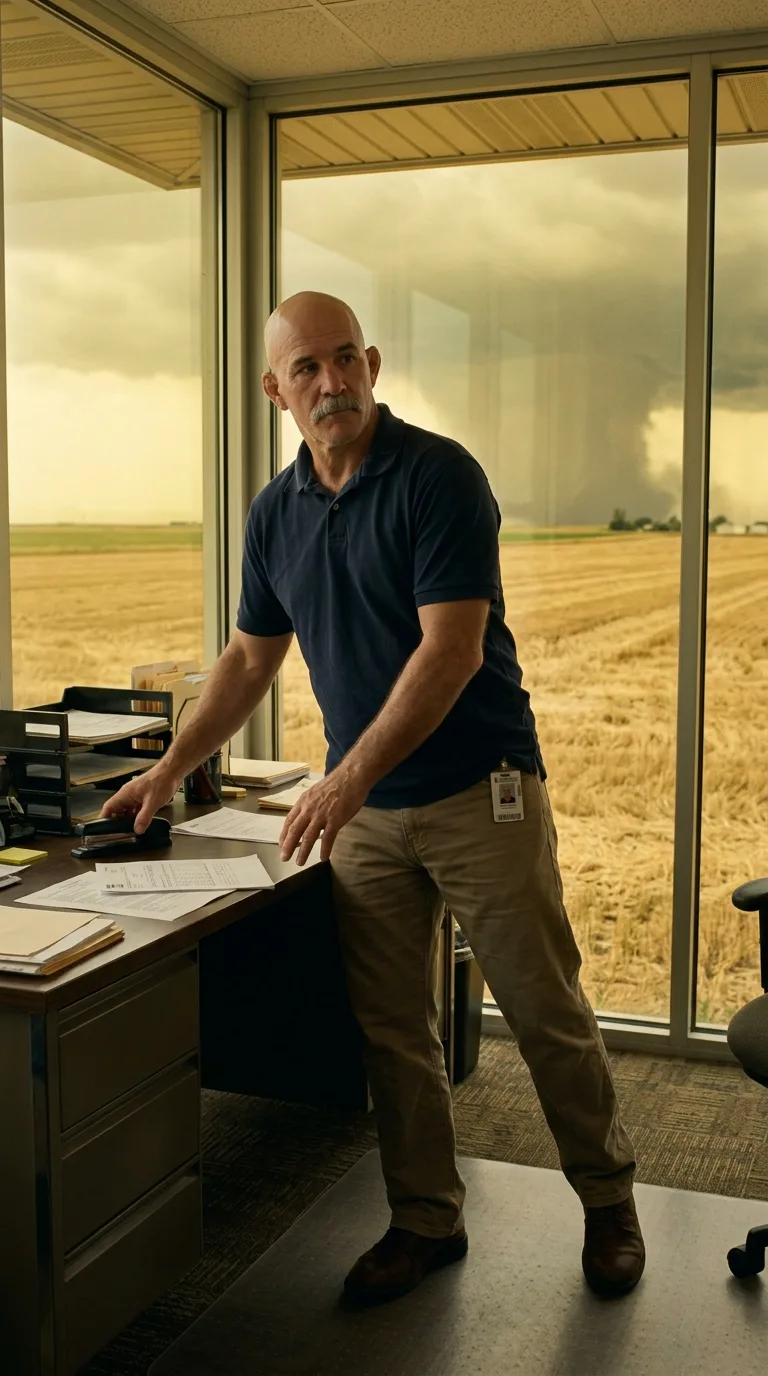
Rarest thing about him: Cauliflower ear — uncommon, 1 in 161
Season 1seed 726181068 · engine v11
Character card
lineage 2NZHHJ
His body-swap story
@colin.hasbrook, wearing Sami Haddad-Younes, rolled the wheel on and woke up as Terry Wickman, spent under a minute in him, then spun the wheel and woke up as Dominic Salcedo
---
Sami Haddad-Younes is standing in the doorway of his own glass-walled office at eleven in the morning, San Francisco light flat and white through the window behind him, and his hand — dad-bod soft, once-broken nose casting a small shadow on the wall — is resting on the frame like it belongs there. It does belong there. That's the trouble. Less than a minute in him and already the meetings are visible from here: the Q3 numbers, the guy in sales who needs managing out, forty more years of rooms like this one if the actuarial tables are kind. It is a good body. It is a comfortable one. That is exactly why the itch starts — comfort is a room with the exits found already, and you have never once, in eight hundred and thirteen tries, wanted to know where the exits are before you've walked through every wall. You want the version of this morning you haven't had yet. You go back to the site with his soft hand still on the doorframe.
The wheel spins. It does not care what you were.
The rhythm breaks — a stapler picked up wrong, set down, picked up again, slow and correct — and then you are behind a face with a moustache and a bald head under fluorescent light going yellow at the edges, and outside the glass wall a wheat field lies shorn to stubble under a thunderhead built up black and closing like a fist. Your hand — his hand, thick-knuckled, faintly shaking even now, even doing nothing — is flat on a stack of invoices. There is a stapler under your palm. The air smells like carpet dust and coffee gone bitter on a warmer plate. It is the middle of the day here. It was the middle of the day in Kansas before you ever left San Francisco, which tells you nothing yet, because you don't know yet that this is Kansas, only that the light outside is doing something California light never does — going the color of a bruise, going still.
The stapler is what opens first. Ten thousand times, this same motion, this same desk — a flash of him twenty years younger stapling invoices in a smaller office down the hall, the wallpaper different, a woman's voice somewhere behind him that isn't there anymore, gone the way most things go, without a funeral, just a lease that ended and was never renewed. Terry Wickman. Fifty-five years, all of them within sixty miles of this building. The polo shirt is next — cheap cotton, third one he's owned in this exact navy, and his own hands, sleeve by sleeve, that morning: sitting on the edge of a bed nobody else has slept in for over a decade, one arm through, pausing at the ear before the second sleeve because the cauliflower ear still catches on collars sometimes even now, forty years since some Friday night mat in a high school gym where a boy named Dale Frisk drove his skull into the floor and something in the cartilage never went back to being an ear. Wrestling. That is where it lives — 145 pounds, a conference title, a photograph in a box somewhere that his mother kept and he never threw out. He touches his own ear without meaning to sometimes. He is doing it now, in your hand, though you don't yet know why the hand goes there.
The khakis carry the money — not flash, never flash, but a rollover 401k that turned, without much attention paid to it, into something past half a million, the kind of number a man in Western Kansas does not mention at church, does not mention anywhere, keeps in a drawer of the mind next to the fact that he stopped drinking eleven years ago not because it ruined anything visibly but because one Tuesday he looked at the second can and didn't want to know the man who needed a third. He never smoked. Never saw the appeal. Mainline Protestant, an usher twice a month, a man who believes mostly out of inherited habit and finds that habit enough.
The desk under your palm gives you the job whole: middle manager, seventeen people under him, a role he is good at in the unglamorous way of a man who shows up, who does not lie to anyone, who has managed the same regional accounts long enough that the work stopped needing his full attention around the time his hair finished leaving. No wife. No kids. An ex-fiancée twenty-two years gone whose name doesn't even sting anymore, just sits there like a filed invoice. He built a life that is quiet and paid-for and entirely, uneventfully his, and through the window the thunderhead is close enough now that the office lights have kicked on early, and somewhere in him — in the shake that lives in his hands and always has, since before this body was even fifty, some tremor with no name he never got around to seeing a doctor about — there is the specific, ordinary fear of a Kansas man watching a sky do that: not death exactly, just the old habit of watching the horizon when it goes wrong-colored.
The stapler is still under your palm. Your hand — his hand — is shaking the way it always does, an idle five-hertz tremor that means nothing and never has. You lift it off the invoices and turn it over, front to back, at the fingers like a tool you're checking for damage, and the cauliflound ear catches the office light when you turn your head toward the window and the storm stacking up black over the stubble.
"Didn't feel a thing," you say, to no one, in a voice that isn't San Francisco's, isn't anyone's you've worn before, and you don't know yet whether you mean the storm coming or the eight hundred and fourteenth time.