Dominic Salcedo
Fictional. Generated by AI — not a real person, and no likeness of one is intended.
20, line cook in Small-town Ohio · rolled by @colin.hasbrook · card — no film
History
who has worn him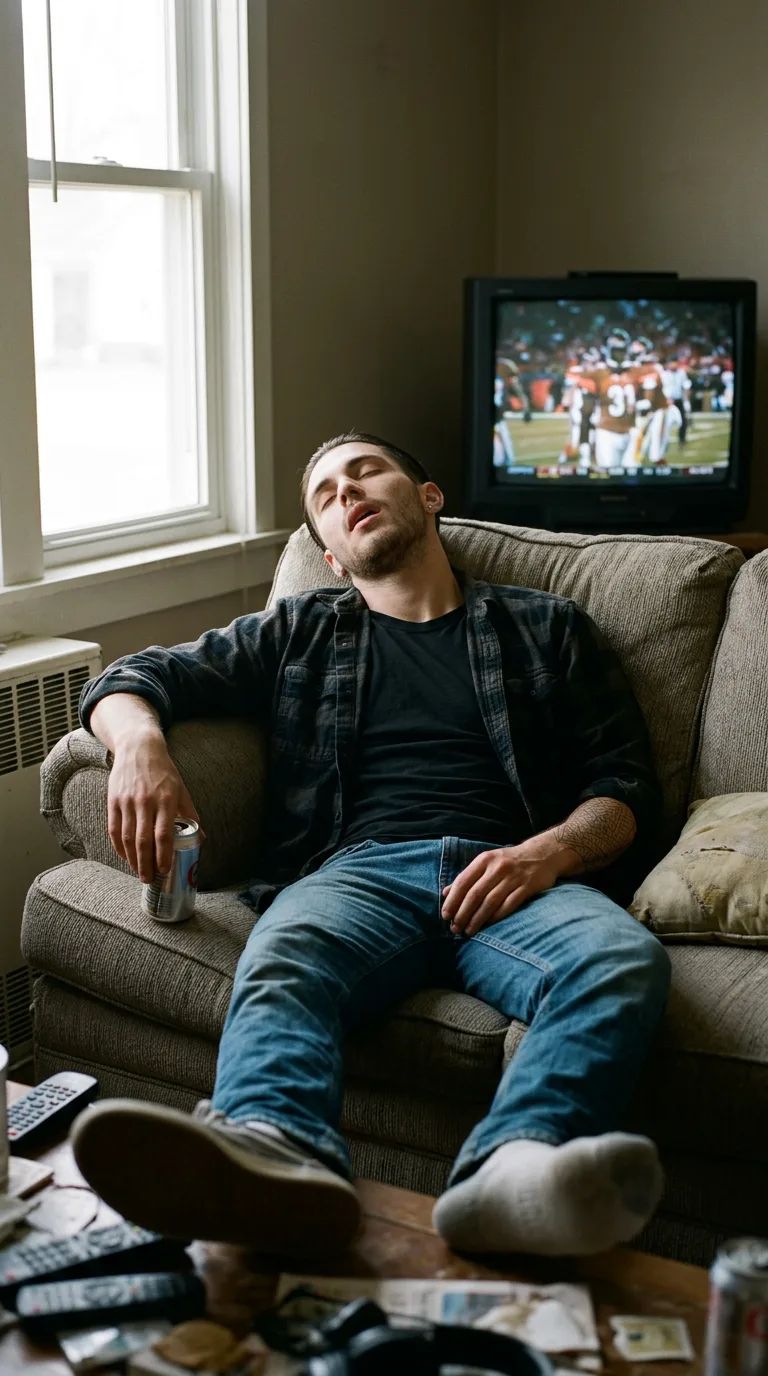
Rarest thing about him: Falling asleep in front of the game — common, 1 in 59
Season 1seed 508538836 · engine v11
Character card
lineage 2NZHHJ
His body-swap story
@colin.hasbrook, wearing Terry Wickman, rolled the wheel on and woke up as Dominic Salcedo, spent 1 hour in him, then spun the wheel and woke up as Efrain Bautista
The office in Western Kansas smells like burnt coffee and the particular staleness of a man who does not open windows. You are Terry Wickman today, and you have been Terry Wickman since yesterday, standing at his desk running his blunt fingers along the edge of a stapler that means nothing to you, in a body that aches in the ear like it always aches, a low dumb throb in the cauliflowered cartilage that Terry apparently never once iced properly in whatever life gave it to him. Fifty-five years in this frame and none of them yours. You spun for him less than a minute ago, in some other man entirely, and already the wanting is back, quick and stupid, because that is what eight hundred and fourteen spins does to a person: it turns wanting into a reflex, like blinking. You are bored of the moustache. You are bored of the paperwork on the desk with Terry's name typed at the top of it. You want to be in a body that has not decided anything yet today. You open the site on the office computer, mousing past a spreadsheet nobody will notice you abandoned, and you spin.
The room that arrives is not this room. It is smaller, dimmer, lit sideways through a window with a pull-cord blind, and there is a can in your hand, aluminum, sweating faintly, half-warm, and a television throwing colored light against a wall you have never seen. Your head is tipped back against a cushion. Your mouth is open. Somewhere behind your eyes, on a screen, a ball is already through the air a second time — a replay — and your thumb, without asking you, finds the volume rocker on a remote wedged into your ribs and nudges it up two clicks, precise, practiced, a man's habit surviving the man. You are sitting forward before you've decided to. Nobody warned you. Nobody ever does.
The can is the first thing that gives you anything: cheap beer, half a swallow left, and under your palm the memory of a case of it bought at the gas station on Main because the grocery closes at seven and the diner across from it closed for good two winters back and stayed closed, boarded, a joke the whole town still makes. You feel, briefly, the particular Ohio flatness of a town with one stoplight, the light itself sitting there blinking amber this time of day because there's no one left to control for. Thursday. Early afternoon, though something in the body insists it should be night — a tiredness sitting bone-deep, the wrong-hour tiredness of someone who works the overnight and is trying to unwind before a sleep that will not come easily, watching a game recorded off last night's feed because live means nothing when your shift ends at six a.m.
The shirt against your back opens next, plain black cotton, soft with washing, and it gives you a whole morning: standing in a kitchen no bigger than a closet, pulling this same shirt over your head one-armed while the coffee maker groans, the half sleeve of geometric linework catching the light from the one window, still slightly tender in one spot from the last touch-up eight months back. Sleeve down. Flannel over it, buttoned wrong on purpose because you were going to take it off again the second you sat down anyway. Jeans that have flour ground into the seams no matter how many times they go through the wash. Socks, no shoes, because shoes are for the restaurant and the restaurant is eleven hours away in either direction depending which way the clock is pointing.
The apron isn't on you now but the memory of it is stitched into the muscle anyway — the line at Rosetti's, the heat coming off the flat-top in waves you stopped noticing around month three, the particular rhythm of six tickets up and the expediter calling times over the hood fan, your hands — his hands — moving without him, plating, wiping, plating, the small studs in your ears catching steam-light, stubble he'd stopped bothering to shave because nobody at that station cares. Twenty years old and already good at something, good with a real, quiet competence nobody in this town has bothered to notice out loud. No money in it. No savings account worth the name. A vape in the truck's cupholder that you reach for on breaks without thinking, the habit surfacing now as a small phantom itch in the chest. No girl currently, no girl particularly missed. A mother somewhere who calls on Sundays. A body still young enough that the ear doesn't ache, the knees don't ache, nothing aches except the specific tiredness of a night shift folding into a Thursday afternoon nobody else in town is awake for the same way.
The couch under you remembers itself too — a hand-me-down, cigarette-burned by whoever owned it before, a torn cushion you keep meaning to flip. This is his whole life, this room, this couch, this can going flat in a fist that isn't shaking anymore, everything he had and none of it much, and you are standing in the exact center of it with no warning given and none owed.
You bring the hand up — his hand, tan over pale, tattoo running down toward the wrist — and turn it over slowly in the blue light off the screen, watching the fingers flex like you're checking they still work. Behind you the crowd on TV roars for a goal he never saw the first time either. You drag your palm once over your scalp, an old gesture that isn't yours yet and already is, and you look into whatever's watching, and you say, in a voice younger than any you've used in longer than you can count:
"Guess I'm up."