Terrence Boykin
Fictional. Generated by AI — not a real person, and no likeness of one is intended.
58, museum conservator in Las Vegas · rolled by @marco.villagrana · card — no film
History
who has worn him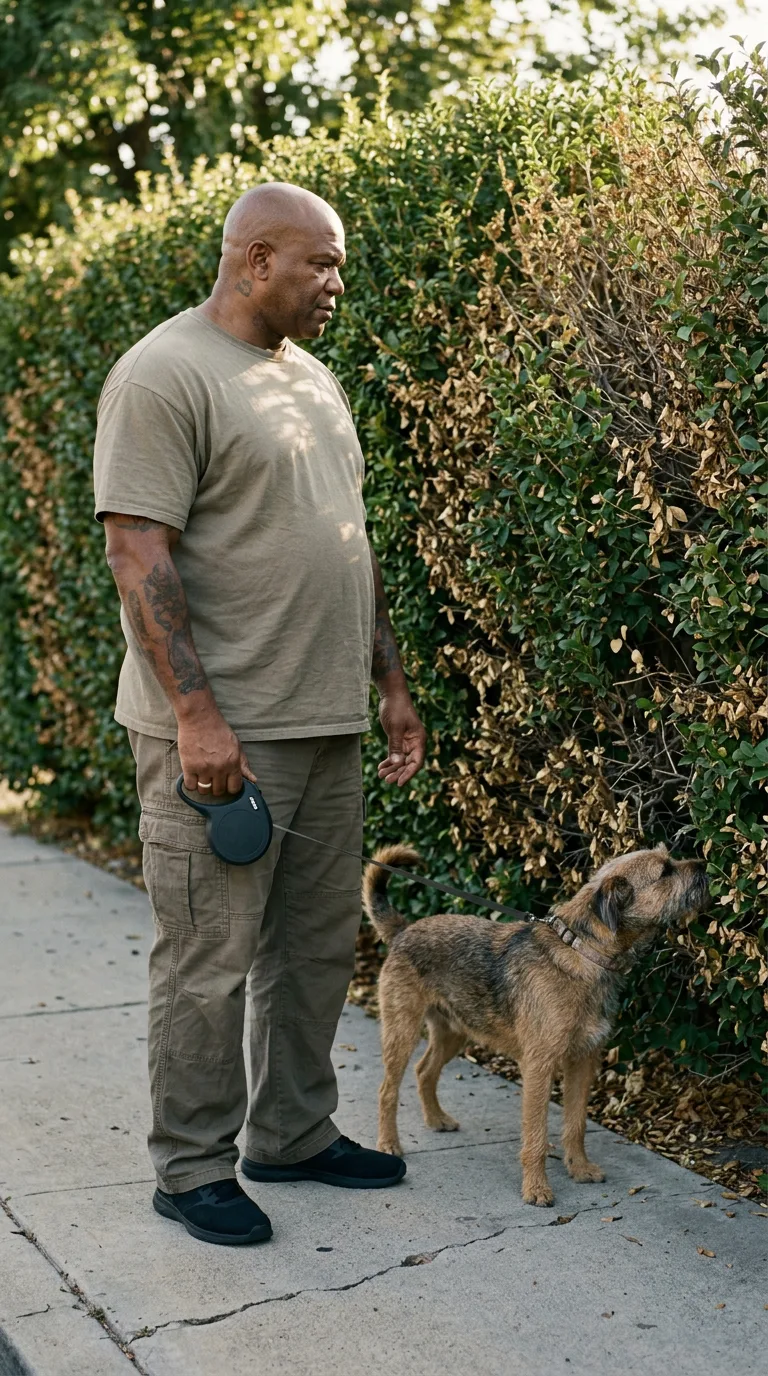
Rarest thing about him: Museum conservator — uncommon, 1 in 181
Season 0seed 90674675 · engine v10
Character card
lineage LJL8SV
His body-swap story
@marco.villagrana, wearing Marcus Etheridge, rolled the wheel on and woke up as Terrence Boykin, spent 3 minutes in him, then spun the wheel and woke up as Danilo Reyes
Marcus Etheridge's apartment is quiet, and his knees ache the way they always ache, standing at the window with a glass of water he isn't going to finish. Gray hair at his temples, the good watch on his wrist, the sales numbers still glowing on the laptop behind him. Three minutes ago he became you, and already the fit of him is wrong in some way you can't name — the softness through the middle, the tiredness in the hands, a life that isn't unpleasant so much as beside the point. You didn't spin fifty-six times because any one of them held you. You spin because none of them do. The wheel is still open in the browser tab, patient, glowing, and Etheridge's finger — your finger, for three more minutes — is already moving toward it before the rest of him agrees.
The leash goes slack in your hand and then you are the hand.
A hedge, greener than anything in Nevada should be this late in the year, and a dog with its ears back looking up past it at the man holding the leash, except the man is you now, mid-breath, mid-afternoon-going-to-evening, weight settling forward onto feet in black slip-on shoes that have already broken themselves in around a bad left knee. You wind the leash twice around your palm without deciding to. The dog doesn't understand the new rhythm yet and neither do you, and for one stride you are both relearning the same thing at once.
Then the shirt.
It's a plain tan T-shirt, soft from washing, and the cotton against your back gives you a morning: him standing in front of a mirror in a bedroom with the blinds already up, because Las Vegas light doesn't wait for anyone's schedule, pulling the shirt down over a torso that carries weight the way a retired lineman does — not soft, exactly, just settled, permanent. His shoulder clicked when he raised his arm through the sleeve. It always clicks. He rolled it once, the way he does every morning, a habit older than he can place, and thought about nothing in particular, which was its own kind of peace.
The cargo pants next — he remembers buying them at a big box store off Sahara with his daughter years ago, her laughing at how many pockets a grown man could possibly need, him saying you'd be surprised, and meaning it, because his job is full of small tools that need somewhere to live that isn't a lab coat pocket that isn't his own anymore for the day.
The lab coat. That's the one that opens the widest door.
Gray, cotton, a little stiff at the collar from bleach. Under those north-facing windows at the museum, the light doing that flat even thing that light does when it isn't trying to be beautiful, just honest — good for seeing what a four-hundred-year-old varnish is actually doing to a face underneath it. His hands, gloved, holding a swab and a scalpel he uses like a paintbrush, more patient than anything else in his life has ever asked him to be. He loves this work in a way he has never loved being loved. There's a canvas on the bench, a saint's robe going threadbare under old retouching, and the particular quiet of a room where nobody is allowed to raise their voice, which is maybe why he took the job in the first place — after the divorce, when raised voices were most of what he remembered of home.
The ring finger has no ring on it but the pants brush against it anyway, and there it is: the small paler stripe of skin, and behind it a whole marriage — Renata, her name arriving with the shirt sleeve somehow, though you can't say why cloth would carry a name — sitting across a kitchen table with the finality already decided, both of them too tired and too Baptist to shout about it. A daughter between them, grown now, who calls on Sundays. He goes to church still. He has never had a drink in his life and has never wanted one, which used to be a point of pride and is now just a fact about him, like his shoe size.
His knees complain, his lower back complains, an old ache that lives just above the belt and never fully leaves, and his hand — his hand, without him asking it to — drifts up toward his own jaw, touches the smooth dome of his head, checks his own face like a man checking a door is locked. He does that forty times a day and has never noticed himself doing it.
The dog barks once, short, impatient, tired of the hedge.
You look down at your hand where it holds the leash, thick fingers, a bare ring line, a small burn scar you didn't put there and don't explain, and you turn it over slowly in the light that's going orange now at the edges of a Nevada evening.
You say, "Okay. Okay — who's hungry."
And the dog, mistaking it for permission, pulls you both forward into the rest of an evening you don't know the length of yet.