Danilo Reyes
Fictional. Generated by AI — not a real person, and no likeness of one is intended.
34, florist in Anchorage · rolled by @marco.villagrana · card — no film
History
who has worn him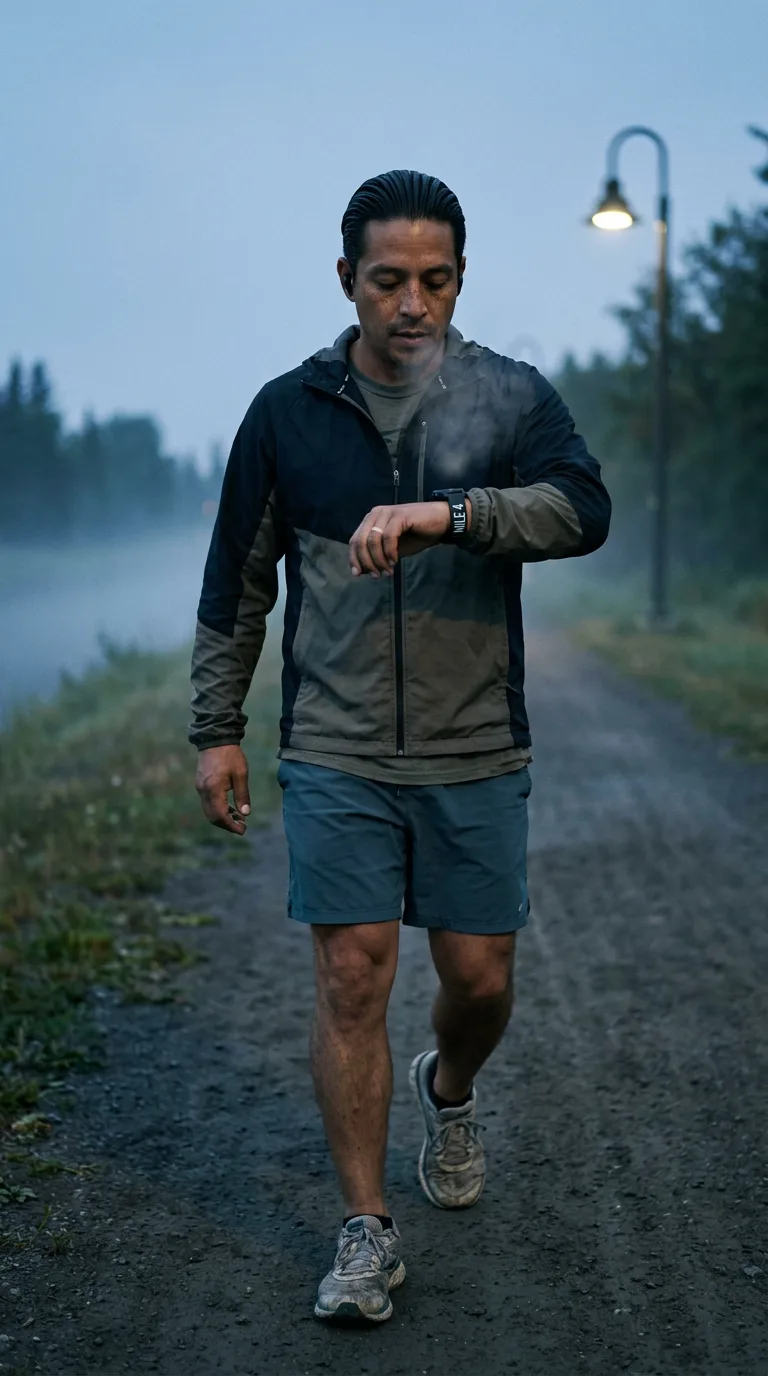
Rarest thing about him: Latter-day Saint — epic, 1 in 49
Season 0seed 1405475310 · engine v10
Character card
lineage LJL8SV
His body-swap story
@marco.villagrana, wearing Terrence Boykin, rolled the wheel on and woke up as Danilo Reyes, spent 4 minutes in him, then spun the wheel and woke up as Walter Chessman
Three minutes in Terrence Boykin's museum office, and already the joints are wrong for you. You feel it in the wide bald skull when you tip your head down at the loupe still sitting on the felt pad, at the varnish sample under it he was in the middle of matching before you came along and took the wheel from wherever he kept it in his mind. Sixty-one years of somebody's care sits under your palms, and your palms are enormous, thick-fingered, a stranger's calluses in a stranger's climate-controlled hush. It is early evening here, the museum gone quiet around the last docent, and the AC breathes cold across skin that isn't cooled from any run, any work, anything you did. You did nothing to earn this body and you will do nothing to keep it. Boredom isn't quite the word. It's more that Terrence Boykin, at three minutes old, is already someone you've finished reading — a good sturdy paragraph, a life you can feel yourself starting to describe rather than live. The itch under that boredom is old and specific: you want the drop again, the two full seconds before a life closes its hand around you. You pull up the site on his phone, thumb clumsy with his own unfamiliar reach, and you spin.
The cold hits first — not violent, just Alaska, five in the morning, breath fogging off a face that is not the one you had half a second ago. Your foot is already coming down wrong, weight shifted, stride interrupted mid-swing like a skipped word in a sentence, and for two steps you are nobody's man at all, arms too low, head floating, a stumble that the ground never gets to finish. Then it resolves. You are running. Someone's watch buzzes against a wrist you didn't ask for, registering a split that belongs to a stride you've never held before, on legs a foot shorter than the ones you left standing in Nevada. Earbuds thread tinny music into ears that flinch at first, unused to it, and then don't. The canal fog is close and gray and smells like standing water and spruce. Somewhere behind you, in Las Vegas, Terrence Boykin's body is presumably still holding a loupe over a green stain on old wood, minus whoever was steering it.
The shirt isn't on this body — it's a running jacket, zipped to the throat, and it doesn't carry much. But the skin under it does, and so do the shorts, and so does the watch, and it all starts arriving before you've taken three more strides. Danilo. The name comes up out of nowhere and everywhere, out of the wristband, out of the rhythm his feet already know without you steering them — mile four, always mile four by the lamp with the flickering bulb, seven years of getting up before the girls wake for a school he no longer lives close enough to walk them to.
The freckles across this nose are a joke his mother used to make, algo del sol de tu papá, and there's an ache folded into that memory that isn't grief exactly, just distance — she's been gone longer than the divorce has, and the divorce is not long at all. Two years. His ring finger still carries the pale stripe where the band sat for eleven of them, and touching it — feeling his own thumb brush it out of habit mid-stride — opens a wider door: Marisol, a kitchen in Muldoon with cilantro drying upside down from a cabinet knob, her laugh at something dumb he said in the wrong tense of Spanish because he grew up more English than she expected a Reyes to be. Two kids, a boy and a girl, seven and four, and the last real fight wasn't about money or another woman, it was about him working Saturdays through the Mother's Day rush every single year of their marriage, and how flowers, of all things, were what finally used him up.
The shop comes back through his palms even though his palms are empty right now, mid-swing, nothing in them but air and cold — muscle remembers the pruners before the mind does, the specific grip low on the handle, the wet bench slick with stem-water and rose-thorn nicks he's stopped noticing. Petrov's Flowers, six a.m., buckets of alstroemeria and eucalyptus crowding his boots, the walk-in cooler's hum a sound he could sleep inside. He is good at this, better than he expected to be at thirty when he took it as a stopgap; there's real pride threaded through the tiredness, the kind that doesn't announce itself, just sits in the shoulders.
The clothes he actually dressed in this morning weren't these — they're folded on a chair in an apartment that still smells faintly of primer, six weeks lived-in — but the jacket he zipped up in the dark carries its own small memory, cold zipper pull, the reflexive check of the door twice, quiet so he wouldn't wake anyone, except there's no one there to wake anymore, and some mornings that fact arrives late, like now, like a held breath he didn't know he was holding.
Church is in there too, folded into Sunday mornings alone in a pew that used to seat four, an elders quorum lesson on families he sat through with his jaw tight and said nothing, because what is there to say. He drinks maybe three times a year, never smoked, never needed the excuse. What his leg does without him — the bounce, the drum of it against nothing — is doing it right now against the rhythm of the run, like his body never fully trusts stillness even in motion.
The watch buzzes mile four for real this time, in your legs, in this stride, this height, this weight that carries lower to the ground than any body you've worn in fifty-seven tries. Your knees like it. Something in his knees has always liked it.
You stop on the path, breath ragged, actually his ragged, and you hold your hand up in front of your face — smaller than you expected, still, calluses at the base of each finger, a thorn-nick scarring pink on the thumb, the pale ring-stripe catching the amber light coming low across the canal.
"Okay," you say, out loud, to no one, watching the fingers curl and open like you're testing whether they'll do it again. "Okay, Danilo."
The watch buzzes once more, patient, waiting on a split you have no intention of running.