Terrence Abasi
Fictional. Generated by AI — not a real person, and no likeness of one is intended.
20, butcher in Small-town Ohio · rolled by @colin.hasbrook · card — no film
History
who has worn him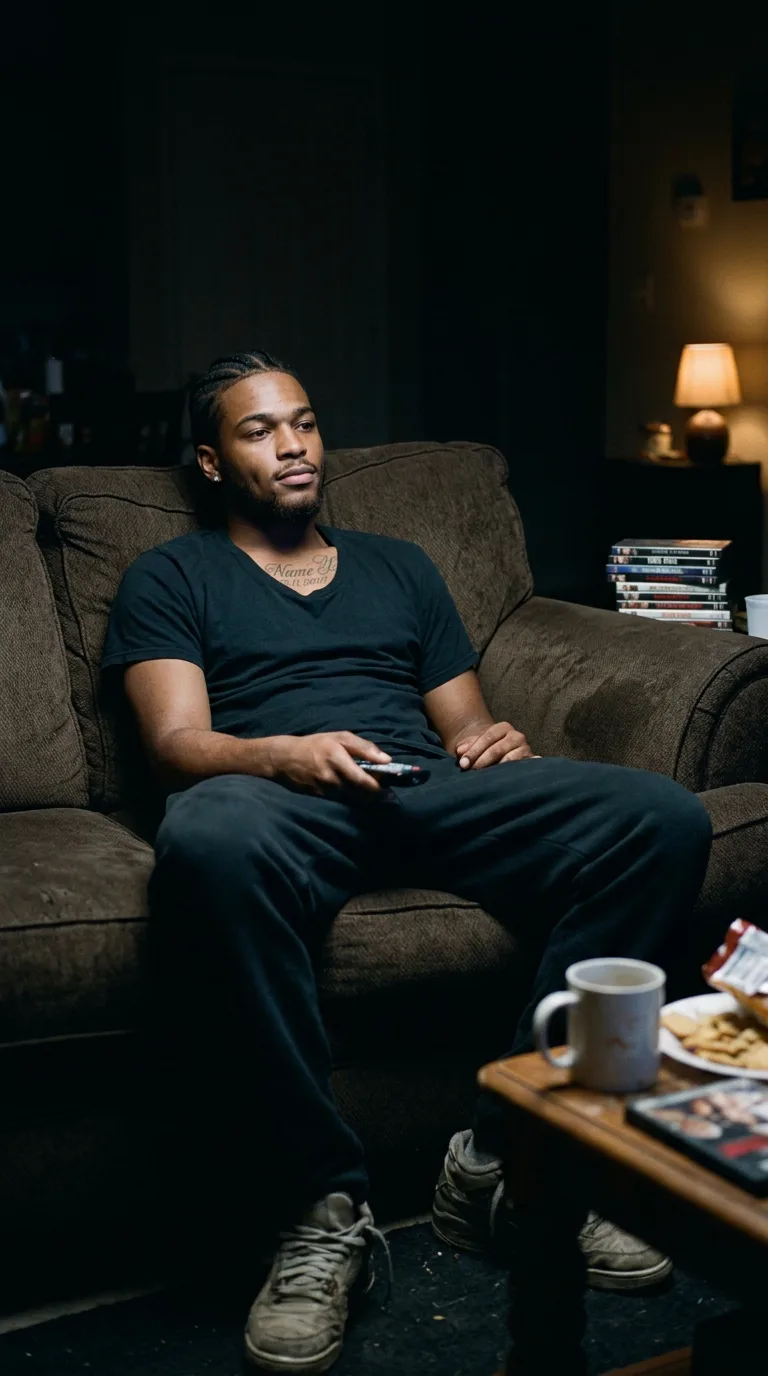
Rarest thing about him: Cornrows — uncommon, 1 in 285
Season 1seed 1962836355 · engine v11
Character card
lineage 2NZHHJ
His body-swap story
@colin.hasbrook, wearing Marcus Tillery, rolled the wheel on and woke up as Terrence Abasi, spent 3 minutes in him, then spun the wheel and woke up as Owen Halstrom
Marcus Tillery's hands smell like the loading dock — diesel and cardboard dust — and they will not sit still on the kitchen counter. That's the thing about this one, this freight handler with the silver in his beard: the hands never learned to rest, even after eight hundred and fifty-two other lives taught you what stillness costs. Less than a minute ago you were nobody, and then you were him, standing in his kitchen at eleven at night with a mail-order card still glowing on your phone. Marcus is fine. Marcus is even good, in the way a body can be good — strong back, steady knees, nothing wrong with him a day off wouldn't fix. But you already know, the way you always know now, thirty seconds in: this isn't the one you meant to keep. You didn't spin for him. You spun for something restless of your own, and Marcus's stillness — his contentment, his quiet apartment, his one lamp on — sits on you like a coat that fits somebody else. So you open the site again. You pay. You spin.
The wheel stops on a couch in Ohio.
You arrive sitting up, which is not how you were sitting. There's a jolt of correction, spine straightening before you've decided to straighten it, and the remote is already being set down on the couch arm by a hand that used to be somebody's before it was yours a half-second ago. The television throws its bright cut across a dark room. A mug on the table. A stack of DVDs leaning like they're about to go. And under you — this body, twenty years old, lighter than Marcus, quicker somehow even sitting still — a joke plays on screen, the kind of joke that a minute ago made this face move, and now it doesn't. You watch the rest of the scene with a stranger's stillness on a face built for something else.
Then the shirt gives you the first of it. Black v-neck, worn soft at the collar, and touching it brings back a Tuesday — him pulling it over his head in a bedroom with band posters still up from high school, humming something with no tune, dimples already there before anyone said anything funny. The sweatpants: laundromat on Main, the dryer that eats quarters, him standing in the fluorescent buzz reading a torn People magazine and thinking about nothing, which was its own kind of peace. The couch under you gives up more — a whole winter of evenings just like this, lights off, movies rented two-for-five from a bin by the register, because the trip to the city for anything better means passing the shuttered diner and the one stoplight that's been yellow-stuck since before he had this apartment.
His hands, restless even in memory, keep finding things: the remote, worrying at the seam of his sleeve, drumming on his knee during commercials — an old habit, older than the smoking he quit, which itself replaced some other fidget he can't name anymore. Behind the counter at the shop, those same hands don't shake at all. They know exactly what they're doing there — the drag of the blade through a shoulder cut, the practiced weight-shift, boning knife spun once in the fingers before it goes back to work, chain-mail apron cold through the coat sleeve in November. He is good at that stillness-in-motion the way some men are good at silence. It's the only place his hands ever stop asking for something to do.
The tattoo at his collar comes last and comes hardest — script and a date, and under your palm without meaning to press there, a name surfaces with it: a grandmother, the woman who taught him to trim fat clean off a rib without wasting meat, gone the November this ink went on. He'd cried getting it done and told the artist it was the needle. Twenty years in a town with one stoplight, no wife, no one who calls at midnight wanting anything from him, twenty-five to seventy-five thousand dollars quietly stacked from a paycheck he doesn't spend much of, and dimples that show up even when there's nothing to smile about, which people mistake for happiness more often than not.
You look down. The hand on the couch cushion is his — narrower than Marcus's, a callus riding low on the trigger finger from a knife handle, one earlobe stud catching the last blue light off the screen. You turn it over slow, the way you always do, checking it's real, checking it's yours now.
"Didn't even get to the good part," you say, to the empty room, in his voice, and you don't mean the show.