Owen Halstrom
Fictional. Generated by AI — not a real person, and no likeness of one is intended.
30, chief executive in Philadelphia · rolled by @colin.hasbrook · card — no film
History
who has worn him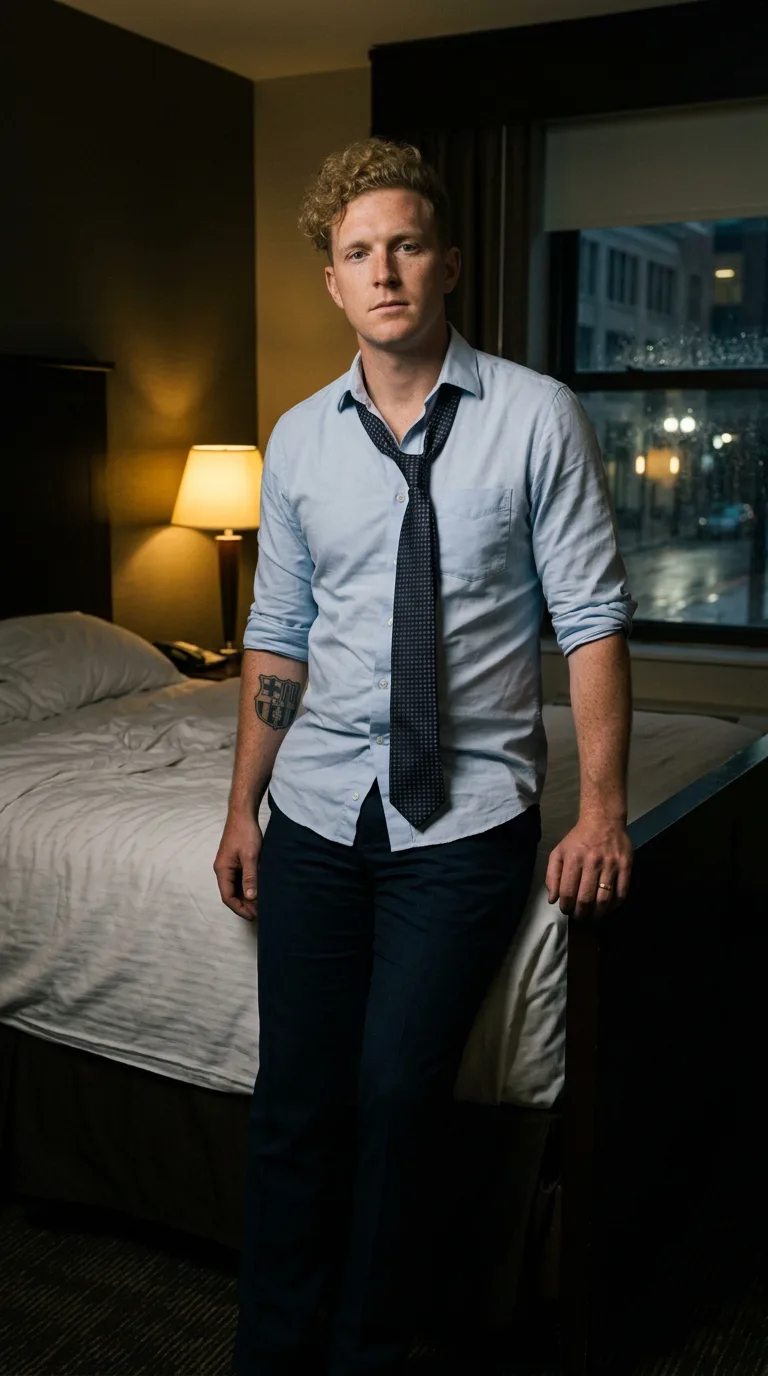
Rarest thing about him: Gray — uncommon, 1 in 96
Season 1seed 118873712 · engine v11
Character card
lineage 2NZHHJ
His body-swap story
@colin.hasbrook, wearing Terrence Abasi, rolled the wheel on and woke up as Owen Halstrom, spent under a minute in him, then spun the wheel and woke up as Rafael Toubia
The apron is still on you, and that's the whole problem. Terrence Abasi's apron, Terrence Abasi's hands, three minutes old and already you can feel how they know the knife better than you do, how the muscle under this brown skin wants to reach for the boning blade on the rail without being asked. You stood him up from where he'd been crouched behind the display case, and something in him — some last resident echo, a groove worn into the meat of him — flinched at being made to stand. You didn't like that. You don't want a body that pushes back, even a little, even for a second. Three minutes is not enough time to know if this one will keep doing that, and you are not in the mood to find out. The shop is closing. Cold case humming. Somewhere behind the counter a radio is playing something with a fiddle in it. You take off the apron, hang it because his hands want to hang it, and you go to the little office in back where the laptop is already open to a page with a wheel on it, because it is always already open, because you always leave it that way.
You pay. You spin.
The reach for the button stops. Not because anything is wrong — because the hand doing it is no longer only his. You feel the ribs under your palm before you feel anything else, a different ribs than you had a second ago, higher up, less padding on them, and the shirt is buttoned wrong by one and the fingers — his fingers, yours now — go still on the fabric like they're listening to something. Then they move. Undo, redo, up the placket in order this time, and the tie that had been hanging loose gets taken in both hands and worked into a knot this closet, this mirror, this life has never once seen tied that way. A room comes into focus around the motion: heavy curtains, a lamp with a yellow shade, the window behind it holding a wet street and a skyline going up into a rind of last light. Not his bedroom. Not any bedroom that belongs anywhere you've been in this body yet.
The shirt gives it up first, because the shirt is what's touching you. Cotton, pressed, a little too big through the shoulders because he bought it before a stretch of gym mornings that never became a habit — a hotel dry cleaner, a bill signed with his own initials because the company card was maxed on something bigger that week. Philadelphia. Not home — a hotel three blocks from the office, booked because the board dinner ran late last night and going home felt like admitting he couldn't handle both things in the same day. His name arrives on the back of that: Owen. Owen Halstrom, thirty years old, an office on the nineteenth floor with the city laid out under it at dusk like something he's supposed to feel he owns and mostly just feels tired near.
The tie is next, dark, small check, a gift — Claire picked it, two Christmases ago, said it made his eyes look less like a golden retriever's, and he'd laughed the real laugh, the one she still gets more than anyone. The wedding band on the hand doing the knotting sends its own flash: her in a green dress on a boat on the Schuylkill, both of them younger, before the miscarriage nobody at the office knows about, before the second one they haven't tried for since. Married four years. Good, mostly. Quiet in the ways that scare him a little at 2 a.m. and never at dusk, when the office is lit gold and there's a deal on his desk that needs him more than anyone does.
The sleeve rides up over the tattoo — a crest, a team from a city he spent one reckless post-college summer in, inked in a fever of feeling free that he still can't fully account for to himself — and under it, the arm: thirty years old, gym-soft rather than gym-hard, a body that plays a round of golf and calls it exercise. Good shoulders. A little give at the middle he notices in mirrors and pretends not to. The freckles across his nose came from a mother who used to tell him they were where the sun had kissed him, and he believed her until he didn't, and then believed her again once he was old enough to miss being told things like that.
Under his feet, hotel carpet, thin and the wrong color of beige. Against his back, when he turns, the cool window glass for a second — the city seventy feet down and lighting itself up window by window, and a flash of the woman who got away arrives with the feel of it, a rooftop somewhere in this same skyline, years ago, a version of tonight that never happened because he chose the safer, better thing instead, and mostly doesn't regret it, mostly.
His fingers, without him telling them anything, drift to his own cuticles and start picking at the edge of the thumbnail — an old, small, comforting violence, older than the marriage, older than the job, a habit from a boy who used to sit through boring sermons at his grandmother's church picking his hands raw while she elbowed him to stop, which is maybe where the spiritual thing without the religious thing comes from, though he's never traced it that far himself.
You stop the fingers. You look at them instead — pale where Terrence's were dark, freckled where they were smooth, a wedding band catching the lamp — and you turn the hand over slow, palm up, like you're checking it's real, which it is, which it always is, every single time, and it never stops being the best part.
You lift your eyes to the window's reflection, since there's no lens in the room but there might as well be, and you say, low, almost to yourself: "Not yet, Owen. Not yet."