Terrell Whitby
Fictional. Generated by AI — not a real person, and no likeness of one is intended.
43, pharmacist in Los Angeles · rolled by @colin.hasbrook · card — no film
History
who has worn him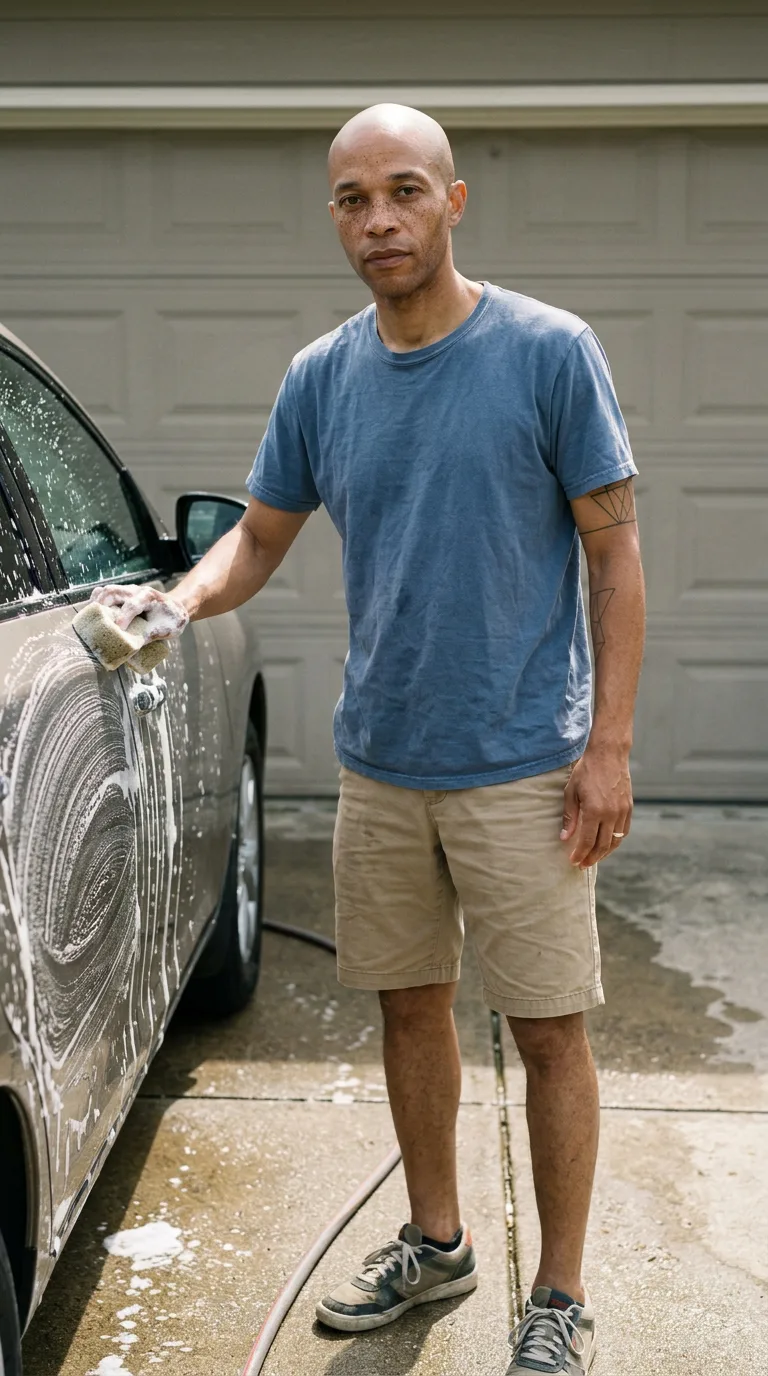
Rarest thing about him: Dip or chew — rare, 1 in 40
Season 0seed 935899271 · engine v10
Character card
lineage 2NZHHJ
His body-swap story
@colin.hasbrook, wearing Marcus Deveaux, rolled the wheel on and woke up as Terrell Whitby, spent under a minute in him, then spun the wheel and woke up as Gary Ferebee
Marcus Deveaux's hands smell like cardboard and packing tape, and they have smelled that way for eleven straight hours, and you are so tired of them you could scream.
You stand in his kitchen in Coastal Maine, the window black already though it isn't even eight, and you flex his fingers — dimpled knuckles, a callus map you didn't earn — and you think: not tonight. Not this apartment with the one bad chair, not this back that some other man wrecked lifting sectionals for people who tip in exact change. You have been him less than a shift's worth of hours and already the wanting is back, that itch under the sternum that has outlasted four hundred and seven men before him. It isn't hatred of Marcus. It's just that he is a door you already walked through, and there is always another door.
You open the laptop at his little table, the blue light doing something unkind to his face in the dark window-reflection, and you go to the site the way you always go to it, like a tongue to a sore tooth. The wheel loads. You pay. You do not let yourself hesitate, because hesitating is where guilt gets in, and guilt has never once stopped your hand.
You spin.
—
The water is running before you know you're the one holding the hose.
Warm California light, low and orange, lying flat across a driveway. A sponge in your right hand, soap sliding in fat white arcs down a car door, and your own — his — grip changing mid-stroke: thumb tucking under, wrist rolling into small, private circles instead of the wide ones from a second ago. Behind you the swirl marks stop appearing on the wet paint. Nobody notices. Nobody is watching. It is a Monday evening at the tail end of an ordinary day and a stranger has just walked into your skin and you keep washing the car because the body doesn't know yet that anything has happened, and for one full second neither do you.
Then the sponge registers — foam, grit, terrycloth going soft under water — and it opens like a struck bell.
—
The sponge remembers a hundred Saturdays. Not this one specifically — all of them at once, folded together — a boy's hands smaller than these, learning the wide arcs from a man who is gone now, whose voice you almost catch and then don't. The wedding band on the left hand, plain gold, warm from the sun: a church basement, folding chairs, a woman in blue who laughed before he'd finished the vow because he stumbled on her middle name. Fourteen years of that laugh. A daughter's height marked in pencil on a doorframe that this hand, this exact hand, has touched every year to add a new line.
The tattoo under the wet sleeve — fine geometric lines, half-hidden — comes up through the fabric where it clings: a shop on Crenshaw, twenty-six years old, a friend from pharmacy school dared him into it and he never told his mother, and she found out anyway and didn't say a word, just looked at him the way she looked at everything, patient and unimpressed.
The white coat isn't on him now but the memory of it is stitched into the shoulders anyway, waiting in the muscle: the amber wall behind the counter, the particular quiet of four o'clock, counting tablets into little cups while afternoon light came low and gold through the front window, an old man's blood pressure numbers that worried him more than the old man let on. High blood pressure — his own, not just the customers' — a pill he takes every morning with orange juice standing at this same counter he's washing beside now, the kitchen counter, before anyone else in the house is up.
The shorts, khaki and damp at the hem — this morning, going on: sitting on the bed's edge, the mattress dipping, his wife's voice from the bathroom asking would he get to the car today, and him saying yeah, yeah, like he says every week, and meaning it every week, and somehow it's always Monday evening before he does.
Beneath all of it, the body itself, plain and unmistakable: forty-three, skinny in a way that has nothing left to lose, a knee already starting its old-man bounce though nobody's sitting, brown eyes that squint easy in this light, freckles warm across cheeks and nose from decades of exactly this — a driveway, a Monday, the sun going down orange over a garage door. A tin of dip riding untouched in a back pocket, waiting for later, for the porch, for the part of the evening that's his alone.
The hose runs on, forgotten, hissing against concrete.
—
You lift the hand from the door. Sponge held loose, foam sliding off it in one long strand.
You turn it over — his hand, freckled at the wrist too, wedding band catching gold — like it's a thing that was handed to you and you're checking the maker's mark.
Then your eyes come up, off the hand, into whatever is watching — a phone left running on the hood, maybe, or nothing at all, just the habit of looking for a lens — and you hold there.
"There you are," you say, to no one who was ever going to answer, and somewhere behind the amber glass wall three thousand miles gone, a woman in blue is calling his name for dinner, not knowing yet that the man who answers will be new.