Gary Ferebee
Fictional. Generated by AI — not a real person, and no likeness of one is intended.
63, stagehand in Las Vegas · rolled by @colin.hasbrook · card — no film
History
who has worn him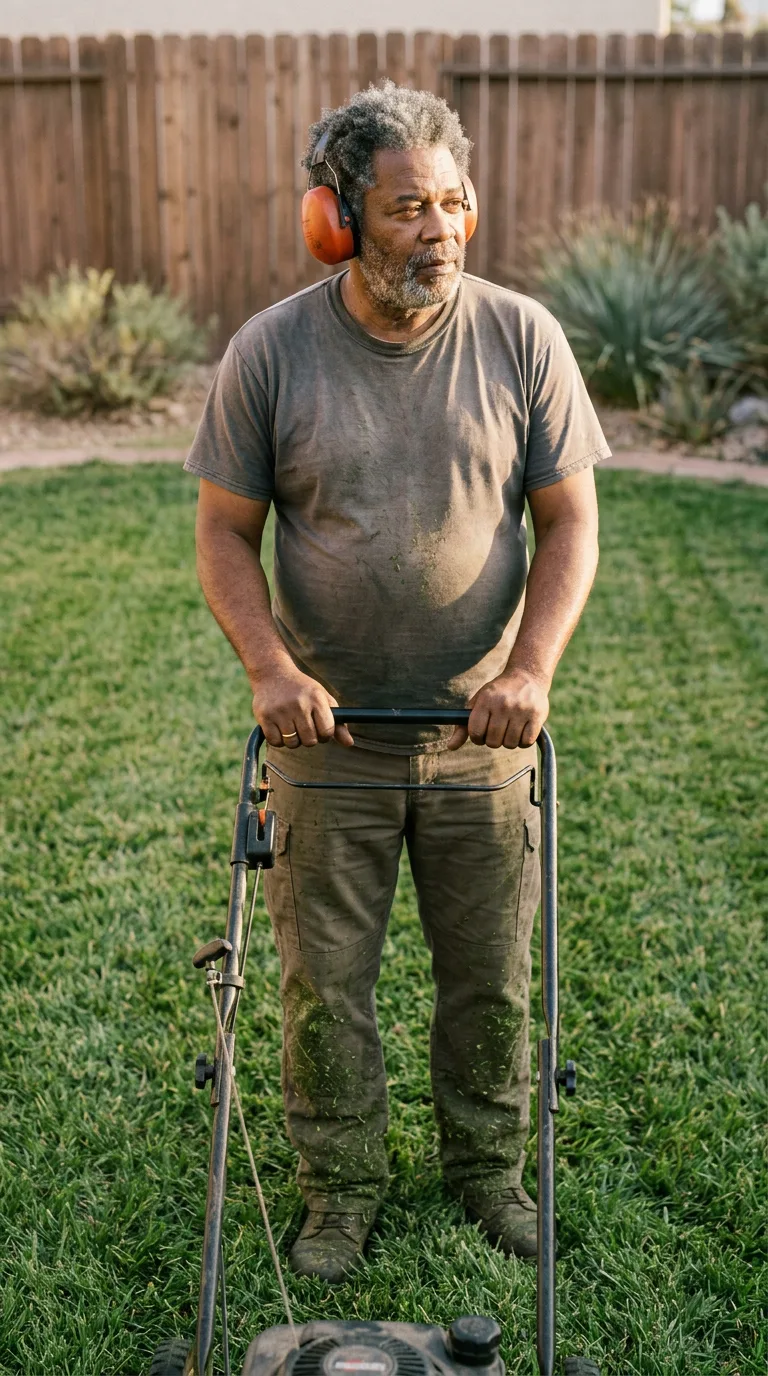
Rarest thing about him: Orthodox Christian — epic, 1 in 75
Season 0seed 523460724 · engine v10
Character card
lineage 2NZHHJ
His body-swap story
@colin.hasbrook, wearing Terrell Whitby, rolled the wheel on and woke up as Gary Ferebee, spent under a minute in him, then spun the wheel and woke up as Kevin Lum
You are standing behind a pharmacy counter that is not yours, in a body that is not yours, counting out thirty tablets of something for a woman who has already asked twice if it's ready. Your hands — Terrell's hands, bald head under the fluorescent light, freckles across the knuckles — move fine, they've always moved fine, that was never the problem. The problem started less than a minute ago, when you first got here, when you first felt how narrow his shoulders are, how the waistband sits, how his feet ache already at the end of a shift that for you has not even begun. You have been him for forty-some seconds and you are already finished with him. That's the whole reason, if anyone asked, and no one will: you don't want this one, not tonight, maybe not ever, and there is a wheel that doesn't care what you want done with, only that you want it. You set the vial down without finishing the count. You are already gone before your hand leaves it.
The mower engine drops a note under you and catches, and you are the one holding it steady.
Your hands — his hands now, broader, heavier through the knuckles, a wedding band riding loose enough to spin if you flexed wrong — stay on the bar through the stumble in the engine. Grass clippings sit wet against your shins. One ear is bare to the evening noise, the earmuff hanging off it by habit, and before you've had a single thought of your own the hand nearest it reaches up and sets it back over the ear, unhurried, like it does this every week, because it does. The next pass runs dead straight. You didn't do that. He did, on the way out the door of himself, and you rode it in like a passenger grabbing the wheel a half-second after the car already knew the road.
The shirt is what opens first — sweat-through cotton, damp at the small of the back where the waistband of the pants rides low under the belly. It comes with the sun still high enough over the fence line to be strange for a man who by every clock you know should be somewhere with carpet and slot noise and no grass at all, and the memory answers before the question finishes: Monday is his day off, has been his day off for eleven years, ever since the house crew moved the dark bump-in to Tuesdays. Vegas doesn't run on Sundays and Mondays the way the rest of the world does. He mows in the early evening because the heat breaks then and because his wife likes to see the lines from the kitchen window when she's plating dinner, and because doing it any other day feels, obscurely, like doing somebody else's job on somebody else's lawn.
The mower bar under your palms is worn smooth in two ovals exactly where his palms have always gripped it, and that smoothness comes with fourteen summers of this same yard, this same fence somebody else built and he re-stained twice, a peach tree in the corner that died the second year and that he never got around to pulling out, so it stands there still, bare-branched, half in frame every time his wife takes a picture of the kids by the pool. The earmuffs against your head smell like the inside of a toolbox, and that smell brings the fly rail with it — the blue running light backstage at the casino showroom, three in the morning, ropes counterweighted just so, forty years of knowing exactly how much a headset weighs against your collarbone before the cue calls it. Rigging is what his hands know without asking, a whole language of knots and counterweight that never once, in four decades, put a dancer or a drop in the wrong place at the wrong second. He is proud of that the way some men are proud of a war they won quietly.
The wedding band is loose because he has lost weight this year without trying to, and that fact drags his blood sugar in behind it — the metformin on the bathroom counter, the little kit he pretends his wife doesn't watch him use, the doctor's voice saying numbers he answers with a joke every time. Under the pants, your left knee — his left knee — throbs faintly in the specific, recognizable way of a man who has stood on his feet on concrete for a hundred thousand hours; it is not new pain, it is furniture. His back, when you settle your weight into the next push, holds the particular ache of somebody who used to be able to run this whole yard in twenty minutes and now paces it, and does not mind pacing it, because there is nowhere else tonight he would rather be walking to.
The shirt going on this morning comes last and softest — not urgent, just there, his hands (not yours, his, remembered rather than felt) pulling it over his head in the bedroom while his wife was already downstairs with the coffee going, the window unit humming, one of the kids texting something from Phoenix that made him laugh out loud alone in the room. He'd stood in front of the mirror a second before pulling the shirt down, not vain, just checking, the way he does every morning of every year, the way his father used to check his own collar before church, and this is a Monday so there was no church, only the promise of the yard waiting for him at the end of the day like something owed and gladly paid.
Your hands — his hands, thick-knuckled, the band riding loose at the joint — let go of the mower bar and come up in front of your face without your permission, turning once, palm and back, in the low orange light.
You look up from them into the yard, at the crooked rows behind you going suddenly straight, and you say, out loud, to no one, in a voice pitched lower and older than any voice you've worn in months:
"There we go."