Kevin Lum
Fictional. Generated by AI — not a real person, and no likeness of one is intended.
31, manager (mid-level) in Chicago · rolled by @colin.hasbrook · card — no film
History
who has worn him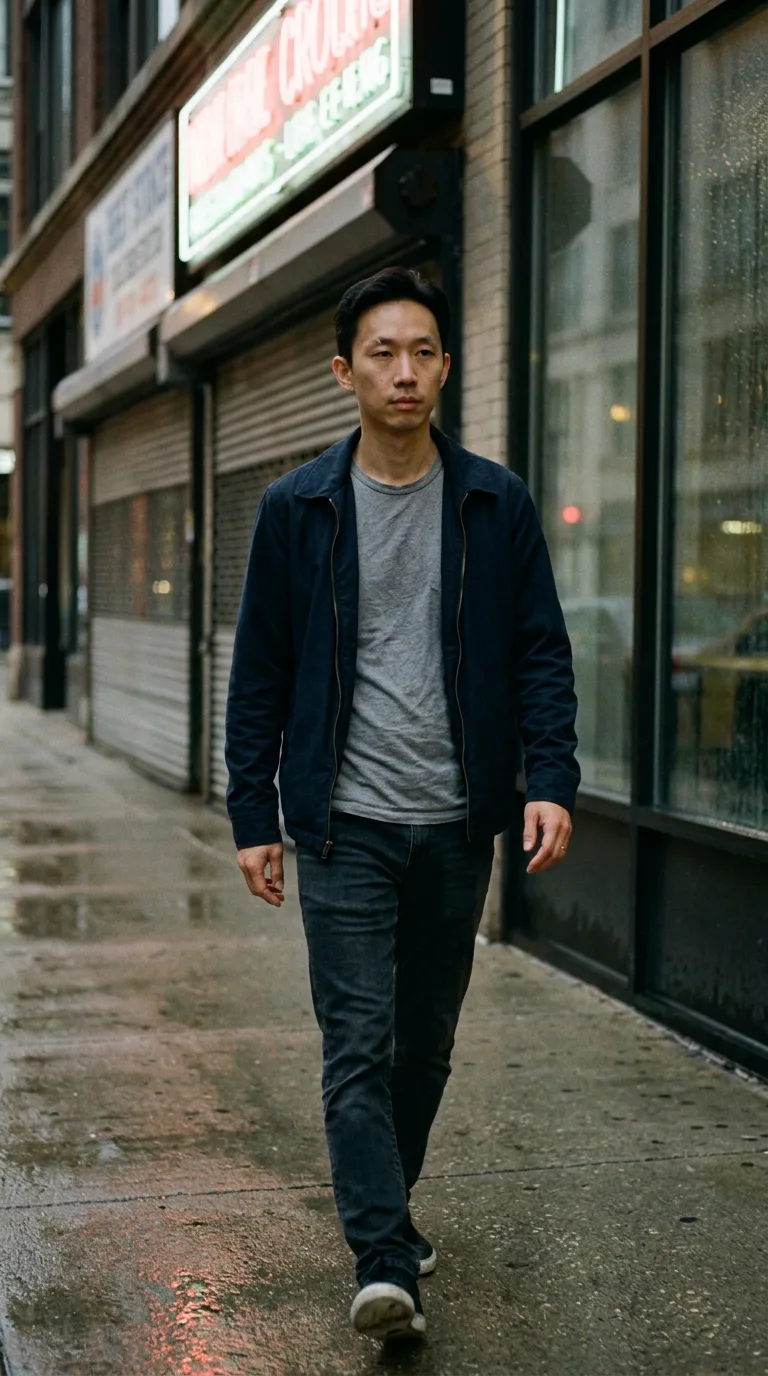
Rarest thing about him: A scar through the eyebrow — uncommon, 1 in 16
Season 0seed 1535015027 · engine v10
Character card
lineage 2NZHHJ
His body-swap story
@colin.hasbrook, wearing Gary Ferebee, rolled the wheel on and woke up as Kevin Lum, spent under a minute in him, then spun the wheel and woke up as Wendell Thundercloud
Gary's hands hurt. That's the thing nobody tells you about a stagehand's body at sixty-three: the knees announce themselves before you've decided to stand, and the left shoulder has a permanent low hum in it from thirty years of rigging. You are sitting on the edge of his unmade bed in his apartment off Sahara, the swamp cooler ticking, some rerun going in the other room that Gary would have watched all the way through if you'd let him keep the night. You didn't spin because Gary is bad. Gary is fine — a big laugh, an easy walk, a body that still does what you ask it. But you've had him less than a minute of his own life and already you know the shape of the rest of it: load-in, load-out, a beer with the crew, a couch. There is nothing left in him you haven't already tasted in three hundred other men, and boredom, it turns out, is its own kind of hunger. You open the laptop. The wheel is already loaded, mid-spin from last time, like it never really stops turning. You put your thumb — Gary's thumb, blunt, a callus across the pad — on the button, and somewhere behind your eyes you feel the old itch that isn't Gary's and never was. You press it.
The scuff stops.
You are mid-stride on a wet sidewalk and your foot lands flat and quiet where a second ago it was dragging, and the cold hits you first — real cold, lake-cold, a wind coming down the corridor between buildings that Gary's desert never had. Jacket open. Something small and hard in the jacket pocket, keys, knocking your hip. You catch the last of a stumble that was already happening when you arrived, one hand slapping the wet flank of a parked Civic, and the shock of the contact — cold metal, condensation under your palm — is the first true thing this body gives you. Chicago. Under the tracks somewhere, you can feel it more than hear it, that particular hollow the L leaves in a street even when no train is running. You straighten up. Your legs, unbidden, unspooled from a memory that isn't yours yet, carry you forty steps even and quiet, and at the corner they turn left. Not home. You don't know that yet either. You just walk, because he was already walking, and grief, whatever it is, doesn't stop just because someone else is driving.
The jacket is what opens first. Navy, waxed cotton going soft at the collar, and putting your — his — hand into the pocket to check the keys gives you the morning: him standing in front of the closet at six-forty, still deciding, a version of himself in the mirror that he has stopped fully looking at. He put on the gray tee first, because it was on top, not because he chose it. Then this jacket, because his wife said it was going to rain and she was already three sips into her coffee and not looking at him when she said it. Something is wrong between them that isn't a fight — you get that clearly, a whole low-pressure system of it, no thunder, just weather. She works a floor above him at a different company; they eat dinner at seven most nights facing the television instead of each other. It has been that way long enough that neither of them names it. The wedding band on your left hand — his left hand — is warm from his body heat when you notice it, a plain gold weight he stopped feeling years ago and started feeling again about eight months back, for reasons the ring itself won't give you.
The shirt under the jacket gives you the office: glass walls, door propped open on purpose because a closed door reads as trouble to the people who report to him, and he has spent four years mid-level and expects to spend four more. There's a woman on his team he has to write up next week and he's been putting it off, and the dread of it sits in his sternum like a swallowed stone, dull and specific. You feel his hands, small competent hands, tapping a keyboard, holding a paper coffee cup gone lukewarm, and under the desk his knee bouncing, a tic he doesn't know he has.
The scar in his eyebrow comes back through nothing you touch — it's just there, under your own fingers when you drag a hand down your face out of old habit, a hairline pull in the skin. Nine years old. A bike, a curb, his mother's face when she saw the blood, more scared than the wound deserved. He carries the mark and none of the memory of pain, only the memory of being carried inside, held.
And there's a name that comes up through his hand around his phone, which isn't in his pocket tonight — it's the ghost-weight of it he keeps expecting and doesn't find. Mara. An ex from a decade back, Wisconsin, a kitchen with bad light where they used to cook together badly and laugh about it. He does not think about her often. Tonight he had two glasses more than usual at a colleague's leaving party and somewhere around glass three she surfaced, the way she does maybe once a season, harmless and aching, and he told himself walking the long way home was about the rain finally stopping, not about needing forty extra minutes alone with an old want he's not proud of and hasn't acted on.
His wife's name comes back gentler and heavier both: Grace. Their apartment is four blocks from here, and there is a version of tonight where he walks home the straight way, lets himself in quietly so he doesn't wake her, and lies down next to a woman he loves in the complicated, worn-in way of eight years, and none of that will happen now, though you don't say that to yourself in words. You just keep walking left.
You stop under a dead awning, streetlight buzzing above a shuttered dry cleaner, and you lift both his hands and turn them palm-up, the way you always do, the way that never stops being strange no matter how many times you've done it — smaller hands than Gary's, no calluses, a college ring not worn, a wedding band that isn't yours catching what light there is.
"Okay," you say, out loud, to the empty street, in a voice that is his and isn't. "Let's see what you've got."
Behind that, quiet, not yet a plan: how long, this time. Nobody answers. Nobody ever does.