Terrell Washburn
Fictional. Generated by AI — not a real person, and no likeness of one is intended.
61, cashier in Los Angeles · rolled by @connor.waskiewicz · card — no film
History
who has worn him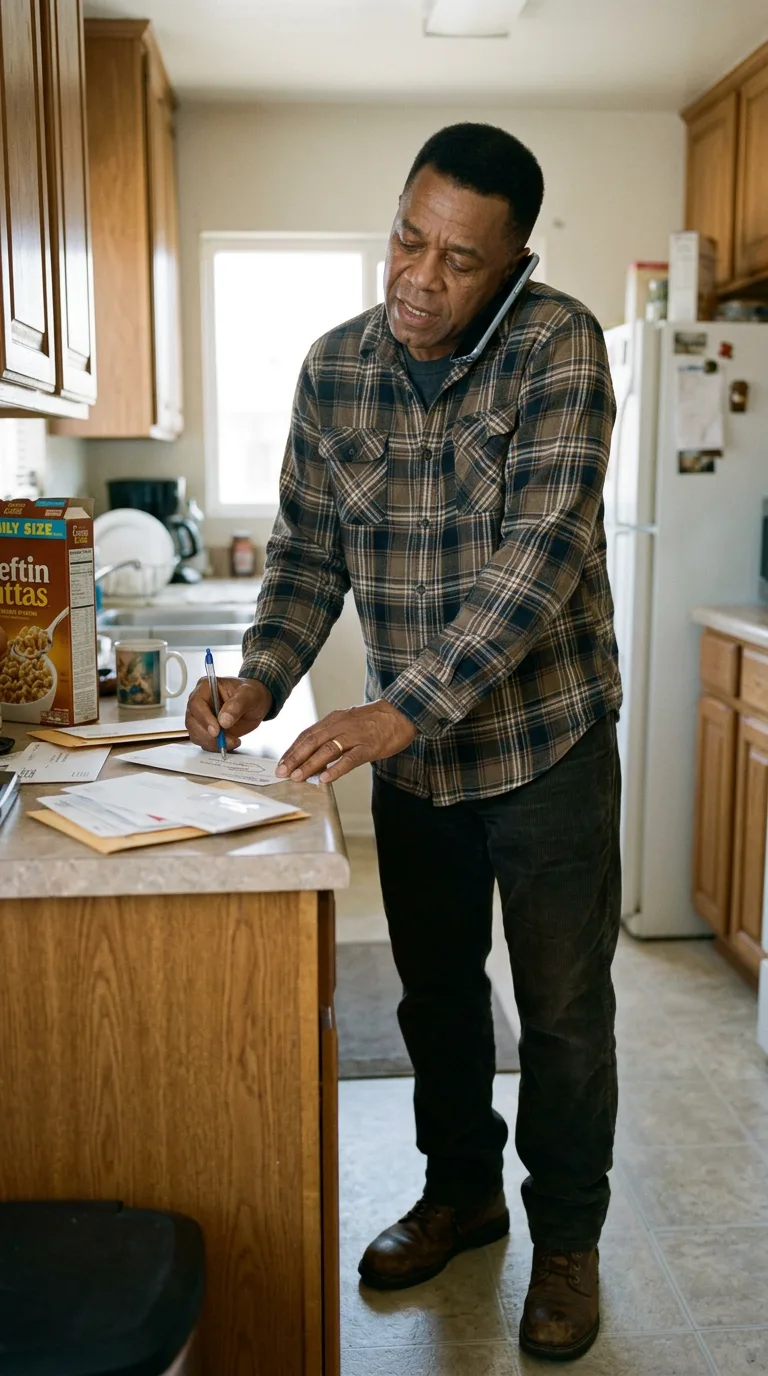
Rarest thing about him: On hold with someone — common, 1 in 70
Season 1seed 1224064655 · engine v11
Character card
lineage 2NZHHJ
His body-swap story
@connor.waskiewicz, wearing Marcus Alvarado, rolled the wheel on and woke up as Terrell Washburn, spent under a minute in him, then spun the wheel and woke up as DeShawn Purvis
The warehouse smell is still in your nose — cardboard dust, pallet wrap, the specific staleness of a loading dock in Houston at two in the afternoon — and you are standing in a body that is not tired enough yet. Marcus Alvarado, forty-two, six-five, all that muscle built from a scan gun and a fourteen-hour shift, and he has been yours for less than a minute and already the itch is back under his sternum where it always lives. It isn't boredom exactly. It's that you spun him last time for the size of him, the strength, wanting to know what it was to fill a doorway, and now you know, and knowing is the thing that always kills it. Nine hundred and eighty-one men before him taught you that the wanting doesn't wait for you to be finished. His phone is in his back pocket, a shift supervisor's voice crackling somewhere behind a stack of totes. You don't even set the scanner down. You just go.
The loop of the hold music hits its first bar again — a tinny string of marimba notes you have already heard four times — and your shoulder is the one that drops the phone into your hand, mid-loop, like you'd been about to do it anyway. A pen is between two fingers, resting on the second digit of a reference number written in a slightly unsteady hand, and it simply does not move again. Kitchen light, gray-gold, late-afternoon-through-blinds. A box of cereal to your left. The refrigerator hums. Your knees feel different — not bad, just older, a low ache behind both kneecaps that has clearly been there long enough to be furniture. You are 5'7" now, and the counter is a different height against your hip, and there's a ring on your left hand that catches the light when you shift your grip on the pen.
The flannel shirt is what opens first. Your own — no, his — arms remember pulling it on this morning, sleeve by sleeve, a little stiff through the right shoulder the way it always is until about nine a.m., an old rotator cuff thing from lifting, decades of lifting, register bags and crates before that and before that a hand truck at a lumber yard in Inglewood when he was twenty. The cuff button is missing one down low and his fingers go there without thinking, a habit, checking it's not undone. Corduroys that are getting thin at the knee. Boots he bought because his feet ache by hour four of a shift and cheap shoes make it worse.
Then the counter under your hand, and it's not the shirt anymore, it's thirty-one years of counters — this one, the one before it in the apartment on Normandie, the one at his mother's house where he did homework as a boy with the radio turned to a gospel station she never turned off. The envelope under the pen is a hospital billing office, a reference number for his wife's cardiologist, and just touching the paper gives you the tight, practiced patience of a man who has spent two decades learning to wait on hold without letting his voice go ugly when a person finally answers. Yvonne. Her name arrives whole, unannounced, the way a smell arrives. Thirty years married in October. She is at her sister's this afternoon, which is why the kitchen is quiet except for the marimba loop and the fridge.
The cleft in the chin is not something you feel, but a hand goes there anyway, an old tic, rubbing it when he's thinking, and with it comes a whole run of years at a register — the beep of a scanner, the particular ache across the lower back from standing eight hours on tile, the sourness in his knees by four p.m., customers who look through him, a manager half his age, the flask he keeps meaning to leave in the car and doesn't. He drinks more than Yvonne knows he knows she knows. He smokes on his breaks behind the store by the cart corral, vapes the rest of the day so the smell doesn't ride home with him, and both of those want him right now, a low hum under the sternum that feels, for one strange second, almost exactly like your own wanting, like two appetites recognizing each other.
There are two kids somewhere in this — a son in Rialto he talks to on Sundays, a daughter's wedding photo on the refrigerator behind you, magnetted under a church flyer — and a savings account he checks more than he'd admit, not much, but something, enough that he sleeps at night knowing it's there. He believes in something, not a church exactly, but something that keeps the books level in the end. He has never told anyone that. The envelope gives you that too, somehow, the way paper can give you a man's whole afternoon of small worry.
You look down. The hand on the counter is shorter than the one you had a breath ago, darker, a plain gold band catching the window light, a pen still balanced against a number that will now never get finished. You turn the hand over once, like checking it's real, feeling the stranger-weight of sixty-one years settle into the joints, the good ache of a body that has worked hard and carried people and is, this particular second, simply standing still.
You lift your eyes off the hand, into the kitchen window's reflection, and say, to no one holding on the other end of the line:
"Sorry — who is this again?"