DeShawn Purvis
Fictional. Generated by AI — not a real person, and no likeness of one is intended.
22, software engineer in Detroit · rolled by @connor.waskiewicz · card — no film
History
who has worn him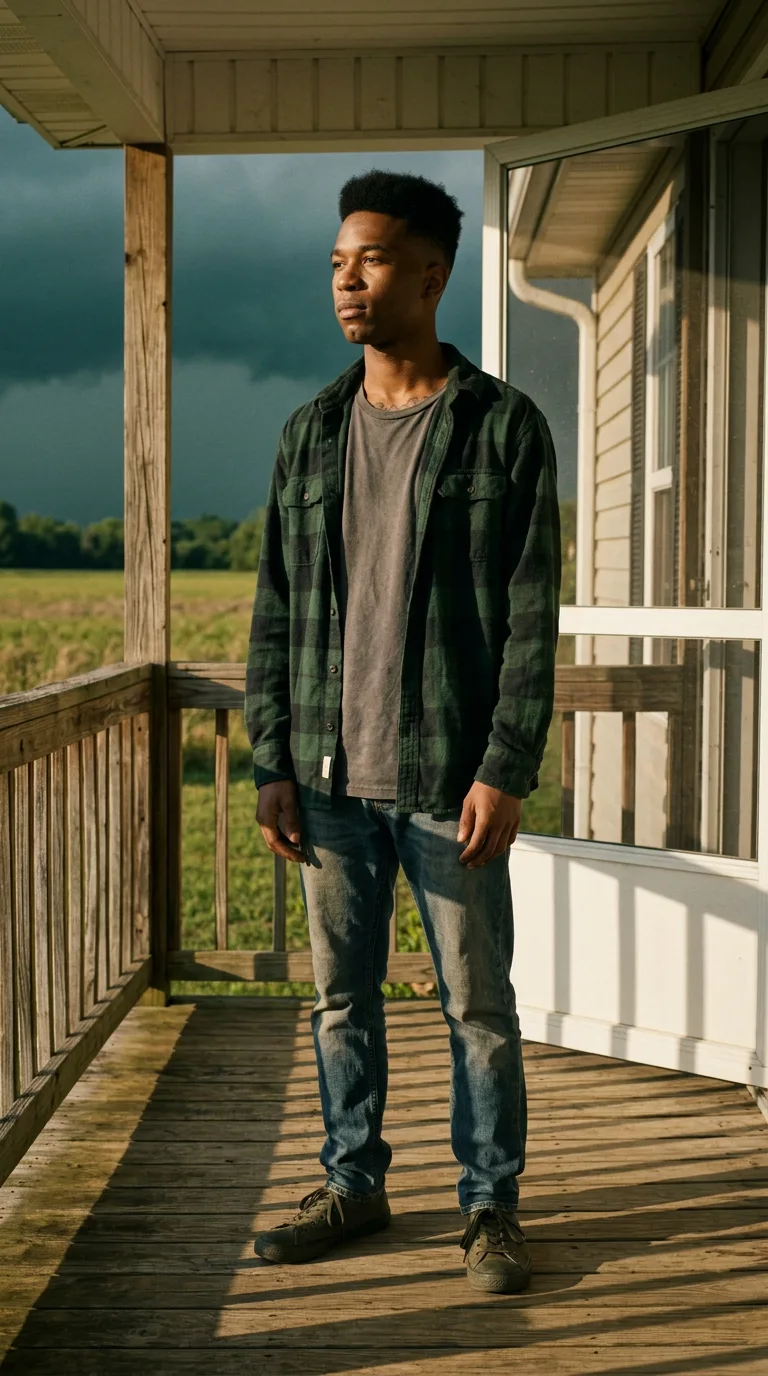
Rarest thing about him: Watching a storm come in — uncommon, 1 in 183
Season 1seed 1509473265 · engine v11
Character card
lineage 2NZHHJ
His body-swap story
@connor.waskiewicz, wearing Terrell Washburn, rolled the wheel on and woke up as DeShawn Purvis
Terrell Washburn's knees ache standing at the register even when there's no line, and there's no line now, just the hum of the cooler case and a Wednesday afternoon burning off outside the window. You have been him for forty-one seconds. Long enough to feel the brace on the left knee through the slacks, the reading glasses sliding down a nose that isn't broken in anywhere yet, the particular tiredness of a man who clocks in at noon and stands until close. You spun him up out of impatience nine spins ago and he has done nothing wrong. That's the trouble with him. Nothing to chew on. Sixty-one years of a body that is careful with itself, that eats the free banana at the end of shift, that says "you have a blessed day" to customers and means it a little. You have been sixty-one years old for less than a minute and already the itch is back, the specific boredom of a life with no edge on it, and your thumb finds the lighter that isn't there in this man's pocket because Terrell never carried one, and that absence is the last straw, small and stupid as that. You want hands that do something without being told to. You pull the site up on the register's grimy under-counter phone, thumb shaking a little with an old man's tremor, and you spin.
The wind stops.
Not fades — stops, the whole wide green field going still like a held breath, and you are so much lighter than you were a half-second ago, up on the balls of feet in canvas shoes, chin tilted into air that smells like rain that hasn't fallen yet. Ozone and cut grass and somewhere under it your own clean sweat. Your hands swing loose at your sides, no ache in them, no brace on anything, and the porch boards are warm through thin soles and the screen door is still banging shut behind you, once, twice, slowing. You are walking. Not toward the door. Away from it. Off the porch and down the two steps into the yard, toward a sky the color of a bruise healing wrong, and your body — his body — keeps walking like it has been asked nowhere it doesn't want to go.
The flannel is what opens first, green and black and soft from a hundred washes, sleeves rolled once at the cuff, and in it: a morning, eleven hours ago by his clock, standing in front of a closet in a rented house on a Detroit side street, pulling this same shirt off its hanger because the gray tee under it was already laid out on the bed, because Sunday he'd worn the blue button-down to the early service and today, a plain Wednesday, called for nothing but comfort. Threading one arm in, then the other, the fabric catching for a second on a shoulder that carries more tension than a 5'5" frame should, wiry and quick, a body that has spent twenty-two years being underestimated and has made peace with being fast instead of big. The jeans next — worn soft at the knee from a years-old habit of crouching over server racks and under standing desks to chase down loose cables, a callus on the pad of his right thumb from years of a phone, from the specific click of a lighter's wheel though there's no cigarette that follows it, just the flick, flick, flick he does without knowing, some nervous metronome older than any of his bad habits because he never had that one. His father gave him that lighter, actually — no, his father gave him the habit of needing something in his hands during long phone calls, the lighter itself he picked up off a bar top three years ago, never lit, never smoked, just spun between two fingers like a coin during standups, during the long silences with his mother on Sunday calls when she asks if he's found a church up there yet and he says he's looking, which is not quite a lie.
The desk memory comes up through nothing he's touching now, just the ghost-ache in his wrists that have stood at that keyboard too many hours this week, two monitors and a coffee gone cold and a merge conflict that made him want to put his head through the drywall, and how he'd shut the laptop at six and come out here instead of sitting with it, because the sky had gone that color and something in him, something that still gets up for early service most Sundays even when he doesn't feel like it, wanted to watch it rather than hide from it. He has never been afraid of weather. His grandmother used to say the Lord speaks loudest right before He lets something go, and DeShawn had believed that the way you believe things you were told before you had any say in the matter — not quite doubting it, either.
Under the shirt and the jeans, the body itself: skinny in a way that has never filled out and probably won't, fast metabolism, a jaw he shaves close every morning out of habit more than vanity, and that chin, the cleft in it, the one thing strangers comment on at bars he barely goes to. Brown eyes narrowing now against wind that doesn't come, hair faded tight at the sides, grown full on top, three days past needing a trim. Nothing hurts. Nothing has ever really had the chance to.
The screen door claps shut behind you, final, and the field ahead goes the color of a held note, and you lift your hands — his hands, unlined, uncallused in the ways yours just were, warm — and turn them over in the strange failing light like you're checking them for something.
"Storm's not gonna wait on me," you say, out loud, to no one, in a voice that isn't the one you walked in with, and somewhere in the dead quiet the first fat drop of rain hits the porch roof behind you like a knock at a door nobody's going to open in time.