Brian Oleszczuk
Fictional. Generated by AI — not a real person, and no likeness of one is intended.
39, freight handler in Anchorage · rolled by @connor.waskiewicz · card — no film
History
who has worn him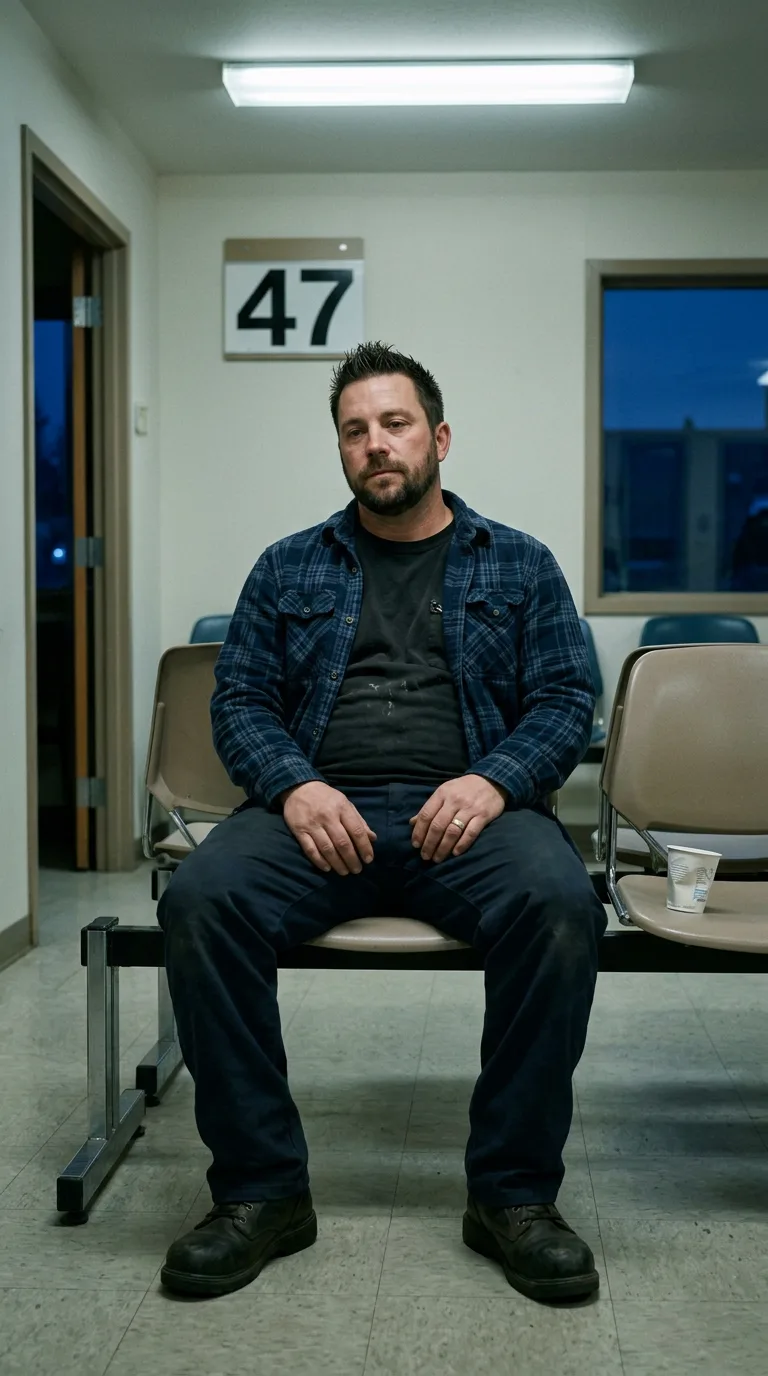
Rarest thing about him: Nipple — rare, 1 in 172
Season 1seed 1804189345 · engine v11
Character card
lineage 2NZHHJ
His body-swap story
@connor.waskiewicz, wearing DeShawn Purvis, rolled the wheel on and woke up as Brian Oleszczuk, spent under a minute in him, then spun the wheel and woke up as David Marchetti
The lease on Detroit noon is already thin. You feel it in the apartment's bad air conditioning, in the way DeShawn's phone keeps lighting up with a name you've learned to ignore — Priya, the girlfriend who calls at lunch because she still believes this is a man worth calling. You've been him four days and twenty hours. You know the code he writes is good and that nobody at the standup meeting this morning noticed the person inside him had gone quiet, answering in monosyllables, staring at his own clever fingers on the keyboard like they belonged to someone he was babysitting. It isn't boredom exactly. It's that skinny wrists and a kid's metabolism and a cleft chin that photographs well have stopped being new, and newness is the only thing you've ever actually wanted. You open the laptop, you open the site, you do not say goodbye to him because there is no him left to say it to. You spin.
The number board clicks to 48. Somewhere in that same instant a knee stops bouncing — not yours, not yet, but it is about to be — and you are there, mid-breath, mid-stillness, the plaid collar heavy and damp-smelling against a thicker neck than you've worn all week. The paper cup sweats on the bench beside a leg that is not thin. Your hands — his hands — are already folding themselves in his lap like they've done this a thousand times in a thousand rooms exactly like this one. A name gets called from the window. You do not look up. He never would have either, probably, deep enough in whatever he was carrying into this room.
The flannel shirt is the first thing that talks. It knows about a closet in a house with plywood under blue poly siding, about a hand pulling it off a hook at an hour when the window behind the blinds was still full dark, because the yard light never really goes off here anyway. Sleeve, then sleeve, the fabric soft from a hundred washes, a coffee stain he gave up trying to get out of the cuff two winters back. Under it the undershirt, and under that the small cold kiss of metal where the nipple piercing sits — got it at twenty-six on a dare from a buddy who's since moved to Wasilla and who Brian hasn't spoken to in four years, and he still turns it absently sometimes at night, a tic his wife teases him for.
The wedding band gives you the most. His hands know its weight without thinking, know the exact half-turn it makes between thumb and forefinger when his mind drifts, and his mind is always drifting on nights like whichever one put him in this chair. The ring remembers a wedding in a church with folding chairs and a pastor who'd known him since Sunday school, remembers Melissa's hand cold with nerves in his. It remembers a daughter, five years old now, asleep probably right now in a house he left before she woke, because the freight bay doesn't care what hour the sun bothers to show itself up here. It remembers, too, a different hand — not Melissa's — a woman named Ashley from three towns and one bad year ago, the kind of memory the ring doesn't want to give up easily, guilt and want still snagged together in it like a hook in cloth. He broke it off clean, he tells himself, turning the band, clean enough. Evangelical enough to know exactly what he should feel about it and feel it anyway.
The boots against the floor know twelve-hour shifts, the cold burn of a steel dock door going up at a temperature that makes Michigan look like spring, the particular ache that sits now in a lower back thickened by forty years of dad-bod comfort and warehouse weight both. Strong in the forearms, soft at the middle, hands that have learned a hand truck's exact balance without ever once having to think about it. He is here for something ordinary — a doctor, maybe, a number on a board, nothing dramatic — just a Monday morning carved out of a graveyard-shift life, waiting under a strip light with a cup going warm and a wife and a daughter asleep in the pale window behind him.
You feel his whole unremarkable, decent weight settle into you — nothing special about him, nothing the facts would flag, and that is somehow the thing that catches: a man with nothing to his name building a whole life out of nothing anyway.
You look down. His hands, broad and a little work-scarred, turn themselves over in his lap without your telling them to, the ring catching strip light for half a second. You bring your eyes up off them into the window where your reflection waits against the dark glass.
"Forty-eight," you say, out loud, to no one, testing the voice before anyone can call it again.
Somewhere down the line, the wheel is still spinning. It just hasn't told you when.