David Marchetti
Fictional. Generated by AI — not a real person, and no likeness of one is intended.
57, mechanic in Philadelphia · rolled by @connor.waskiewicz · card — no film
History
who has worn him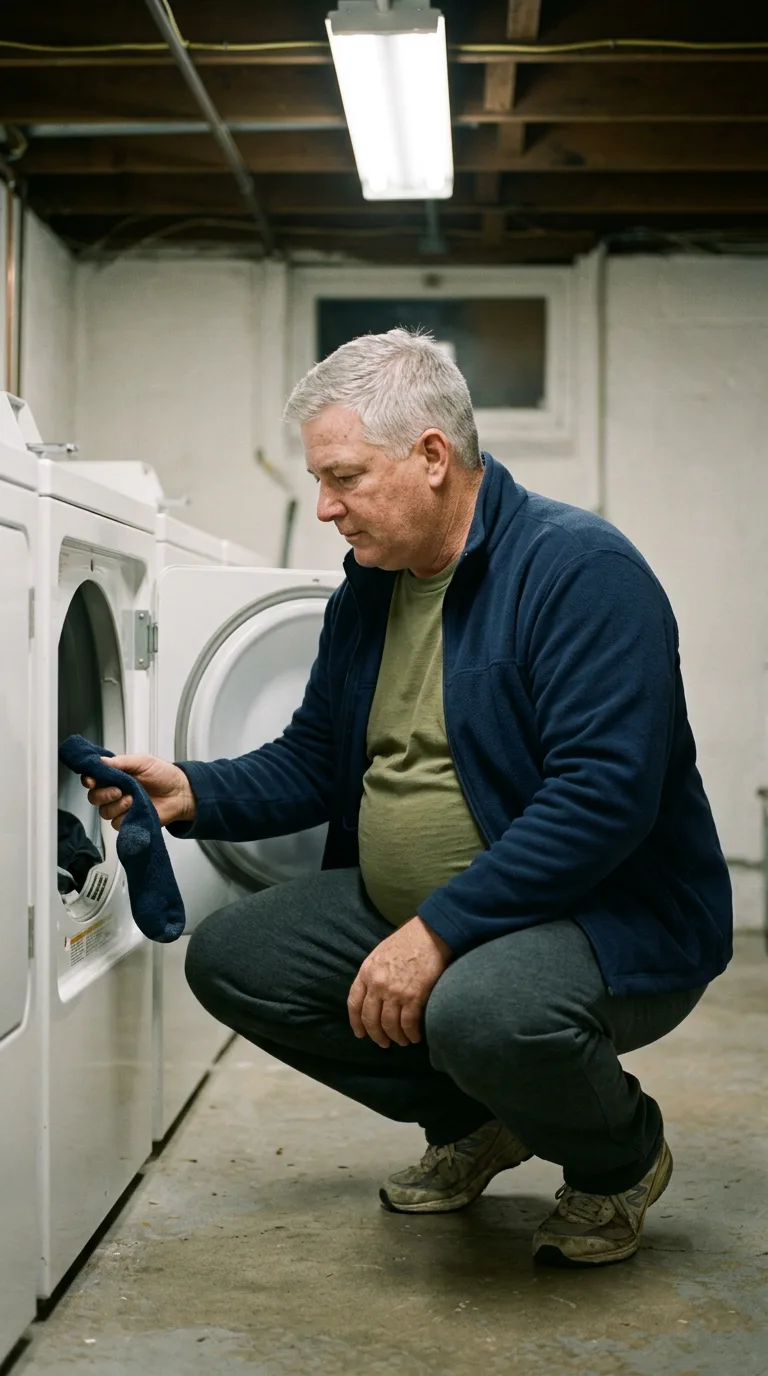
Rarest thing about him: Cigars only — common, 1 in 30
Season 1seed 365403297 · engine v11
Character card
lineage 2NZHHJ
His body-swap story
@connor.waskiewicz, wearing Brian Oleszczuk, rolled the wheel on and woke up as David Marchetti, spent under a minute in him, then spun the wheel and woke up as Shawn Delancey
The freight dock in Anchorage is quiet at this hour, which is to say the forklifts are still going but your head isn't in them. Brian's shoulders ache the way they always ache by the back half of a shift, a dull low throb that belongs to a 39-year-old who sleeps wrong and lifts worse. It's the middle of the morning on a Monday and you've been him less than a minute, barely long enough to know where the break room is, and already you're walking toward the lot instead of toward your station, because the itch is back. It is always the itch. Not boredom with Brian exactly — Brian is fine, Brian is sturdy, Brian has a short beard you kind of liked growing in — but the itch has no loyalty to fine. Nine hundred eighty-four men behind you and the only thing that has ever been consistent about any of them is that eventually you stop wanting to be the one you're being. You get your phone out behind a stack of pallets. The site loads the way it always loads, patient, gray, a wheel that doesn't need you to be anybody in particular. You spin it thinking of nothing, which is its own kind of answer.
It takes you out of Brian mid-stride and drops you crouched, which is worse on the knees than you expect — these knees, this particular set of fifty-seven-year-old knees, complain about the drop before you've even finished landing in them. Fluorescent light overhead, a hum in it like a trapped fly. Concrete floor. Open dryer in front of you, warm chemical breath of it on your face, and a sock — someone's sock, his sock — damp-warm in your fingers. You're bigger here, not taller so much as wider, a gut pressing soft against your own thighs as you crouch, and your knees are asking you to please not do that again without warning. It is the middle of the day where you're standing now, you understand that much from the window's gray wash of light down in the corner, though the understanding comes slow, a fact arriving before its feeling.
The sock is the first door. It opens onto a hundred other socks, a hundred other Mondays — laundry has always been his, not hers, some arrangement made so early in the relationship that neither of them remembers agreeing to it, just that he's down here most Mondays while Carol's upstairs with the TV on low. You square the sock's mate against it by feel, an old motion, and the basket at your knee is already half full of things your hands know how to fold before your mind catches up: a towel in thirds, a t-shirt in that fast flat trick that squares the corners without you looking. Eight shirts crumpled in a drawer upstairs flash through you sideways — his, from some other year, some apartment before Carol, when there was nobody to fold for and he didn't bother. That isn't now. Now the corners matter.
The fleece on your back gives you the morning you put it on: cold concrete under bare feet first thing, grabbing it off the hook by the basement stairs because the shop's unheated bay eats the morning chill right through a shirt, going upstairs after to kiss Carol's hair where she stood at the counter, her not quite awake yet, you not needing her to be. The green T-shirt under it smells like the garage even clean, like it's absorbed forty years of the place into its threads — Marchetti & Son, though there's no son, there was never a son, just you and your old man and then just you, and the sign never got repainted because taking his name off the glass felt like a thing you weren't ready to do even eleven years on. Your knuckles remember an oil pan dropped wrong, the quick practiced flinch, a scar that isn't there because none of them left a mark that lasted — just calluses, built in layers, the right palm harder than the left from decades of the same wrench.
Somewhere in the folding your mind goes, unbidden, to Denise. Not Carol — Denise, years back, the one who left for Scranton and a man with a pension and you let her go without much of a fight, told yourself it was fine, and it mostly has been, except on certain Mondays in a certain basement when the dryer hums just right and you catch yourself doing math on an age she'd be now. You don't say her name. You never did, much, even then. You fold a pair of sweatpants instead and the missing her passes through like weather.
The body under all this is heavier through the middle than it used to be and doesn't apologize for it; the back twinges if you bend from the waist instead of the knees, a twinge you already know to route around before it happens. Your hands are the good part — thick-fingered, certain, sure of what a sock is for even while a stranger is standing in them for the first time. Catholic in the unexamined way, cigar on the porch some evenings and never a drink, not in eleven years, a decision made once and kept without drama since.
You look down. The basket's half full, squared and silent, and your own hand is holding a folded towel like it has always known how.
You lift your eyes toward where a mirror would be if there were one, toward the lens of nothing in particular, and you say, out loud, to the humming light and the empty basement: "Didn't think I'd miss her this much today."
Then you keep folding, because somewhere above you a woman named Carol is about to call down asking if lunch is ready, and because you don't know yet — not him, never him, but you — how many Mondays this one gets.