Tavita Faleolo
Fictional. Generated by AI — not a real person, and no likeness of one is intended.
23, groundskeeper in Philadelphia · rolled by @colin.hasbrook · card — no film
History
who has worn him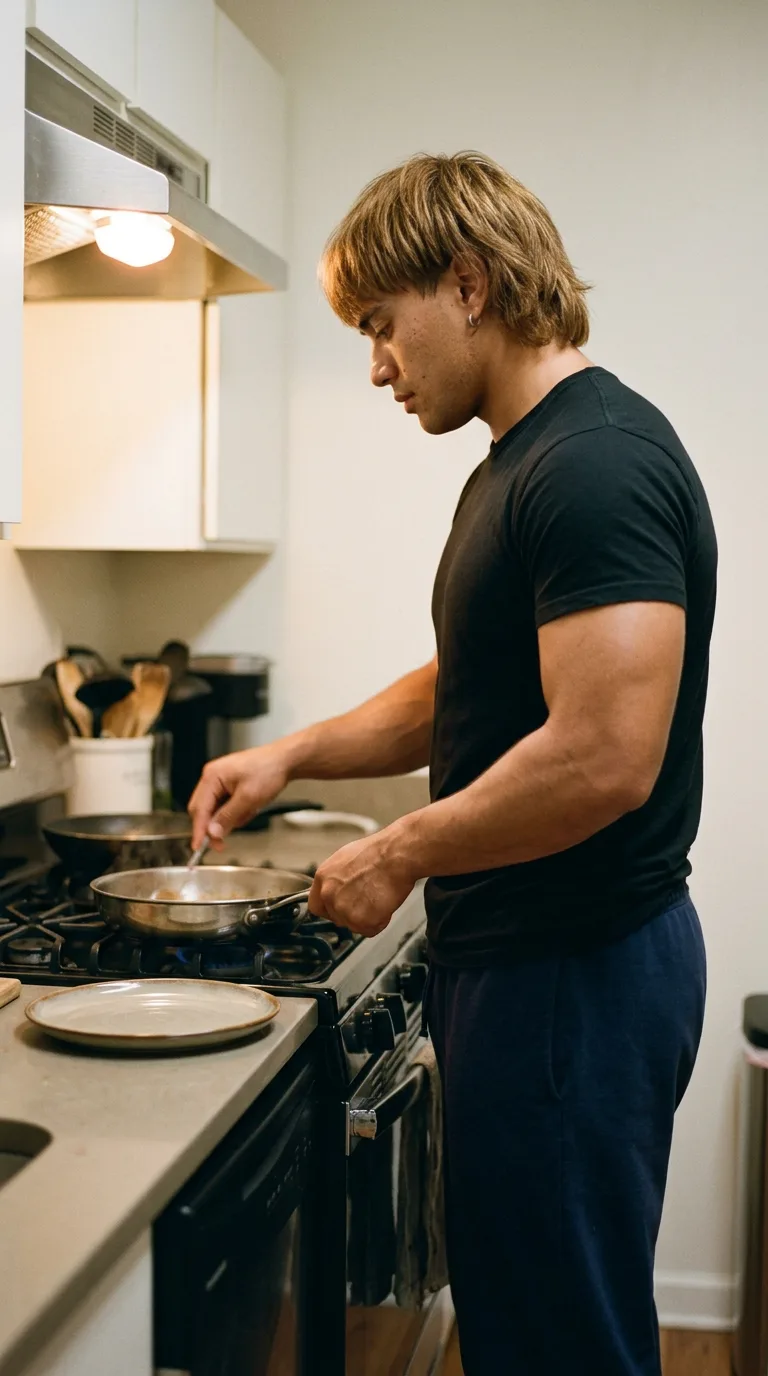
Rarest thing about him: Pacific Islander — epic, 1 in 172
Season 0seed 990922794 · engine v10
Character card
lineage 2NZHHJ
His body-swap story
@colin.hasbrook, wearing Baldev Chahal, rolled the wheel on and woke up as Tavita Faleolo, spent 3 minutes in him, then spun the wheel and woke up as Russell Halvorsen
You are sixty-two in a body that isn't yours either, standing in a New Orleans kitchen that smells like somebody else's dinner, and Baldev Chahal's knees ache in a way you have owned for less than a minute and already hate. His feet hurt from a day of mower vibration you didn't earn. His silver hair is damp at the neck with sweat that fell before you arrived. Sixty-two is a bad number to wear when you know, better than anyone alive, that it doesn't have to be permanent. You paid for him last time and you're already bored of his hips. That's the whole reason, plain as that, and you're not proud of it: greed dressed up as impatience. You go to the site on your phone with his thick fingers, the ones that already know how to grip a rake and don't yet know how to type fast, and you spin.
The pan is still turning under the spoon when you land — mid-circle, clockwise, his wrist already committed to the motion — and you finish it because the muscle finishes it before you can. Then you reverse it, stirring the other way, testing the arm like a new car in a parking lot. Steam off something with garlic in it. A gas burner's blue crown lapping the pan's underside. You are 5'6" again after being 5'6" already, but this is a different 5'6", denser, twenty-three, and the sheer unbruised ease of standing in it lands like relief before it lands like anything else. You salt the pan without tasting it — an old habit that isn't yours yet but your hand does it anyway, certain — and you reach up into the cabinet and take down a second plate, and something in the gesture is so practiced, so worn into the tendons, that you know before any memory arrives: he does this often. Sets a place across from himself. For no one.
The shirt is what opens first. Not the black one on him now — the one hanging on the back of the closet door in a rowhouse three blocks off Passyunk, tan, breast pocket, the one he wore for the Wednesday crew meeting eleven weeks ago when the parks supervisor called him "Tank" in front of the new hire and he laughed along and hated it a little, quietly, in the way of a man who has decided quiet is cheaper than an argument. That shirt gives you the mower first — the pull-cord vibration climbing his forearms at six a.m., the grass-stripes laid out like combing, the particular pride of a field nobody sits in yet, empty stands, his stands, his lines. Groundskeeping is the one thing he's never late for. He loves it in a way he doesn't have language for and has never tried to build any.
The apron string against his back — he isn't wearing one now, but the ghost of it is in his spine, the loop-and-tie of Sunday mornings at his tutu's stove in his teens, learning to salt without tasting because she told him a man who tastes everything trusts nothing, and he never unlearned it even after she died and the kitchen became his alone, one pan, one plate, then — for a while — two.
Two plates. That's the memory the second plate drags up whole: a girl named Desiree who left eight months ago, not dramatically, just a slow leak of a relationship going flat, and he kept setting her plate out of some stupid muscle memory for weeks after, put it back in the cabinet, took it out again tonight without noticing, the way your hand reaches for a phantom limb. He's single. No one who still matters. He told himself that so many times it became half-true.
The mole on his cheek is there in every mirror he's avoided lately, the vape in his sweatpants pocket cool against his thigh, three hits deep already tonight before he started cooking, an asthma inhaler in the junk drawer he hasn't reached for in a week though the vape doesn't help that, doesn't help anything, and he knows it and does it anyway. The debt is in there too, distant and gray, a number he doesn't look at directly, credit cards from a stretch of bad decisions and worse luck, seventy-some thousand he owes people who call at dinnertime, which is maybe part of why he cooks alone with the ringer off. His hands, when his mind drifts — right now, actually, this exact moment — go to his own cuticles, thumbnail worrying at the edge of his index finger, a small violence he does to himself without deciding to.
Dressing this morning comes back sleeve by sleeve because the shirt he's not wearing now still remembers his shoulders from hours ago: work boots first, laces double-knotted the way his old crew lead taught him, the heavy canvas pants already grass-stained at the knee before he even left the house because he never fully gets them clean, the hoop through his left ear that he puts in last, always last, a small ritual, catching his own eye in the mirror and thinking, not badly, there you are.
You look down at his hand mid-cuticle, the muscle and the tan and the small silver ring in his ear catching the stove light when you turn your head, and you feel twenty-three land in you all at once — total, undeserved, obscene good fortune after sixty-two years of somebody else's cartilage. The second plate sits there gleaming, waiting for nobody, and you almost laugh at him, at what he's carrying, at how much of it you already intend to ignore.
"Guess it's just us tonight," you say to the empty kitchen, and put the spoon down, and do not yet know for how long.