Baldev Chahal
Fictional. Generated by AI — not a real person, and no likeness of one is intended.
62, groundskeeper in New Orleans · rolled by @colin.hasbrook · card — no film
History
who has worn him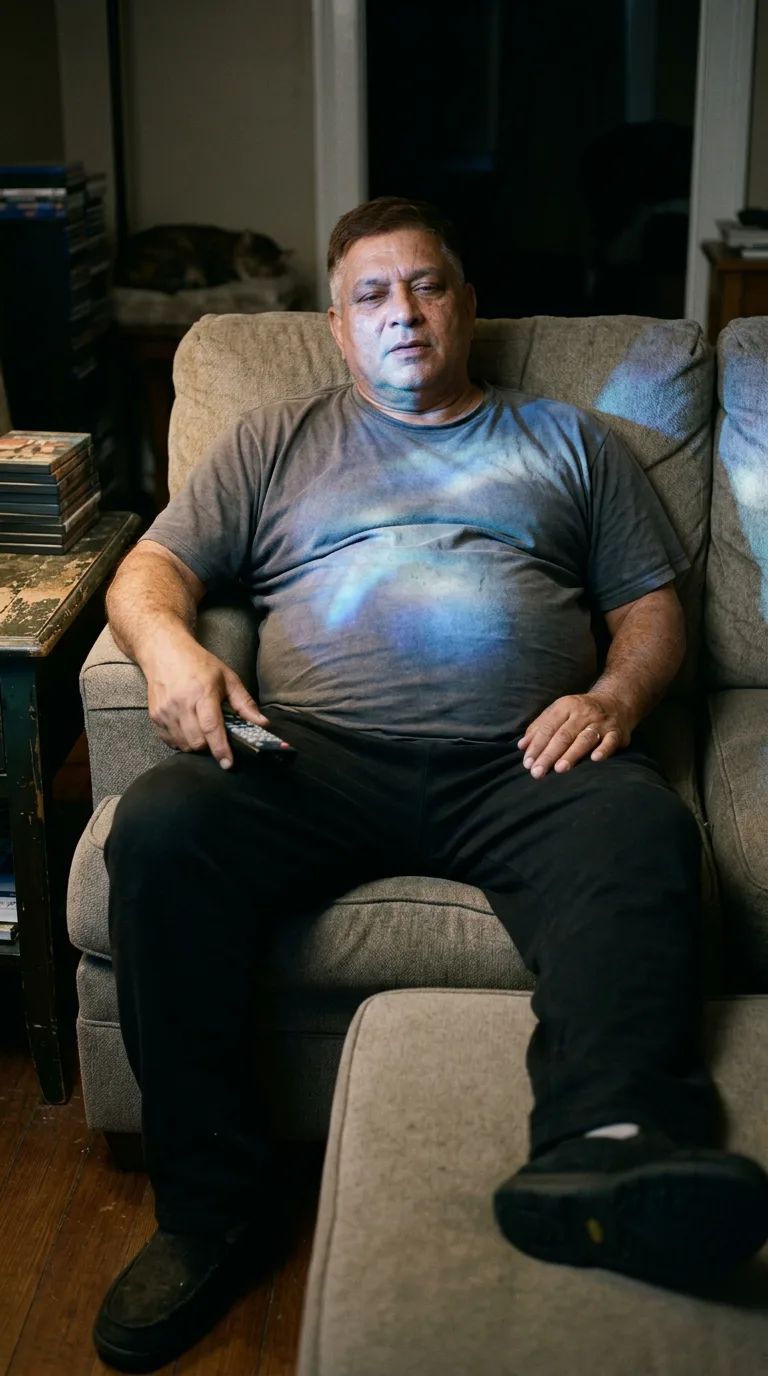
Rarest thing about him: Pipe smoker — legendary, 1 in 188
Season 0seed 1162332460 · engine v10
Character card
lineage 2NZHHJ
His body-swap story
@colin.hasbrook, wearing Gary Wetzel, rolled the wheel on and woke up as Baldev Chahal, spent under a minute in him, then spun the wheel and woke up as Tavita Faleolo
The stream chat is still scrolling when you close the laptop on Gary Wetzel's desk, and that's the thing nobody tells you about a good body: after a while it just becomes furniture you're renting. Sixty years old, athletic, that silver hair the fans love, a face that's been fine for eleven months of streaming to four thousand people a night. You made him laugh on camera for an hour tonight, told the story about the lake house again, closed the software, and felt the specific flatness that comes after — not sadness, just the sense of a room with all the good chairs already sat in. You have been him less than a minute of his own reckoning but eleven months of yours, and eleven months is enough to know every joke he owns. You get up, walk to the machine you always come back to, and you spin because the wanting has already come back, the way it always does, quiet and total, before you've admitted it to yourself.
The wheel turns and there is no in-between. You are sitting up straight on a couch that was not yours a half-second ago, in a room gone dark except for the television, and a remote is settling out of your hand onto the couch arm — not dropped, set down, careful, the way this hand apparently sets things down. The show is bright and going and something in it was funny a moment ago, you can tell, because the studio audience is still laughing, but you are not, because you are new here and you don't know the joke yet.
The shirt is against your back first — thin, worn soft, a gray T-shirt gone loose at the collar — and it gives you a Tuesday, months back, standing in front of a mirror in a shotgun house one room wide, pulling this same shirt over your head with the ease of a man who has dressed himself sixty-two years running. Your shoulders remember the reach. Your left hand, going through the sleeve, catches on the wedding band the way it always does for half a second, a small hitch that isn't annoyance anymore, just weather. Manjit gave you that ring thirty-four years ago in a gurdwara in Kenner with her mother crying too loud, and your body has a whole marriage folded into the width of that band — her hand flat on your chest at 5 a.m. when you get up for the fields, her voice down the hall telling the kids to let their father sleep in on Sundays, the particular silence of a house that's raised three children and is quieter now than it used to be, not sadly, just differently.
The couch under you is the couch you argued for and she said too much money and you bought anyway, and your weight sinks into it exactly where it's supposed to, cushions gone soft in the shape of you from twenty years of exactly this — home from the field, boots off by the door, lights off because your eyes are tired of sun. Your knees know the field before your mind does: the ache that lives in them, an old injury from a ladder that gave way under you decades ago trying to fix a light pole at the ballpark, the kind of thing that never set right and reminds you every time you kneel to check a sprinkler head. Your hands know the mower, the smell of cut grass that's under everything else in this room like a second skin, the pattern you cut into that outfield this morning, stripes so straight the head groundskeeper at the next field over asked how you do it and you didn't have a real answer beyond forty years of doing it.
The pipe is on the side table, you can feel it there without looking, tobacco smell soaked into the wood, and it brings back evenings on the porch after Manjit's gone to bed, just you and the smoke and the cicadas, thinking about nothing in particular, which was always the whole point. A drink most nights, something poured an hour ago and finished, glass somewhere on that table too. Church — no, not church, the gurdwara on Sundays you don't always make anymore, and the guilt of that sitting soft and familiar, forgiven in advance the way old guilt gets.
Three kids, grown, scattered — one voice on the phone last week asking about grandkids' names, a photograph somewhere in this house you haven't looked at in a while but know exactly where it is, top drawer, left side. Sixty-two years of a body that is strong through the middle and slow in the knees, a man who has never been rich and has never much needed to be, twenty-five thousand dollars and a little more sitting patient in an account he doesn't check often, enough.
None of it is yours. All of it just arrived, the way water arrives in a glass, taking the shape without asking, and you are still holding the last of it — his laugh, missing, because you didn't have this show's whole history to laugh at yet — when you look down.
Your hand is broader than Gary's was, browner, the ring catching what little light the television throws. You turn it once, slow, like checking it still works.
"Not yet," you say, to no one, meaning the show, meaning tomorrow, meaning nothing at all — and you keep watching, waiting to find out what's funny.