Shane Ulrich
Fictional. Generated by AI — not a real person, and no likeness of one is intended.
30, machinist in High-desert Nevada · rolled by @marco.villagrana · card — no film
History
who has worn him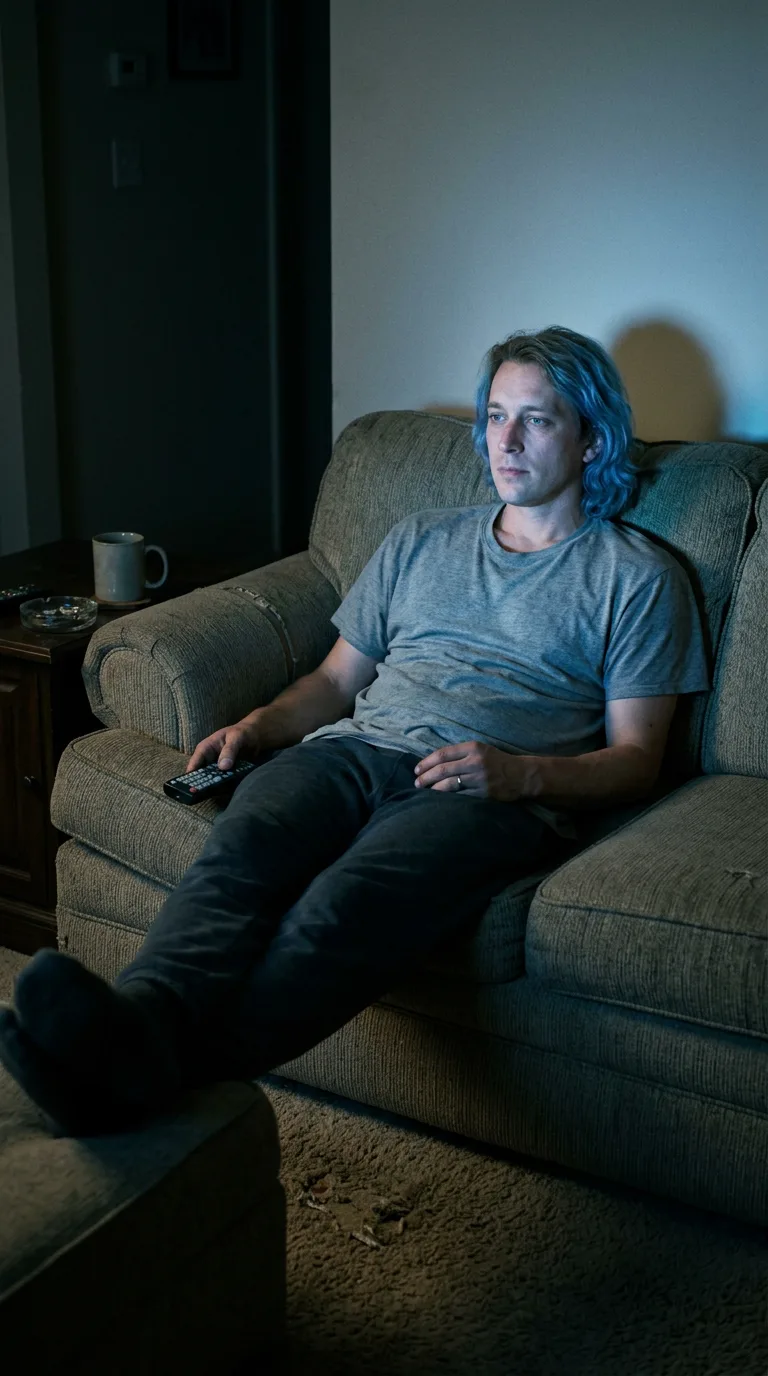
Rarest thing about him: Fashion color — epic, 1 in 56
Season 0seed 474636420 · engine v10
Character card
lineage LJL8SV
His body-swap story
@marco.villagrana, wearing Gary Peschke, rolled the wheel on and woke up as Shane Ulrich, spent 3 minutes in him, then spun the wheel and woke up as Danny Mancuso
Gary Peschke's kitchen smells like a butcher shop even on his day off, because Gary is a butcher, and Gary's hands smell of it no matter how many times he washes them at the steel sink. You are wearing Gary. You have been wearing Gary for four minutes, and already you know you don't want the rest of a Sunday in a fifty-nine-year-old body with a bad hip and a coffee going cold on the counter and nothing in the fridge but cuts of meat he can't sell. You spun him last, and you spun him carelessly, and now you're standing barefoot on cracked linoleum in Anchorage light that hasn't decided if it's morning, thinking about Casey.
Casey Broussard. Six spins back. You wore him for five minutes — a soldier's body, red-headed, freckled, strong in a way that felt like a held breath — and you left him an hour and fifteen minutes ago mid-word, mid-something, you don't even remember what, because leaving is always faster than arriving. What you remember is a name Casey said once, off-hand, about a guy from before the Army, before Houston — a machinist he used to work with on some rig-support contract out in Nevada, blue hair, said it like it was the strangest thing about him, which tells you something about the guy Casey was talking to. You have Casey's memory of him sitting in you now like a coin in a pocket. You didn't plan to spend it. But Gary's hip aches and the coffee's cold and there is a wheel on a page that doesn't care what day it is.
You spin.
The television cuts to a bright frame — some rerun, laugh track a half-beat from landing — and you are sitting up straight before you mean to, spine snapping into a posture that isn't decision, it's just where the body already was, mid-motion, correcting. The remote is warm where your palm set it on the couch arm. Bare feet, one socked, on carpet gone flat and gray with years. Hard blue shadow at the window even though it should be dark for TV-watching, which it is not, quite — the light through the blinds has the thin, early flatness of a shift-worker's morning mistaken for night, curtains drawn against a sun this house has learned to pretend isn't up yet.
The joke that would have made him laugh lands, and you don't laugh. You sit with your weight settling wrong into shoulders that are wider than Gary's ever were, thicker through the forearm, and the shirt against your back is the first thing that talks to you.
It's soft from washing, gray, a size too loose the way a wife buys them when she's guessing, and it gives you an arm going through a sleeve at five in the morning, this exact one, off a chair where it was hung the night before because the hamper was full — her voice from the next room, half-asleep, telling him not to wake the kids, and him promising with his mouth full of yawn, and loving her so plainly in that unremarkable minute that it aches now, secondhand, in a chest that isn't yours. Three kids, maybe more — small feet somewhere down that trailer hall, a night-light, a fight over cereal you catch only the tail end of, gone before you can hold it.
The couch cushion under you gives up a longer thread: nights exactly like this one, except late, except dark, except laughing — a show he half-watches because it's the only hour that's his, shift done, chips still ghosted into the seams of his jeans no matter how the wash tries. The lathe comes up through his palms without being asked — steel singing thin and bright, curling off in ribbons around his boots, the particular satisfaction of a part coming out true to a thousandth, a foreman's nod that meant more than a raise would have. Hands that know how to hold a caliper the way other men hold a coffee cup.
The wedding band on the left hand is warm from his skin and it gives you her, specifically — not a name yet, just the weight of being chosen by somebody steady, a courthouse, a dress that wasn't white because there wasn't money for white, and it was fine, it was more than fine. And under that, quieter, an old ex who still turns up some nights behind his eyes uninvited, a girl from before Nevada, before the lathe, a version of himself he didn't keep and doesn't quite regret not keeping, except on nights like the one this couch remembers best.
Casey's name arrives last, small, almost an afterthought the body itself barely holds onto — a coworker from a stretch of hard labor two summers back, somebody who talked too much about the Army he was about to join and asked good questions about tolerances and never once made fun of the hair. Not a friend exactly. A person he was decent to. The body has no idea you know him from the inside, that you have stood in that man's boots and left him mid-breath an hour ago, that you are, in a manner of speaking, visiting an old coworker through the back door of the world.
You look down at your hands — his hands, blunt-fingered, a nick of old scar tissue at one knuckle that the body doesn't even register as a scar anymore, just a shape — and you feel them start to drum against your knee, unbidden, the way they must always do when the mind above them isn't paying rent on its own thoughts.
You lift your eyes to the dark TV, then off it, into the room, into nothing in particular, and you say, quiet, to no one:
"Didn't laugh."