Casey Broussard
Fictional. Generated by AI — not a real person, and no likeness of one is intended.
24, soldier in Houston · rolled by @marco.villagrana · card — no film
History
who has worn him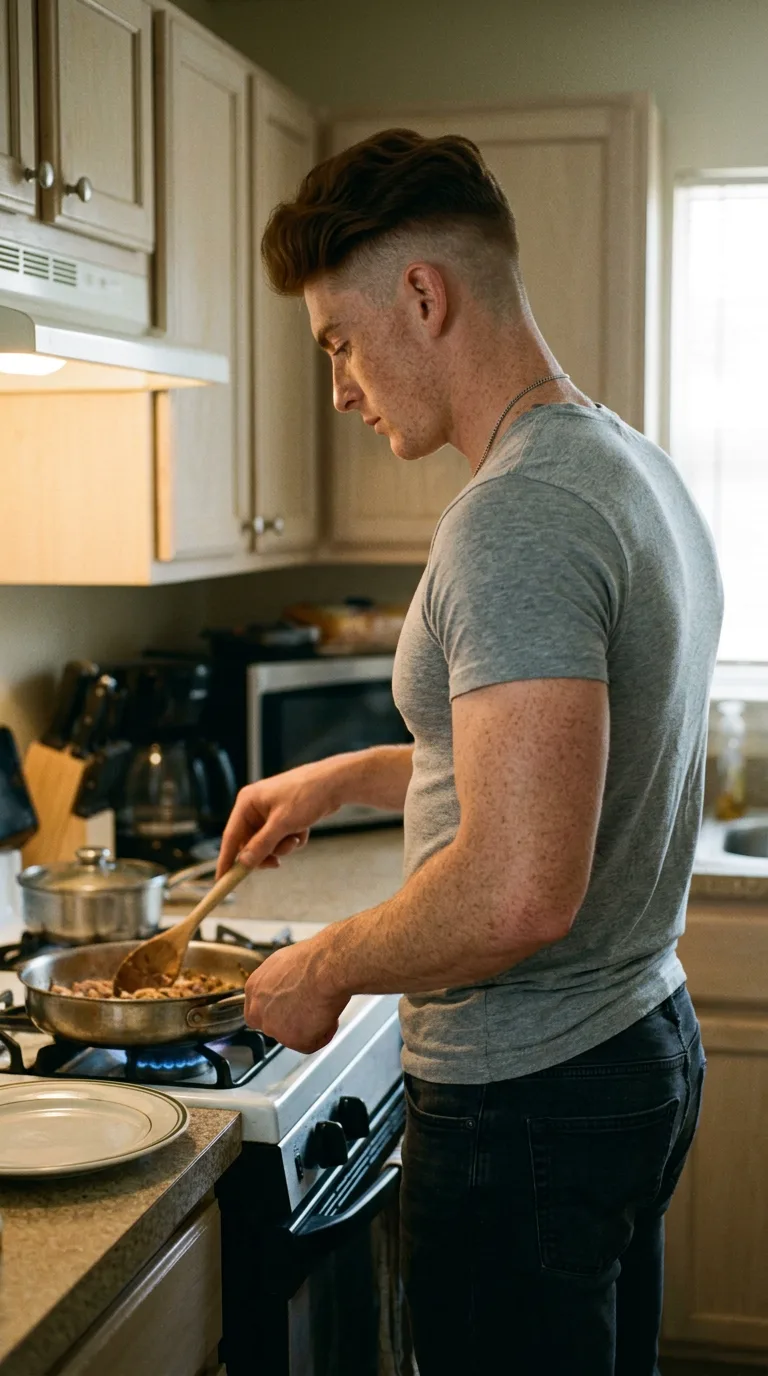
Rarest thing about him: Red — rare, 1 in 21
Season 0seed 1787923124 · engine v10
Character card
lineage LJL8SV
His body-swap story
@marco.villagrana, wearing Kevin Sato, rolled the wheel on and woke up as Casey Broussard, spent 5 minutes in him, then spun the wheel and woke up as Tommy Kessler
Five minutes is not enough to want a body, but it's enough to hate one.
You're standing in Kevin Sato's kitchen — his parents' kitchen, technically, the one with the good tile — in the gray hour before a Phoenix Sunday admits it's morning, and your left hand won't stop shaking. It's been shaking since you took him. Nerve thing, apparently, something that lives in this particular twenty-year-old's wiring and has nothing to do with you. You hold up the hand and watch it tremble and you think: five minutes, and already there's a flaw you didn't order. The tattoo gun on the counter is his — was his — is, you correct yourself, because none of this is past tense yet, none of it ever really is. You don't want to learn what it's like to hold that gun with a hand that won't hold still. You don't want the rest of the five minutes either.
You want out before you're in far enough to feel bad about leaving.
So standing in a kitchen you didn't grow up in, in a body you're about to stop wearing, you open your banking app with a trembling thumb, and you go to the site, and you spin.
—
The spoon is already turning the other way before you notice your hand is doing it.
You're not thinking that thought — some part of you that isn't quite gone yet is, and it startles under your borrowed control like a hiccup, there and swallowed. The pan hisses. Sausage and peppers, going grayish at the edges from too much time on the heat, and the smell of it lands in you like a fact you already knew. Your back is to the room. There's weight on you that Kevin Sato never had — shoulders, a chest, a whole wideness — and dog tags shift cold against your sternum when you breathe, which you weren't doing a second ago in any body at all.
You salt the pan. You don't taste it. Your hand goes to the cabinet on its own, some muscle deeper than decision, and takes down a second plate, and sets it beside the first one on the counter, and only once it's down do you understand you did that, not him, not quite you either — something in between, something the body remembers wanting even with nobody home to want it.
Then it comes in.
The dog tags first, warm where they touch, and under that warmth a name that isn't yours: Broussard, and a service number, and the shape of standing in formation before six a.m. outside a barracks with the sky still doing its slow bruise-colored thing over Houston, cold concrete underfoot even in a state that doesn't believe in cold. You're not there. You're in a kitchen in Texas that isn't a barracks at all, off-post, his own apartment, and the memory of the parade ground arrives anyway, layered under the linoleum like a second floor.
The shirt is next — plain gray, soft from washing, and putting it on this morning comes back to you in his hands: pulling it over his head one-armed while the coffee maker coughed behind him, the fabric catching for a second on the chain of his dog tags before he worked it loose, an old habit, done a thousand mornings without thinking. Under the shirt, a chest that a strap of muscle across the shoulder still remembers a road march with, weight distributed wrong on one side from an old rucksack, a dull ready ache that isn't pain, just information: this body is used hard and forgives it.
The spoon in your hand is the real key. Wood, worn smooth at the neck where his grip always falls, and it gives you the rest of it in no order at all — his mother's kitchen this recipe actually came from, a version with two chicken thighs instead of the sausage he's using now because sausage was what was in the fridge; a barracks common room laughing at somebody's phone; and her. The ex. Not named in the part of him that surfaces, just present the way a smell is present — a second toothbrush that isn't in the cup anymore, a laugh he used to time the cooking around, waiting for the sound of her key before he'd plate up. Nobody's key is coming. He knows that, somewhere under the knowing that's currently drowning, and still the hand set down a second plate, because five months of doing it for two doesn't unlearn itself in the three weeks since it became one.
The tattoo at your collar is the last thing, and it doesn't give you a memory so much as a pressure — pride with no particular scene attached to it, just his unit's insignia sitting warm against skin that flushes easy, freckled skin, cheap to sunburn, the kind that made basic training a special kind of miserable and that he never once complained about because complaining wasn't the kind of man he'd decided to be.
He is twenty-four and none of this belongs to you and all of it is now sitting exactly where his life used to be.
—
You look down at the hand holding the spoon, and it's not shaking. Freckled knuckles, a burn scar at the base of the thumb you didn't put there, a wedding-band tan line that isn't from a wedding — just where a class ring used to sit, gone now, sold or lost, you'll never know which and it will never matter to you the way it mattered to him.
You set the spoon down. You turn the burner off out of some reflex that isn't fully yours yet and will be by tonight. Second plate still sitting there beside the first, waiting on a person who isn't coming to a kitchen that only has to feed one.
You look up, into the window over the sink where the glass throws back just enough of a face to be a face, and you say, to no one who's listening anymore:
"Guess I'm eating alone again."