Gary Peschke
Fictional. Generated by AI — not a real person, and no likeness of one is intended.
59, butcher in Anchorage · rolled by @marco.villagrana · card — no film
History
who has worn him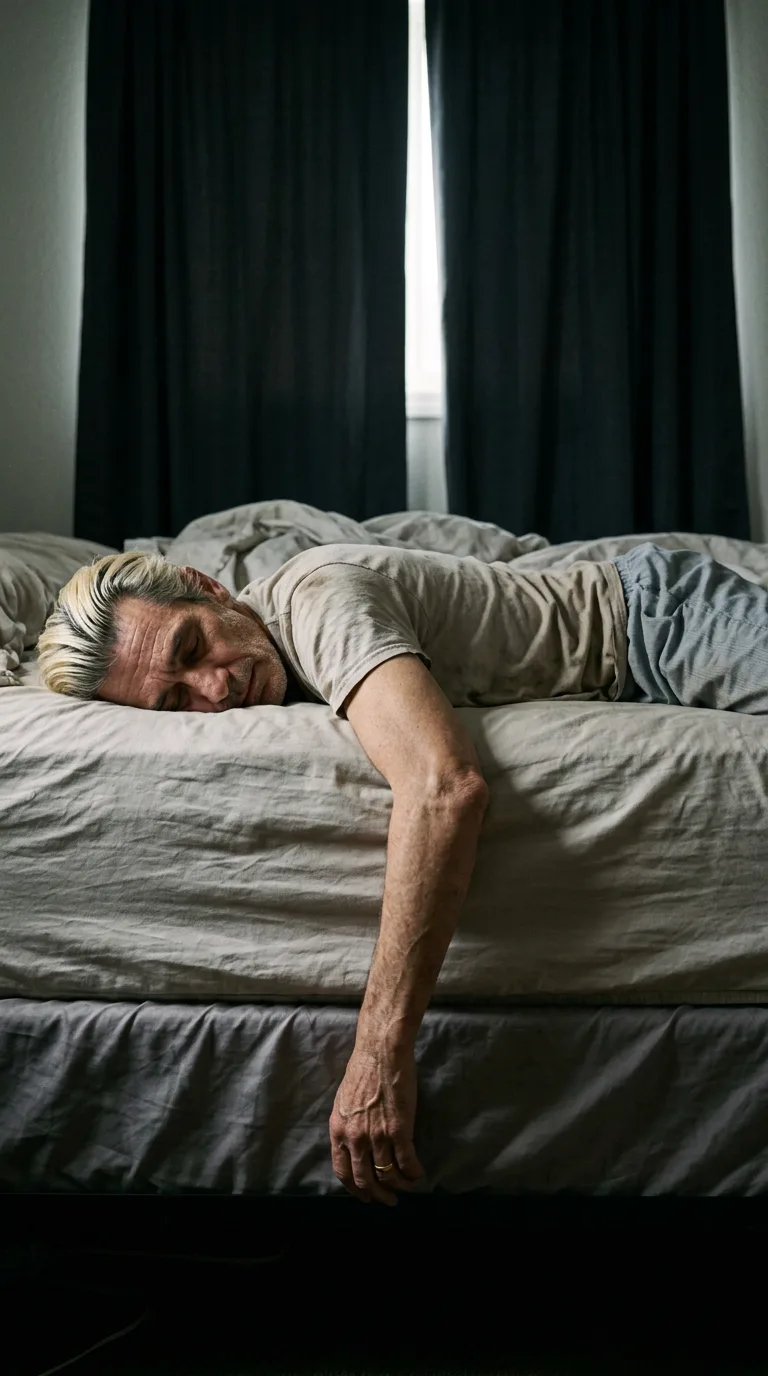
Rarest thing about him: Bleached blond — legendary, 1 in 119
Season 0seed 177878829 · engine v10
Character card
lineage LJL8SV
His body-swap story
@marco.villagrana, wearing Colin Braswell, rolled the wheel on and woke up as Gary Peschke, spent 4 minutes in him, then spun the wheel and woke up as Shane Ulrich
Colin Braswell's shoulders are enormous and none of it is yours. You have been him for three minutes, sitting on the edge of somebody's bed in Houston that isn't yours either, and already the wanting has soured — his hands too thick for the phone screen, his knee already aching in a way twenty-one shouldn't ache, the ceiling fan turning too slow in a room that smells like somebody else's cigarettes. You did not spin the wheel to sit still in a stranger's Sunday. You spin it to leave the second it stops being interesting, and it stopped being interesting the instant you landed. Thumb over the site, the wheel already spinning before you've decided anything, because deciding was never really the point.
It lands.
You are face-down, then you are not — the arm that was hanging off the mattress draws itself up on its own, folding at the chest, and the breath under you goes from ragged to even like a held note resolving. Streetlight through a gap in the curtains, thin and grey. Your back — no, his back — announces itself immediately, low and stiff, a specific ache that has clearly been there for years and plans to stay. A body arranging itself into a shape it has never once slept in, because you are the one arranging it.
The sheets are cheap cotton gone soft with washing, and touching them gives you nothing at first, just fabric — until your palm finds the pillow, still faintly warm on one side, someone's hairspray smell close to the case, and there she is: a woman's shoulder, turned away, breathing slow, thirty-one years of it, married in a church with folding chairs, her hand in his at the altar rail every communion Sunday since. Debra. The name arrives with the pillow the way names arrive when you've said them ten thousand times and stopped noticing you were saying them.
The room keeps giving. The blue tarp shape you can almost feel through the wall, out past the plywood siding, the snowmobile he hasn't started since March, promising himself he will. Two kids grown and scattered, a daughter in Wasilla who calls on Sundays, a son who doesn't call enough, and under both of those a specific old ache that isn't the back — some argument at a funeral, years gone, never quite closed.
Your hand finds the sheet again and gets the shirt he wore yesterday, still slung over the chair, and through it: the shop, six a.m., the walk-in's cold breath on his forearms, the saw's whine dying down to nothing at the end of a Saturday, trays of loin and shank under glass, a coat he's had re-stitched twice at the cuff because he won't buy a new one when this one still works. Boots that know exactly how to stand eight hours without complaint even while the knees do. Hands — his hands — that know a carcass the way other men know their own signature, unthinking, exact, the give of a joint before the blade even asks.
Church parking lot, gravel under those same boots, a folding table with coffee urns, a handshake line, his voice saying grace over a Thanksgiving table nobody remembers the words of, only the sound of it, low and unhurried. A beer on the porch most nights, never two past what Debra would notice, never a cigarette, not once, though half the guys at the shop smoked through their whole thirties and he never once wanted to.
None of it is dramatic. That is what unsettles you, briefly, holding still in a stranger's spine before the streetlight — nothing here was ever asking to be taken. A plain life, comfortable, paid-off truck, a wedding band worn soft at the edges from thirty-one years of turning it in idle moments, which his hand — your hand now — is already doing without being told.
You lift the hand off your chest and look at it. Thin fingers, a nick of old scar along one knuckle that isn't a story, just a knife slipping once in 1994. The ring catches what light there is.
"Debra," you say, quiet, testing the voice, testing whether it still means what it meant to him three seconds ago.
It doesn't, not to you. It might again tomorrow. You don't know yet how long you're staying.