Sean Marchetti-Voss
Fictional. Generated by AI — not a real person, and no likeness of one is intended.
27, contractor in Los Angeles · rolled by @colin.hasbrook · card — no film
History
who has worn him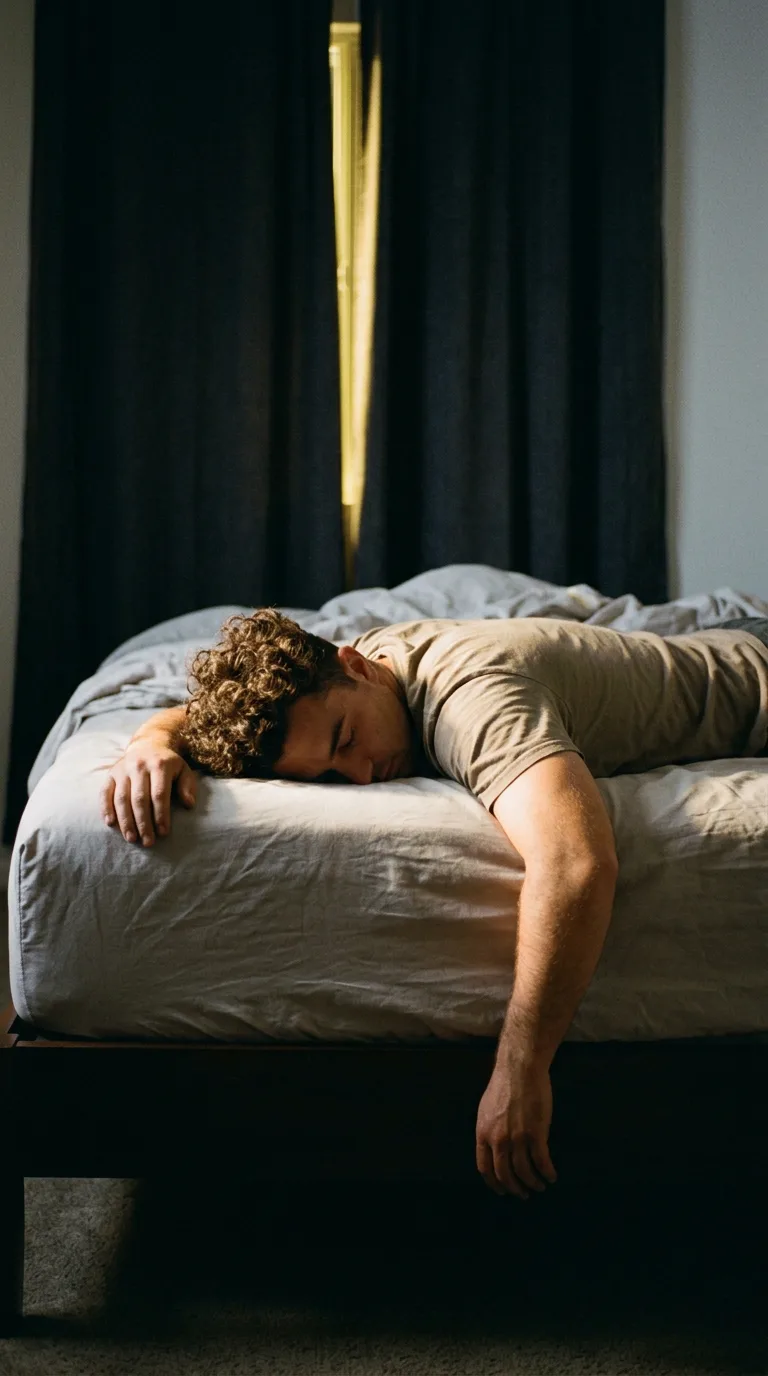
Rarest thing about him: Ex-smoker — rare, 1 in 19
Season 0seed 199350326 · engine v10
Character card
lineage 2NZHHJ
His body-swap story
@colin.hasbrook, wearing Harold Sakamoto, rolled the wheel on and woke up as Sean Marchetti-Voss, spent 6 minutes in him, then spun the wheel and woke up as Craig Boetticher
Harold Sakamoto's knees ache getting up from the recliner, which is the whole problem in one sentence — you have had this body for less than a minute and already you know its inventory: the knees, the blood pressure pill on the counter he hasn't taken, the particular tiredness of being sixty-five and retired and awake near midnight because sleep doesn't come easy anymore and didn't for the man who owned this body either. You didn't ask to feel any of that. You never do. The laptop is still open on the little kitchen table where he left it, browser tab still glowing: vessel.cards, the wheel mid-spin from an hour ago, before this Harold life even started. You paid for another one already. Some appetite that isn't about Harold at all — an old habit from three hundred bodies back, the simple fact that a life you're only borrowing for a minute stops being interesting the second it's yours — pulls your finger to the mouse. Retirement bores you no matter whose retirement it is. You click.
The gap between one breath and the next is the only travel there is. Ragged in, even out, and you are lying face down in unmade sheets with an arm gone dead and numb hanging off a mattress edge, streetlight slicing gold through a curtain gap onto a bare wall. The arm draws itself up without you deciding to lift it. The body rolls onto its back. Hands fold at the chest like a man laid out for a wake, which is not how this body has ever slept, not once, not in twenty-seven years — and you feel that wrongness arrive with the movement, a muscle memory objecting to a posture it never chose.
The sheets are cheap cotton gone soft with washing, and against your bare shoulder blades they hand you a whole apartment: the stucco courtyard outside, dry palms clattering in a wind that never really cools, the particular orange of L.A. streetlight through gauze curtains he bought at a Target three years ago and never replaced. You are Sean. The name surfaces the way his own name would to him, no announcement, just there. Twenty-seven, contractor, a body that has spent a decade being useful — shoulders that know the weight of a beam before the mind has finished deciding to lift it, forearms corded from nail guns and lumber and the particular ache of gripping a drill at a bad angle for six hours. Nothing hurts tonight except the ordinary hum of overworked muscle settling, the kind of tired that feels almost good.
The alarm clock on the nightstand isn't glowing yet — too early, hours before it needs to be — and that fact comes with its own small unease: he sleeps these hours because the job runs early, six a.m. start, the crew already loading trucks by the time most of the city's still dreaming. Framing work, mostly — a four-unit build in Highland Park, joists and headers and the smell of cut Douglas fir that never washes fully out of his hands. You feel that smell arrive with the memory, phantom-real, sawdust in a throat that isn't drawing breath from exertion right now but remembers what it's like to.
Touch keeps giving. The T-shirt against his skin — worn thin at the collar, a color that used to be darker — brings back this morning, no, yesterday morning, him pulling it over his head still half-asleep, tugging his arms through, the practiced motion of getting dressed for a body that's done it ten thousand times: work pants first, the canvas ones with the paint already ground into the knees, the tool belt cinched at a notch worn shiny from years of the same hole. The vest goes on last, orange and yellow, heavier than it looks, straps that chafe a little at the shoulder where the stitching's starting to go. His hands know the belt's weight distribution without thinking, hammer on the right hip, tape measure clipped where his thumb finds it blind. A callus along the base of his right palm answers to nothing but the hammer's handle. None of that is happening now — the sheets under him are bare cotton, no vest, no belt — but the memory of dressing arrives anyway, sleeve by sleeve, because the shirt he wore yesterday still smells like the shirt he's not wearing tonight, and that's enough of a thread to pull.
There's an ex-girlfriend who doesn't come back sharp, just a shape — some low year, some apartment before this one, nothing that follows him into the dark. There's a period he doesn't like remembering, cigarettes on the tailgate at lunch with the older guys, quitting because his chest started doing something he didn't like at twenty-four. A few beers a year now, weddings mostly, nothing regular. A habit his hands fall into without him — a pen clicking, over and over, during permit meetings, during nothing — and even lying here still, no pen in reach, his right hand twitches faintly with the ghost of it, thumb pressing air.
Nothing about him is remarkable and that, too, comes through clean: an ordinary face, an ordinary build, a life built out of ordinary hours — up before the sun, home smelling like a job site, asleep alone in a bed too big for one person, and none of it wanted for anything more than what it already is. Spiritual on nobody's terms but his own — he doesn't pray so much as go quiet sometimes on the roof beams at dusk, looking at the light over the hills, calling it nothing in particular.
You lie there another second in his stillness, in the folded hands he never folds, feeling twenty-seven in the joints where you just felt sixty-five.
Then you look at your own hand in the dark — a stranger's hand, calloused at the base of the palm, curled slightly like it's holding a hammer that isn't there — and you turn it over once, slow, like checking it's real.
"Okay," you say, to the empty room, to no one. "Okay."