Samir Haddad
Fictional. Generated by AI — not a real person, and no likeness of one is intended.
37, roofer in New York · rolled by @colin.hasbrook · card — no film
History
who has worn him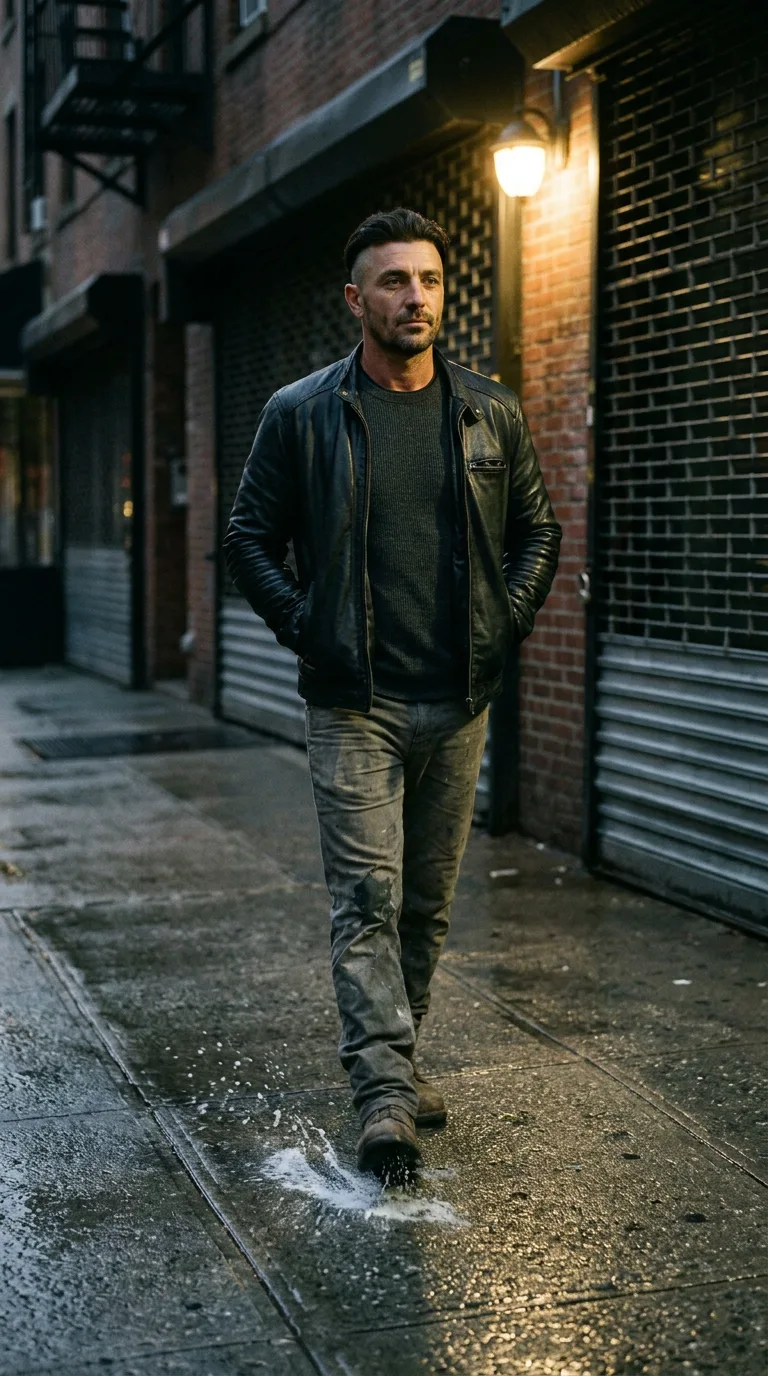
Rarest thing about him: Middle Eastern — rare, 1 in 34
Season 0seed 1049284485 · engine v10
Character card
lineage 2NZHHJ
His body-swap story
@colin.hasbrook, wearing Reginald Fowlkes, rolled the wheel on and woke up as Samir Haddad, spent under a minute in him, then spun the wheel and woke up as Trent Waverly
Reginald's shears are still warm in your hand when you set them down for the last time, and that's the thing nobody tells you about being sixty-one and heavy and tired in a body that isn't the one you started with: even a good one, a comfortable one, starts to feel like a coat you've had on too long. Business was fine today. Client tipped well, told a joke about his grandkids, called you "young man" out of habit and you laughed along because Reginald's laugh is easy, it comes cheap. But you stood at the register counting the drawer and your knees ached the way his knees always ache by five o'clock, and you thought: not this again, not the knees, not tonight. Sixty days in him. Long enough. The site is right there on your phone, same as always, the wheel spinning lazy colors on the screen while you sit in the back room with the smell of talc and old coffee, and you don't even finish the thought before your thumb's already tapping in the card number you memorized two hundred spins ago.
You spin.
You are catching yourself on the cold wet metal of a parked car, palm skidding on the roof, and the scuff of a shoe that was dragging every third step simply — stops. The night air is different air, colder, wetter, tasting of river somewhere close. Your legs are not sore in the old familiar way; they are sore in a new one, tight through the lower back, a dull hot wire above the belt. You are lighter. You are standing straighter than you have any right to, this drunk, this late. Sodium light pools on wet stone ahead of you. You turn left, which some small dead certainty in the muscle knows is wrong, and you keep walking anyway, because the man whose legs these are isn't the one deciding anymore.
The leather jacket is the first thing that speaks. It's cheap leather gone soft with age, a jacket bought on impulse outside a bar in Bay Ridge nine years ago because a woman he was seeing said he'd look good in it, and he did, and she left anyway eighteen months later for reasons that had nothing to do with jackets. Marisol. The name comes with the smell of her shampoo, absurdly, stitched into a coat she never even touched. The divorce papers signed at a lawyer's folding table on Fourth Avenue, both of them being polite about it, too polite, the politeness somehow worse than shouting would have been. No kids to fight over, which he'd wanted and never said, and she knew he wanted, and never said either.
Your hands are in the jacket pockets and they know the shape of a phone, a lighter he doesn't use because he never smokes, a receipt balled up from the bar three blocks back where he drank four beers alone and told the bartender a story about a chimney flashing job that went wrong in the rain, made it funny when it wasn't funny at all, it had scared him, forty feet up on a pitch slick as glass. The dimples come up around that memory even now, a tic independent of you, muscle that grins whether the man behind it wants to or not.
Under your boots the sidewalk is uneven old Brooklyn stone, and your feet know this walk without needing your eyes — twenty years of walking home this exact wet grid, first with his father, a roofer too, before the old man's shoulders gave out, then alone, then married, then alone again. The boots themselves carry the last decade: steel-toed, resoled twice, tar ground so deep into the leather it's part of the color now. Your lower back throbs with a specific, permanent ache — a disc thing, never fixed properly, the kind of pain a man learns to walk around rather than through, and his gait even drunk compensates for it, weight rolling to the outside of the heel.
Your right hand comes up unbidden and you feel teeth against your nail before you catch it — his habit, not yours, decades of it, a man who chews his cuticles down at the edge of every ladder, every ex-wife's phone call, every Sunday mass he goes to less than he used to but still goes, still crosses himself getting on the scaffold because his mother would want that and she is three years gone now and missed. Money he doesn't spend sits somewhere safe, a number he checks twice a year and does not think about otherwise, proof to himself that not everything got wasted.
The morning these clothes went on comes back through the shirt collar against your neck: he'd stood in his kitchen at five-forty, back seizing when he bent for his socks, cursed quietly in two languages, pulled this same navy shirt off a hook still smelling of yesterday's tar, buttoned it one-handed while the coffee maker choked itself awake. He'd looked, for one second, at his own reflection in the dark microwave glass — dimples flashing even in a face doing nothing, doing nothing at all — and thought, not for the first time, that he looked like a man who was fine. He is thirty-seven. He is, by most measures that count, fine.
You look at your hands. Nail beds bitten close, calluses ridged along the palm where a hammer handle has worn its own groove, a thin pale line on the third finger where a ring used to sit and doesn't anymore. Streetlight makes them look older than they are.
You lift your eyes to the wet dark street, to nothing, to no one, and say it out loud to a Monday-night Brooklyn that isn't listening:
"Okay. Okay — who are you tonight."