Reginald Fowlkes
Fictional. Generated by AI — not a real person, and no likeness of one is intended.
61, barber in Pittsburgh · rolled by @colin.hasbrook · card — no film
History
who has worn him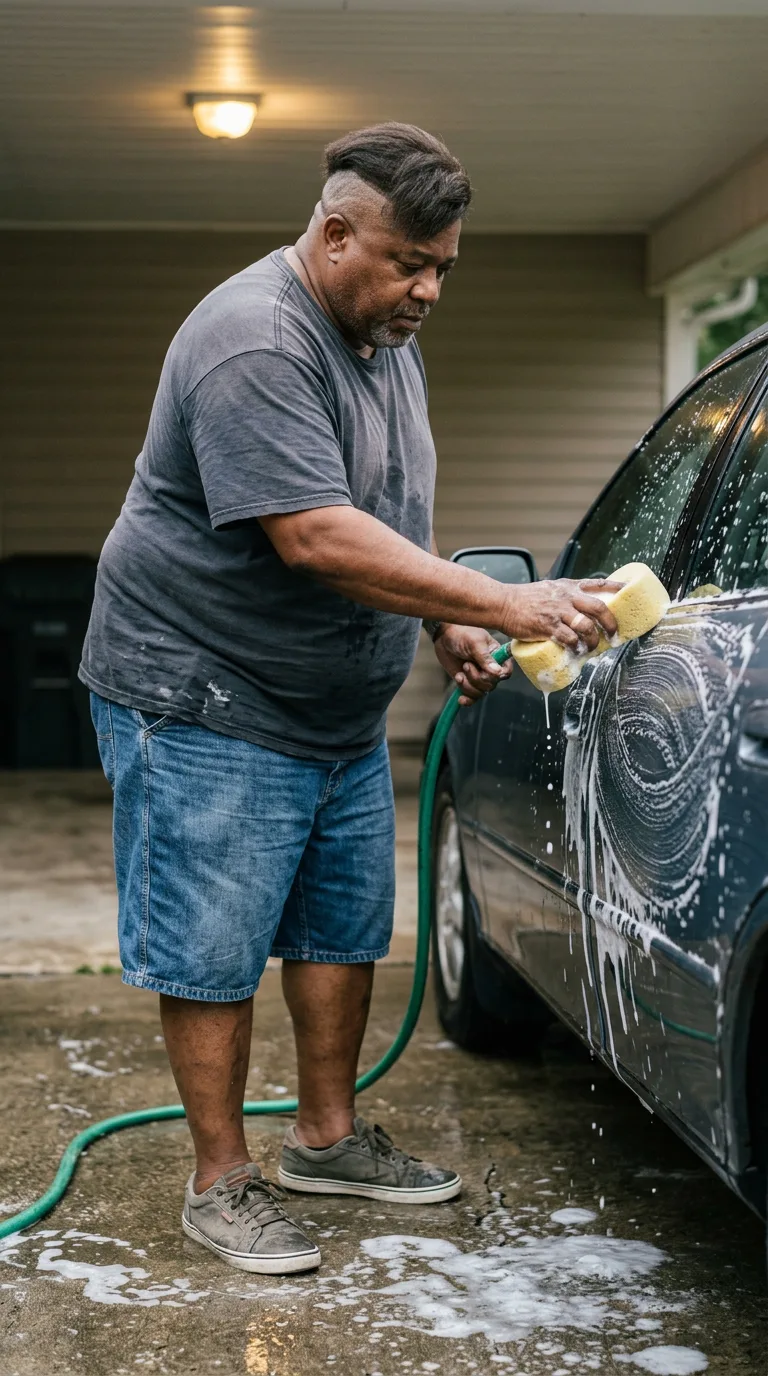
Rarest thing about him: An undercut — rare, 1 in 220
Season 0seed 2020993511 · engine v10
Character card
lineage 2NZHHJ
His body-swap story
@colin.hasbrook, wearing Dennis Okada, rolled the wheel on and woke up as Reginald Fowlkes, spent under a minute in him, then spun the wheel and woke up as Samir Haddad
The turnout coat is still on its hook by the door when the call ends, and Dennis Okada's shift boots are still wet from a grass fire nobody needed him for, and that's the whole problem: nothing happened. Sixty-four years in this body, thirty of them a firefighter, and today is a Monday that gave you smoke with no fire behind it, a scanner that crackled and lied, a chief who sent everyone home early. You stand in his kitchen wearing his silver hair and his heavy shoulders and his good, tired knees, and you think: I did not spin the wheel two hundred and thirty-seven times to stand in a kitchen. You do not hate him. You never hate them. But the wanting is back, low and familiar, like a hunger that isn't about food, and you have learned not to argue with it. You take out your phone. The site loads the way it always does, patient, almost polite. You spin.
The hose is heavier than you expect, or lighter — you don't know yet which hand this is used to — and there is soap running warm-cool down your knuckles and a sponge going soft and yellow in your palm, and the swirl marks stop. Just stop, mid-arc, on a car door that was catching the last of the light a second ago. Your grip has already changed without you: thumb tucked under, wrist turning those same small circles, like the body knows something you don't yet. You are standing in a driveway between two houses, and there are wooden stairs going up the hill behind you between yards, wet leaves flattened onto the concrete, and the light is that particular late-day amber that means the day is closing whether you're ready or not. He does not fight you. There is no *him* left in the doorway of himself to fight.
The shirt is what opens first — gray cotton gone dark at the collar with sweat, and through it comes a Sunday from some June, this same driveway, this same hose, and the specific ache of standing on his feet for four hours straight the day before because Saturdays are double-booked at the shop and he doesn't sit down, not once, not since the surgery, not since the doctor told him remission like it was a gift he had to keep unwrapping. Your feet — his feet — carry that memory in the arches, a dull permanent complaint that never quite becomes pain. The shorts, the sneakers, all of it ordinary, but the shirt keeps giving: this morning, pulling it over his head in a bedroom that used to have someone else's perfume in the closet, a bedroom he's had to himself for six years now, since Carla took the boy and, later, un-took her half of the anger but kept the house in Penn Hills. One child. A son who calls on Sundays and sometimes doesn't. The tan line on your ring finger throbs faintly under the soap suds, a pale stripe where something used to sit, worn into the skin by fourteen years of a marriage and however many years of missing it after.
The sponge gives you the shop — Fowlkes & Sons, though there are no sons in it, just the name he liked the sound of when he opened it at thirty-four. Cape snapping open behind a chair. The particular give of a good clipper in his hand, the vibration of it climbing up through his wrist into a forearm that has done this ten thousand times, that could do it half-asleep, that has done it half-asleep, on the bad mornings after chemo when he came in anyway because Ray needed his Thursday lineup for a funeral and Reginald Fowlkes does not close the shop, not for that, not for anything short of dying. Hair on tile. The smell of that place lives somewhere in his chest even here, streets away, powder and clipper oil and the low talk of men waiting their turn. He quit smoking the year his son was born and has never once, not one single day since, missed it as much as people warned him he would.
The car is his ex-wife's, or was — an old loyalty, washing it out of habit on the Mondays it sits in his driveway because their son still drives it sometimes and Reginald likes it clean for him, likes small useless acts of care that ask nothing back. That's the thing under all of it, the thing that isn't a memory so much as a temperature: he is a careful man. Careful with faces, with blades at throats, with a body that betrayed him once and might again, with an ex-wife he never once badmouthed to the boy. Sixty-one years old and heavy through the middle and strong through the forearms and tired, always a little tired, in a way that has nothing to do with sickness anymore and everything to do with just — carrying it. All of it. Every day, on foot, on his own two feet, for a long time now.
You stop the water with your own — his — thumb over the hose end, and you look down at the hand holding the sponge, foam sliding off it in a way that looks, for a second, like it's dissolving. You turn it over. The tan line catches the light.
"Didn't feel a thing," you say, to no one, to the empty driveway, to the wet stairs going up into somebody else's yard, and you don't know yet if that's true for one more hour or one more year.