Trent Waverly
Fictional. Generated by AI — not a real person, and no likeness of one is intended.
29, lawyer in Miami · rolled by @colin.hasbrook · card — no film
History
who has worn him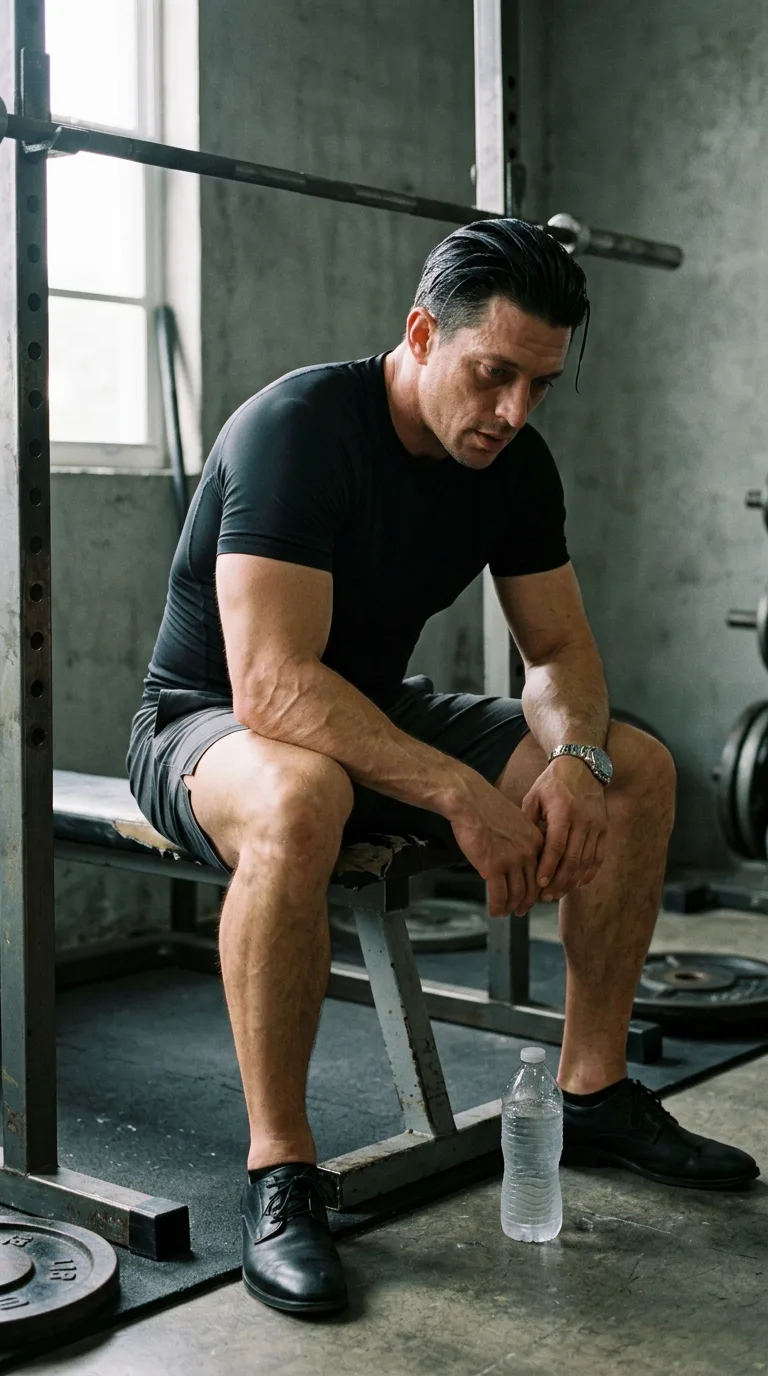
Rarest thing about him: Black — rare, 1 in 27
Season 0seed 1514250366 · engine v10
Character card
lineage 2NZHHJ
His body-swap story
@colin.hasbrook, wearing Samir Haddad, rolled the wheel on and woke up as Trent Waverly, spent under a minute in him, then spun the wheel and woke up as Colton Ash
You are eight minutes into being Samir Haddad, and already you have decided you are done with him.
You are standing in his kitchen in Queens, the one with the water stain shaped like Florida on the ceiling, and you are holding his phone, and on it is a photo of Marcus Odame's face — one of the ten before Samir, one of the men you've already spent and left — grinning at some rooftop cookout, and Samir's hand (your hand, now, for eight more minutes) had this saved in his own camera roll, under a folder, for reasons that have nothing to do with you and everything to do with a man who worked a job site with Marcus once and never said what he felt about it out loud. It is a small ugly thing to find in a stranger's phone. It is not why you are leaving him. You are leaving him because his knees ache on the ladder and his coffee is instant and the shower here takes four minutes to run hot, and because two hundred and forty spins in, a body that merely *works* has stopped being enough of a reason to stay in it. You open the laptop. The wheel is already loaded from last time, the way you always leave it. You pay. You spin.
The bar is in your hands before you are anyone. That is the first thing — not sight, not thought, just steel, cold and knurled, gripped two inches wider on the bar than muscle memory wants it, and a body under you that is not aching anywhere, a body that has been doing this since it was nineteen. You are mid-rep. Thighs burning clean instead of old. You finish the set slow, deliberate, and your face — his face — does not do what a last rep does. No grimace. No grinding jaw. It just watches the bar go up like it's mildly interesting.
You rack it. Sit back down on the bench under the rack. Forearms on your knees, the way he had them. A water bottle sweats on the concrete by your shoe, and you look at it a second before you look at your own hand around the bar's memory, still curled like it hasn't let go.
The shirt gives you nothing yet because there is no shirt, just the black compression tee stuck to your back with sweat, and *that* is what opens first — the smell of the gym, chalk and rubber and old air conditioning, and it drops you into a morning: him standing in front of a mirror at six-fifteen, this same shirt in his hands, pulling it on and thinking about a deposition at ten, thinking, not for the first time, that Renata used to say he loved this place more than he loved slowing down. Renata. The name arrives with a whole shape behind it — four years, an apartment on Brickell with too much halogen light, her leaving not because of a fight but because he never once canceled a workout for her, not once, and how he told himself that was discipline and some nights, alone, knew better.
The watch on your wrist is warm from his own pulse a second ago. It brings the courthouse steps, humidity thick as a hand on the back of the neck, briefcase swinging, a win he didn't celebrate because the client cried in a way that made him feel like a mechanic and not a savior. It brings his mother's voice on the phone, Sunday, asking if he's been to service, and him saying yes when the true answer was three weeks ago. It brings a rocks glass, most nights, one or two, never three, a rule he keeps like a hem he doesn't examine too closely. It brings the last cigarette he ever had, seven years gone, and the pen he clicks without knowing his own hand is doing it, in depositions, in church, clicking through silence like a small mechanical heartbeat.
None of it is loud. All of it is his. You are sitting in a body that has never once been afraid of a locked door, and you can feel, underneath the calm, how little it has ever had to ask itself the kinds of questions you are about to leave it holding unasked forever.
You look down at your hands. Calluses along the palm, clean nails, no ring, no ink, nothing — hands that have held a bar ten thousand times and never once held a child. You turn the right one over slowly, like it might mean something different on the other side.
You look up, past the rack, into the gym mirror bolted to the far wall, and say, to no one, in a voice still finding its new weight in your mouth:
"Two more plates. Why not."