Sami Nazarian
Fictional. Generated by AI — not a real person, and no likeness of one is intended.
20, lawyer in Philadelphia · rolled by @colin.hasbrook · card — no film
History
who has worn him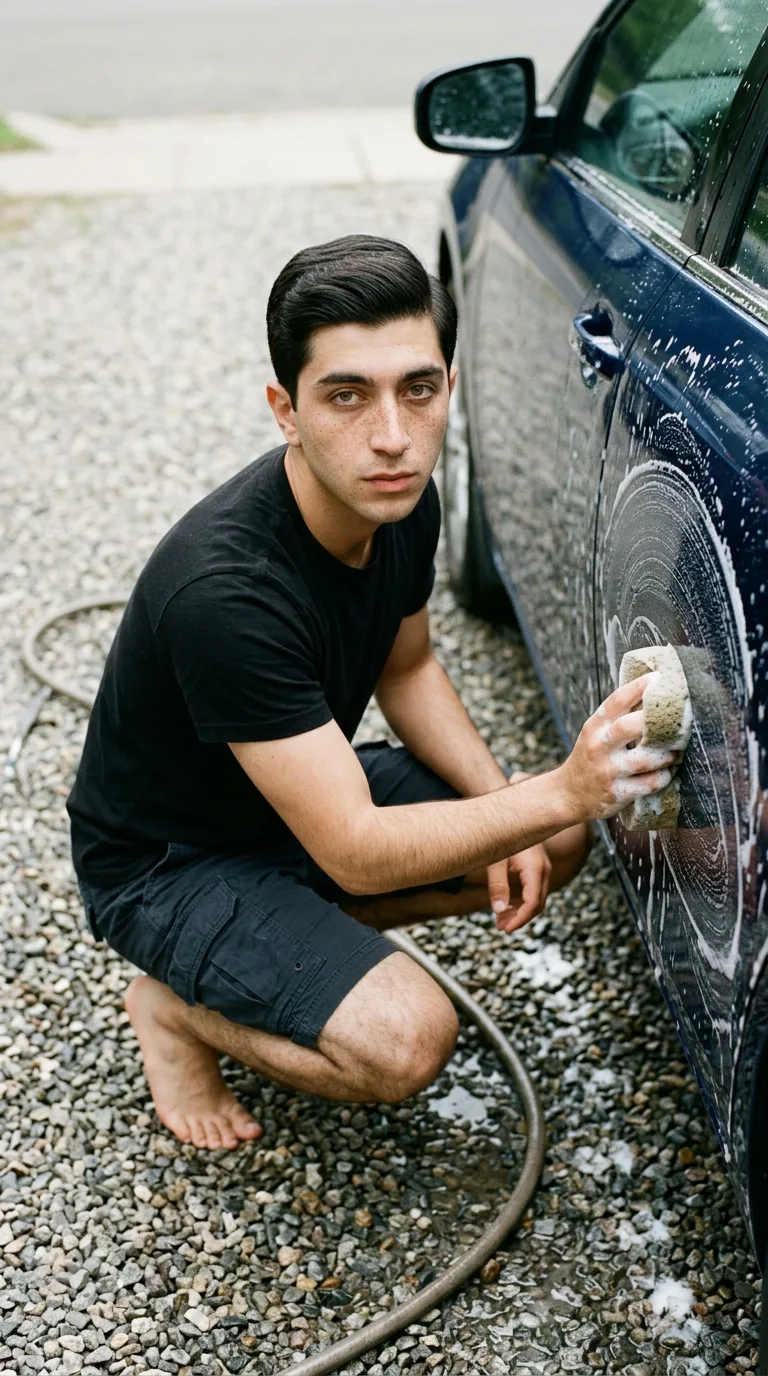
Rarest thing about him: Lawyer — epic, 1 in 698
Season 0seed 130262907 · engine v10
Character card
lineage 2NZHHJ
His body-swap story
@colin.hasbrook, wearing Kevin Nishimoto, rolled the wheel on and woke up as Sami Nazarian, spent 39 minutes in him, then spun the wheel and woke up as Rigo Escamilla
---
Kevin Nishimoto has been standing in his own kitchen for sixty seconds and you already know you made a mistake.
It's not the body. The body is good — thick through the shoulders, forearms that ache pleasantly from a morning running conduit, calluses that feel earned instead of decorative. It's not even the house, small as it is, or the noon light coming flat and white through the window over the sink. It's that you can already feel the shape of the next forty years of him sitting there, unclaimed, waiting for you to want them, and you don't. One minute in and the wanting is already gone, evaporated like it does now, faster every time, 192 men deep into a hunger that used to take days to come back and now takes less than the time it takes coffee to cool. You didn't even unpack his memories. Didn't touch his tools, his phone, anything that would hand you a reason to stay. You just walked to the laptop still open on the counter — his laptop, you'll never know his password history, never know what he was proud of — and you opened vessel.cards, and you spun.
It doesn't ask if you're sure.
—
The world resolves as gravel under bare feet and warm suds sliding cool down your wrist, and your hand is already turning in small circles against a car door that smells like dish soap and hot metal, and behind you the hose keeps running into the grass, forgotten, and for one whole second nothing about this feels like arriving anywhere. It feels like continuing.
Then it isn't Kevin's shoulders. It isn't Kevin's hand.
This hand is narrower, the knuckles pink and a little raw where the nails have been picked at, a thin gold-toned ring catching light where it sits — no, that's not on the hand, that's in your nose, you register it a half-beat late, a small cool weight through the septum you didn't have a second ago. The sponge is the same sponge but the fingers gripping it are someone else's fingers, and the swirl marks he'd been leaving in the soap, wide and lazy, stop. Just stop, mid-arc, like a record lifting off a groove.
You are twenty and kneeling in a Philadelphia driveway in the middle of an afternoon that has no business existing at the same second as Kevin's noon, and you don't know that yet, not in words — you know it the way you know your own held breath, which is to say the shirt is telling you first.
—
It's a black t-shirt, thin from washing, and the second your — his — palm brushes it wiping suds off, you get a flash: this morning, or some morning close enough to it, pulling it over his head still damp-haired from the shower, the fabric catching briefly on his nose ring the way it always does, an irritation so small and so constant it isn't even a thought anymore, just a tug and a twist and done. Sami. The name arrives with the shirt, the way his own name always sounds strange and correct at once, like a word you've translated back into itself.
The cargo shorts against his knees where he's crouched give you more — a whole closet, actually, a rowhouse bedroom two blocks off a street with a coffee shop that overcharges, a hanger of gray suits that smell like dry-cleaning chemical and a little like the vape pen he keeps in the breast pocket out of habit, not need, until it becomes need somewhere around year two of the job. The suits are for the version of him that stands on marble steps worn soft as soap by a hundred years of other men's shoes, briefcase in hand, hazel eyes narrowed against the glare, freckles making him look younger than the room wants him to be, which he has learned to use and resents needing to. Objection sustained. A partner who says his name like it's a punctuation mark. The bar exam, the night before, throwing up from nerves and then vaping on the fire escape to settle his stomach, laughing about it after because what else do you do.
The gravel under his feet gives you the driveway itself — his parents' house, not his own, a visit, a Sunday turned Monday because his father asked and you don't say no to your father, even now, even having said the other thing out loud to him two years ago in this same kitchen and watched his face do the careful, loving, unbearable work of not flinching. His mother had cried a little and then made him a plate. There's no boyfriend in any of this, no ex who left a mark, just a string of names that didn't stay long enough to matter and a phone full of apps he opens more from boredom than hope. There's a heaviness some nights that isn't sadness exactly, more like static, and a bottle of something dark that helps turn the volume down, and a habit of picking at his own cuticles until they're pink and stinging, which you can feel right now, a low persistent ache across both thumbs like the body's own quiet confession.
The car door under his other hand — his father's car, blue, the paint good under all that soap — gives you the whole reason he's out here at all: an offer to help that was really an apology for something neither of them will name, soap and water standing in for the words. It's a nice memory. It's almost enough to make you want to keep it.
Almost.
—
You straighten up out of the crouch — his knees complain, a twenty-year-old's complaint, nothing like Kevin's, softer, more honest — and you look at your hand, sponge still in it, suds sliding off the fingers in fat unhurried drops, the cuticles raw, the small ring of gold in the corner of your eye when you glance down at your own nose without meaning to.
You look up, past the hose still running into the grass, past the house he grew up apologizing in, and you find the lens — a phone left propped against the porch step, recording nothing in particular, the way phones just sit around now — and you hold there a second before you say it, mild, almost amused, like a man noting the weather:
"Huh. Didn't even finish the door."