Kevin Nishimoto
Fictional. Generated by AI — not a real person, and no likeness of one is intended.
27, electrician in Las Vegas · rolled by @colin.hasbrook · card — no film
History
who has worn him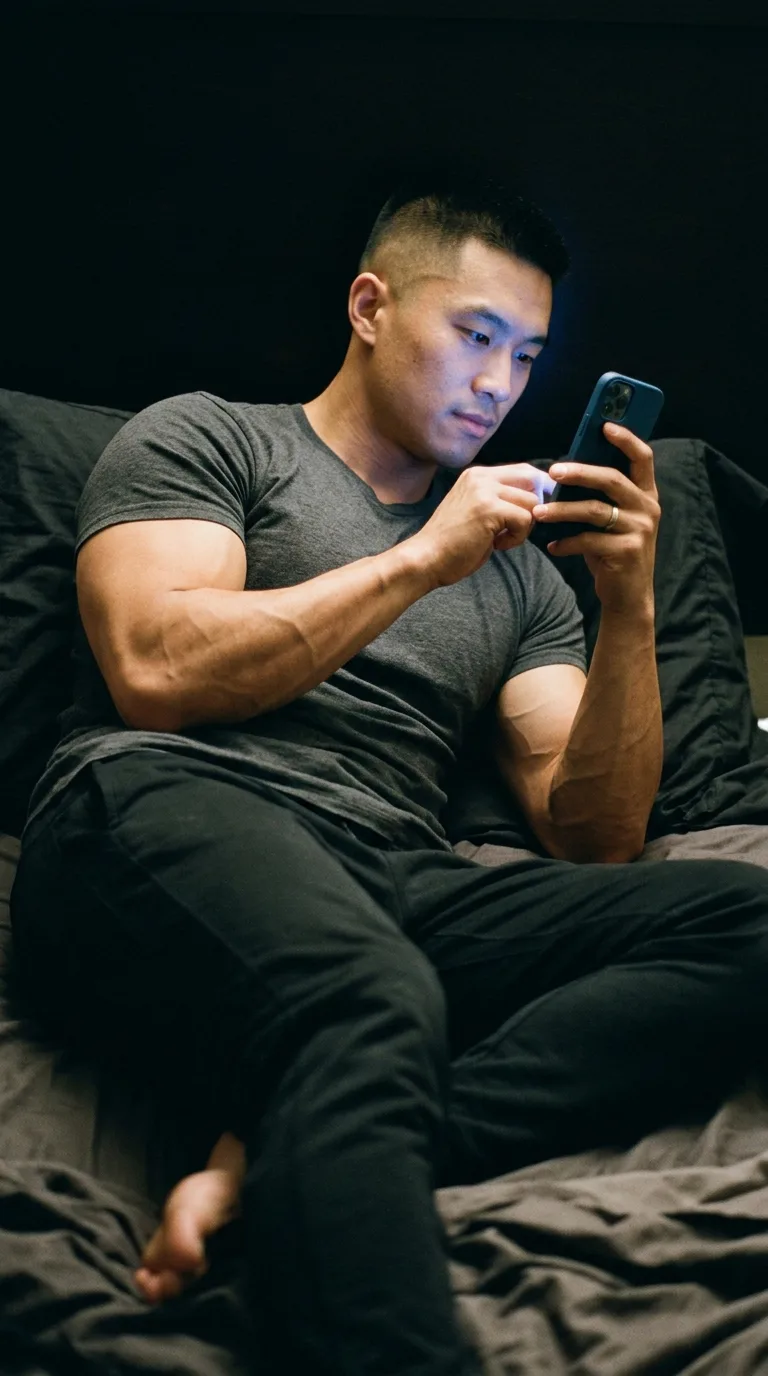
Rarest thing about him: ADHD, diagnosed as an adult — rare, 1 in 30
Season 0seed 1211334162 · engine v10
Character card
lineage 2NZHHJ
His body-swap story
@colin.hasbrook, wearing David Ozawa, rolled the wheel on and woke up as Kevin Nishimoto, spent 1 minute in him, then spun the wheel and woke up as Sami Nazarian
David Ozawa's office chair creaks under a body that isn't tired the way you want it to be tired. Sixty years old, freckled scalp catching the fluorescent light, a deposition transcript still open on the monitor from some case you inherited along with everything else. The mouth tastes like his coffee, going cold. You have been him for less than a minute and already the itch is back — that specific hunger that has nothing to do with David at all, that never has anything to do with whoever you're wearing. It is Monday afternoon in Dallas and you are bored in a way that feels almost holy, a feeling you have chased 191 times now and never once mistaken for anything else. You open the laptop. The wheel is already loaded from this morning, like you knew.
You spin.
The light behind your eyes goes out and comes back on sideways, and you are lying on your side in the dark with a phone six inches from your face, thumb still moving, faster now, steadier, flicking through a stranger's feed like you've done it a thousand times. Which, in a sense, you have — just never with this thumb. The blue light lands on a cheek that isn't freckled, isn't sixty. The room smells like laundry detergent and, faintly, like somebody else's cigarette from two rooms over, a neighbor's habit bleeding through drywall. You are on your side, and the mattress under your hip is unfamiliar in the specific way all of them are unfamiliar for about four seconds before they stop being anything but home.
The T-shirt is what opens first — cheap cotton, worn thin at the collar from washing, and it comes with the smell of a dryer sheet and the ghost-weight of a tool belt that isn't there right now but has been there every day for nine years. Kevin Nishimoto. The name arrives without ceremony, the way his own name always does, like remembering your address. Electrician. The gray shirt, the one in the other photo you'll never see him wearing again, has a nametag sewn crooked because his wife did it in a hurry the week he started at the casino and never redid it.
The hand holding the phone knows things your last hand didn't — calluses along the pads of two fingers, a half-healed nick on the thumb from a wire stripper that slipped last Thursday, the particular flex of a forearm built by pulling cable through conduit overhead for eight hours at a stretch. It is strong in a way David's hand never was, and it also, unbidden, wants to bite its own nails, has wanted to since he was nine, quit for two years when Mia pointed it out and started again the week the baby came.
The baby. That's what breaks the dam.
A memory of a delivery room, fluorescent and too cold, his hand crushed in his wife's hand, the doctor saying something he didn't hear because he was watching her face instead. A name — Emma — soft in his mouth like a held breath. He has not slept eight straight hours since. He works the graveyard crew at the casino because the differential pays better and because at 2 a.m. under a half-gutted ceiling with conduit racked overhead like ribs, nobody needs him to be charming, nobody needs him to remember three things at once, which is the one thing his diagnosis, four years old now and still strange in his mouth — ADHD, at twenty-three, like finding out backwards why school felt like drowning — made impossible to promise anyone.
The wedding band on the hand holding the phone is warm from his own skin. It slides a little; he's leaner than he was the day Mia put it on him at a courthouse in July because neither of them could wait for the church wedding her mother wanted, and somewhere under that easy fact is Sarah — the one before, the one who left for Sacramento and a job he'd never have asked her to give up, the one whose name still surfaces sometimes at 4 a.m. under fluorescent light, not because he wants her back but because a door that closes on its own always rattles a little afterward. He loves his wife plainly, without needing it to be simple.
The shirt from that morning — no, not this morning, some morning, all his mornings — comes back through the cotton at your shoulders: the reach behind for the second sleeve, the snap of the button placket, the nametag catching his eye in the mirror the way it always does, a small dumb pride each time. Six-thirty p.m. his time when he clocked in last night, an eternity of ceiling tile and pigtail splices and a foreman who talks too much, and now it's the deep well of his sleep hours, the sun doing whatever the sun does to people who work while it's up, and here he is at what his body insists is midmorning, unable to put the phone down, waiting for exhaustion to do what melatonin won't.
He goes to church some Sundays, mainline, a building his mother picked because it was walkable, and he still says the Lord's Prayer the way she taught him, fast and by rote, and he still means about half of it. He drinks maybe twice a month, always with the same three guys from the crew, always home by one. He has never smoked anything in his life and finds the smell of it, drifting from wherever it drifts from, faintly nauseating even now. Twenty-two thousand dollars in a savings account he checks too often. A daughter who is eleven months old and already has his stubbornness, Mia says, though he thinks she's just being kind about the parts that are actually his flightiness dressed up as personality.
None of it is yours. All of it sits in your hands like borrowed tools, and you can feel exactly how well he knows how to use them.
You look at your hands — his hands, blunt-nailed on two fingers, bitten to the quick on the rest, phone still lit in the right one — and you turn them over slowly, the wedding band catching the last of the screen's blue light before it dims to black. Then you lift your eyes into whatever is watching.
"Guess I'm somebody's husband now," you say, and you don't know for how long, and neither does he, because there's nothing left of him to ask.