Sam Nassour
Fictional. Generated by AI — not a real person, and no likeness of one is intended.
49, butcher in Small-town Ohio · rolled by @colin.hasbrook · card — no film
History
who has worn him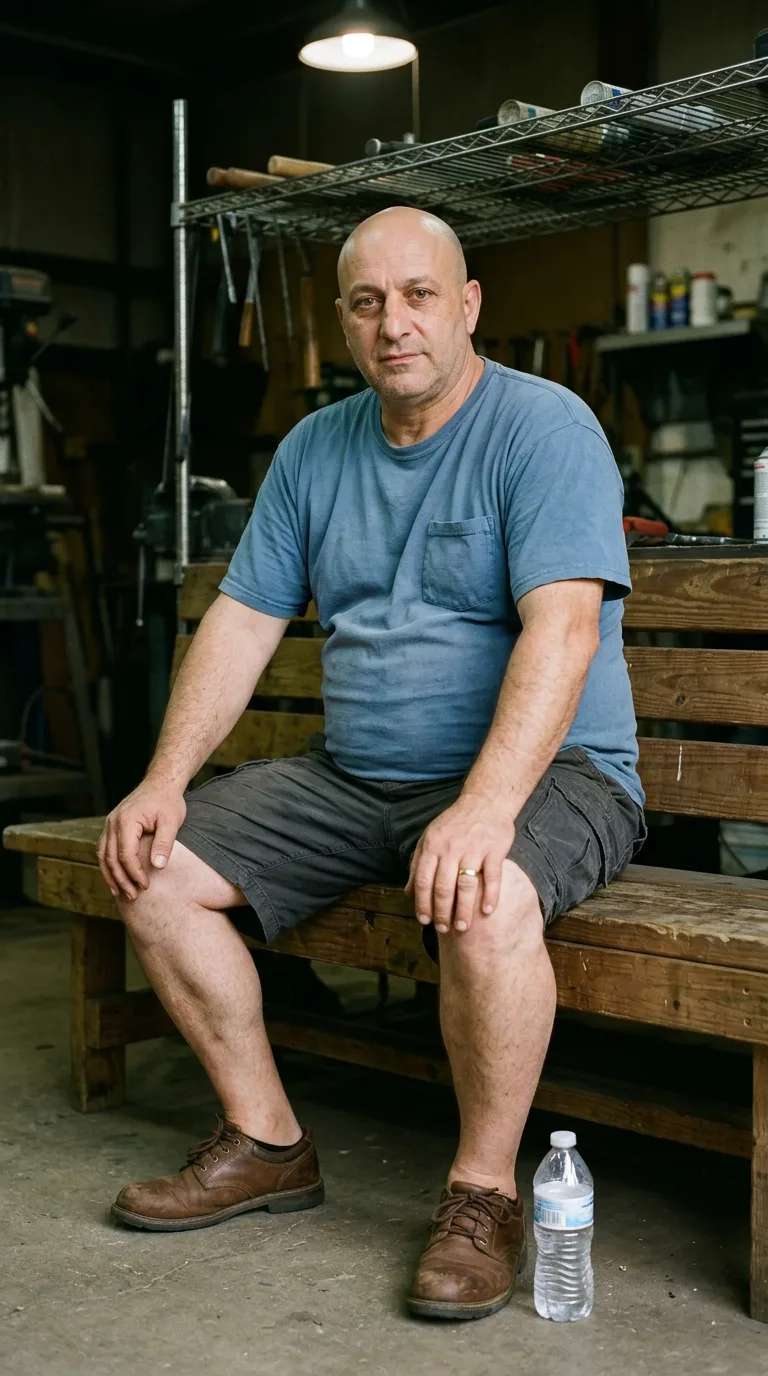
Rarest thing about him: Middle Eastern — rare, 1 in 36
Season 0seed 2132009702 · engine v10
Character card
lineage 2NZHHJ
His body-swap story
@colin.hasbrook, wearing Marcus Whitfield, rolled the wheel on and woke up as Sam Nassour, spent under a minute in him, then spun the wheel and woke up as David Kwon
The tool shed smells like two-cycle gas and cut grass, and you have been Marcus Whitfield for one minute, which is long enough to know his knee already aches when he crouches, that the unibrow itches in this heat, that somewhere behind his ribs there is a hollow feeling like a room nobody has furnished yet. That's the thing about the young ones. So much time left in them and nothing in it. You stand there holding a rake that isn't yours, feeling twenty-four years of a life you didn't live and won't get to, and it isn't enough, it is never enough, the fresh ones are a rush for about as long as it takes to notice they're empty of everything but forward. You want weight. You want a marriage gone stale enough to be real, a body that's paid its dues and complained about it. You want somebody with an ex who still calls sometimes. You set the rake against the shed wall, take out your phone with a hand you have had for sixty seconds, and open vessel.cards, and the wheel is already loading before you've decided anything, which is its own kind of honesty.
You spin.
The bar is under your palms before you know they're your palms, and they are wrong — wider than they should be, the calluses in the wrong places, and the bar itself two inches wider than any bench day this year, though you don't know that yet, you only know the weight is unfamiliar in a way that isn't the shoulders' problem, it's a decision your body already made without you. Legs braced. Belly pushed into a chalk-dusted floor mat by way of a strap you don't remember tightening. Somewhere close, a fan going through its slow arc, gym noise, a plate dropped two racks over. Air comes into a chest wider and shorter than the one you left, and it comes in through teeth that were not blowing air a second before but are grinding now, low and controlled, a last rep that doesn't look like a last rep because whoever is under you does not know it's happening at all.
The bar goes up. Your hands did that — his hands, twenty years of muscle memory that has nothing to do with you and everything to do with a man named Sam. It's the shirt against your back that opens him first, damp gray cotton clinging at the shoulder blades, and through it comes a flash: this same shirt on a doorknob at 5:40 this morning, him pulling it over his head in a dark bedroom while his wife, Renata, made the small sound she makes when the mattress shifts and doesn't quite wake. Bethany, he called her once, years back — no. Wrong name, wrong woman, that one's an old ache with its own room. Renata is the one whose hip he kissed on his way out. Renata is the one who left a note on the counter about the dentist. That's this life.
The bench slats under his palms bring the shop: the low ceiling, the smell of blood gone metallic and cold, twenty-six years behind the counter of Nassour's Meats on a street with one working stoplight and a diner that's been dark since March. His hands know a boning knife the way your hands, whoever's hands those were an hour ago, knew a rake — without asking. He didn't want the shop. His father wanted the shop. He wanted, for exactly four years in his twenties, a woman named Colleen who left for Columbus and married an accountant and still, once or twice a year, texts him a photo of nothing in particular, a sunset, a dog, and he answers and Renata has never once asked what those are and he has never once told her they mean anything, because they don't, not really, except that they're a door he keeps a little bit open onto a version of himself that didn't stay.
The wedding band is warm from his own hand's heat, and it gives up a wedding fourteen years back, a hall with folding chairs, his mother crying because there'd be no grandchildren from this one and being wrong to say so out loud at the reception. It gives up Renata's laugh, the real one, not the one for customers. It gives up a fight about money that ended with him sitting on the shop steps at midnight with a beer he didn't finish, and it gives up, right behind that, ten thousand ordinary evenings that were fine, that were more than fine, that were a marriage doing what marriages do.
The toothpick isn't in his mouth right now — it's in the pocket of the shorts folded in his gym bag — but the ghost of the habit is in his jaw anyway, the click of it against his back teeth while he watches a walk-in cooler run its numbers down. Broad hands, thick through the palm, a rope-burn scar he doesn't have — no, imagined, gone, the real hands have only what forty-nine years of knife work leaves: nicks healed pale, one knuckle that doesn't fully straighten anymore. Dad bod, and he knows it, and the gym at the end of every day is the small stubborn refusal of that, three sets, four sets, blowing through his teeth on the last one like it costs him something, because it does.
The bar racks. Your arms — his arms — are shaking with it. You sit up on the bench and the shop's whole geography unloads at once through the soles of his shoes on the rubber mat: the scale, the register, the crooked nose he got at nineteen from a dropped side of beef and never had reset right because Renata says she likes it, says it's the first thing she noticed. It's the first thing anyone notices.
You look at your hands. Blunt fingers, a plain band catching the gym light, one knuckle that won't come all the way straight. You turn the hand over once, like you're checking it's really attached, then you look up into the mirror across the rack, into hazel eyes that have seen this reflection every day for a long time and don't know today's any different.
"There he is," you say, to no one, in his voice, and it comes out almost fond.