Marcus Whitfield
Fictional. Generated by AI — not a real person, and no likeness of one is intended.
24, groundskeeper in Seattle · rolled by @colin.hasbrook · card — no film
History
who has worn him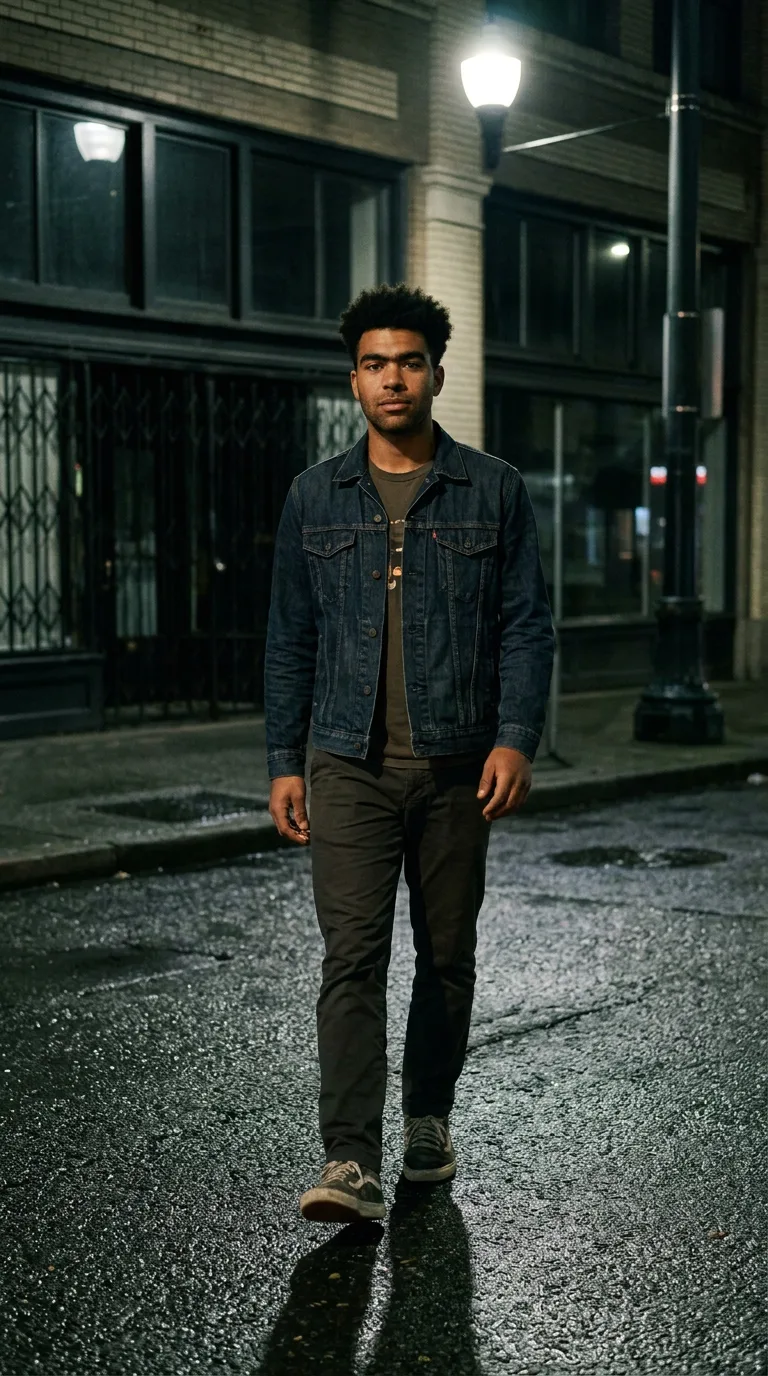
Rarest thing about him: A unibrow — rare, 1 in 51
Season 0seed 207675230 · engine v10
Character card
lineage 2NZHHJ
His body-swap story
@colin.hasbrook, wearing Danny Fusco, rolled the wheel on and woke up as Marcus Whitfield, spent 1 minute in him, then spun the wheel and woke up as Sam Nassour
The glass shop smells like flux and cut metal, and Danny Fusco's hands — my hands, for the last two minutes — are still shaking a little from the score-and-snap he just did clean on a six-foot lite. Good hands. Freckled, quick, twenty-two years old and never broken a bone. I stand there in his coveralls with the shop radio playing something I don't recognize and I think: this is fine, this is a whole life I could keep, and that's exactly the problem. Two minutes in and already I can feel the itch starting under his skin, my itch, the one that never belonged to him. Danny Fusco did nothing wrong. He was handsome and steady and had glass dust on his forearms like gold. I open the site anyway, on my phone, in his pocket, because keeping a good one has never once stopped me from wanting to know what the next one feels like. That's the whole of it. That's all the reason there's ever been.
The wheel spins. Somewhere a coast away and five hours ahead, a man catches himself on a car door.
The wet paint of a Honda's hood is cold under my palm and my shoulder aches from the stumble and my mouth tastes like well whiskey and something with too much lime in it. My foot — his foot — was scuffing the pavement every third step and now it isn't. I straighten up. The street is empty and orange under the lamps and my breath goes out in a small cloud that surprises me, like I forgot bodies did that. I am shorter than I was a second ago. Heavier through the chest, lighter in the legs, my center of gravity dropped down into a build that has spent years bent over a mower deck. I turn left at the corner. Not toward home. I don't know that yet, because I'm not the one who'd know it.
The denim jacket is the first thing that talks to me. It settles on my shoulders like it's been waiting there — a closet, low light, a Sunday morning smell of fabric softener and outside — and I'm reaching for it off a hook by a door, half-thinking about a girl I am not, in this life, currently seeing, and half not thinking at all, because the jacket is old and doesn't require thought. Under it a thrifted shirt, soft from washing, that came from a bin at a Goodwill on Rainier with a five-dollar tag still stapled through the collar, and I feel — his feeling, arriving sideways — the small stupid pride of finding something that fit on the first try. The jeans came from the same trip. The sneakers are older than either, resoled once at a shop that doesn't exist anymore, and my feet know exactly how much give is left in them, know it the way you know a stair in the dark.
The unibrow itches — actually itches, a physical fact, wool-weather dry skin — and my hand goes up to it without me deciding to send it, which tells me something about how long he's had that gesture. Under my boot soles, worn thin at the heel, is the memory of grass: acres of it, a whole afternoon of it, the mower's vibration climbing up through my legs into my back teeth, stripes laid down arrow-straight across center field because a groundskeeper takes some things personally even when nobody in the empty stands will ever know the difference. Marcus does. Marcus checks his lines from the dugout roof sometimes just to see them right. Nobody pays him for that. He does it anyway.
There's a toothpick in his jacket pocket, and touching it opens something smaller and sadder — a mouth that used to smoke real cigarettes until the money stopped allowing it, then a vape that lives in the other pocket, and under both of those a toothpick worn down by back teeth during long silences at the field when the sun goes low and there's nobody to talk to and the quiet gets to be too much to just stand in. He chews it without noticing he's started. He's been not-noticing it for years.
The whiskey memory comes up through the stomach, not the hands: a bar he goes to maybe twice a month when the loneliness gets loud enough to spend money on, cheap drinks with a friend from another crew, a joke that killed, a second round he didn't need. Tonight he took the long way home past the closed shops because the walk sobers a man out slower than a bus does, and because home, when he gets there, is quiet in a way he has complicated feelings about. Twenty-four and single and nobody waiting up, which he tells himself is fine, which some nights is true.
My — his — legs stop scuffing. I feel the balance come back into me like ballast settling, and forty steady steps happen under a body that used to be stumbling and isn't anymore, though nothing announces that to him because there's no him left in here to notice the difference.
I hold my hands up under the streetlamp. Wider than Danny's. A callus at the base of each finger that a mower's grip has been building for years, dirt gone gray-black into the whorls of two knuckles no soap has ever quite reached. I turn them over once, like I'm checking they're real, which I am, because they're mine now and there's no version of tonight where they go back to being his.
"Huh," I say, to the empty street, to the wet glass shopfronts, to nobody. "Left it is."